
24/7 全天候客户支持

免费退货

当日/次日达

品质保障

开启新人专享福利: 全场免邮 | 低至 2 折 | 免费试用 30 天 JoyPlus 会员
下载 Joybuy
Waking up with a stuffy nose, itchy skin or unexplained congestion can be frustrating. For many in the UK, the culprit isn't seasonal pollen but microscopic dust mites living in our mattresses, sofas and cushions. While a specialised dust mite vacuum seems like a straightforward solution, the market is filled with devices that promise much but deliver little. As a Joybuy Product Recommendation Officer, my role is to help you see past the marketing clutter and identify what truly makes an effective cleaning tool.
Before you invest, be aware of these common purchasing pitfalls:
To make a smart purchase, focus on the core specifications that determine performance. These are the non-negotiable features for any effective anti-allergen vacuum cleaner.
This is arguably the most important feature. Suction is what physically lifts and removes dust mites, pet dander and other debris from your upholstery. Look for a rating in Pascals (Pa) or kilopascals (kPa). For deep cleaning mattresses and thick fabrics, a suction power of 10,000 Pa (10 kPa) or more is advisable. Anything less may only clean the surface, leaving deeper allergens behind.
An advanced filtration system is essential to ensure allergens are captured and contained. The standard to look for is a HEPA (High-Efficiency Particulate Air) filter, which is designed to trap 99.97% of particles as small as 0.3 microns. Some modern designs also feature dual-cup systems that separate larger debris from fine dust, which helps prevent the HEPA filter from clogging and maintains consistent suction power throughout your cleaning session.
Dust mites cling to fabric fibres with their legs. To dislodge them effectively, a good handheld bed vacuum needs a mechanism to agitate the surface.
Instead of a confusing list, we match products to specific needs. Based on our criteria for a comprehensive and effective cleaning solution, here is a standout option for households serious about tackling allergens.
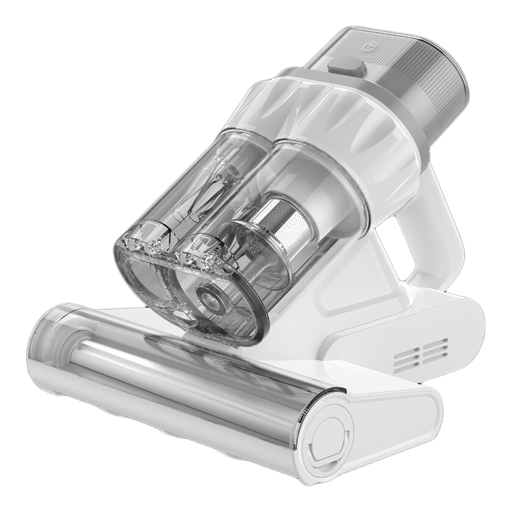
Why This Fits Their Persona: This model is ideal for families with allergy sufferers, pet owners or anyone wanting a truly deep clean. Its combination of features addresses the entire problem—from killing germs and dislodging mites to powerfully removing them and filtering the air. It's a comprehensive tool for maintaining a hygienic home environment, especially for a pet hair vacuum for bedding.
It directly counters the common pitfalls with its strong 12,000 Pa suction, ensuring deep extraction. The dual-cup design and HEPA filter prevent clogging and stop allergens from being re-released, while the UV light is supported by physical removal features.
Its all-in-one system combines high-frequency pulsating pads, 65°C hot air, a powerful motor and a smart dust sensor. This multi-pronged approach provides a more thorough clean than single-function devices.
We have compiled a complete, real-time list of products that fully satisfy these strict selection criteria and UK safety regulations.
For general maintenance and to keep allergen levels low, using a bed hoover for dust mites once every one to two weeks is a good routine. If you have severe allergies or pets that sleep on the bed, you may find it beneficial to vacuum your mattress and pillows weekly.
While a standard vacuum with an upholstery attachment can remove some surface dust, it typically lacks the specific features needed to tackle a dust mite infestation effectively. Specialised mite vacuums have the combination of UV light, hot air, high-frequency agitation and powerful, focused suction that is required to dislodge and extract allergens from deep within fabric fibres.
Yes, when used as directed. Reputable UV mattress vacuum cleaners are equipped with safety sensors that automatically shut off the UV-C lamp when the device is lifted from a surface. This prevents accidental exposure to your eyes and skin. Never attempt to bypass these safety features or look directly at the lamp during operation.