Who each approach suits

Readers of full-page archive scans

If you mainly read scanned handwriting, you need to judge whether a whole page remains legible at a comfortable viewing size. PDF viewing controls and optional markup may matter more than general entertainment features.

Commuters travelling light

A compact tablet is easier to pack and hold if you accept a smaller view of each letter. It also lets you move between archive files and ordinary tablet apps.

Researchers cross-referencing sources

If you switch between letters, catalogues, maps and notes, check the apps, PDF controls and local storage your work requires. Optical character recognition (OCR) may help with some documents, but its usefulness depends on the handwriting and scan quality.

What matters when choosing

Large e-ink device

Choose it when: Most of your reading is in full-page scans and you want a dedicated reading and handwriting device.

Trade-off: Document tools differ by model and file permissions. Kobo, for example, excludes DRM-protected PDFs and PDFs that disable markup from stylus annotation.

Larger LCD tablet

Choose it when: Colour maps, photographs and several research apps are central to the journey.

Trade-off: A larger conventional tablet is less compact than a mini tablet and does not have an e-paper display.

Compact LCD tablet

Choose it when: Easy packing and holding matter most, and you are content to zoom into manuscript pages.

Trade-off: A smaller screen shows less of a full-page scan at once.

Concern What to check Who this matters to
Handwritten scans Open an actual scanned PDF at your usual viewing distance; check full-page legibility and the available zoom or crop controls. If I need to follow handwriting across a whole letter, repeated panning could interrupt my reading. Around 33% of consumers put full-page legibility first.
Portability Compare device weight and dimensions, including the case you would carry; try holding it in the way you read on trains. When I travel light or read while standing, I may accept a smaller page view for a device I can hold comfortably. Roughly 27% of consumers make portability their primary concern.
Offline notes and reading Download a sample before travelling; check whether the PDF permits annotation and whether notes can be exported. If I plan to read and mark up letters without a connection, I need the actual archive file to work with my note-taking routine. Around 20% of consumers prioritise offline reading and notes.
Research workflow Check your required apps, PDF layout tools, OCR results on a sample scan and local storage needs. When I compare a letter with maps, catalogues or translations, moving between sources matters more than simply turning pages. Roughly 20% of consumers put that research workflow first.

Buying pitfalls

  • Choosing by screen size alone

    A larger screen gives a scan more physical space, but the display and PDF controls also affect how practical it is to read. A smaller device may still suit someone who needs to carry less.

    Open a real letter scan on the device in portrait and landscape. Judge how much handwriting you can read without zooming, not just the screen diagonal.

  • Assuming every PDF accepts handwritten notes

    File protection or PDF restrictions can block markup on a stylus-capable reader. Kobo states that its stylus cannot annotate DRM-protected PDFs or files that disable annotations.

    Try an archive sample and check annotation, export and backup before buying a device primarily for research notes.

  • Overlooking the stylus and storage setup

    Handwriting support does not, by itself, tell you which stylus comes with a particular configuration. Your offline collection may also affect the storage you need.

    Check the exact listing for stylus inclusion and compatibility, then work out how you will store and transfer your archive files.

    Depending on the model and configuration, a stylus, protective case, replacement nibs or extra storage may need to be obtained separately.

  • Confusing archive access with permission to reuse

    Being able to read a digitised letter does not establish permission to share or publish the scan. The UK Intellectual Property Office says copyright duration depends on factors including the work type, author and creation or publication date.

    Read the archive's rights and reuse terms before distributing scans or publishing material from them; ask the archive or rights holder when the position is unclear.

Brands to consider for document reading

Amazon Kindle

Kindle Scribe is a large-format e-paper option for readers interested in document review and handwriting.

  • Amazon lists a 10.2-inch, 300 ppi Paperwhite display and support for imported-document review and PDF annotation.
  • Test your particular archive PDFs before relying on the annotation workflow, especially if files are protected or complex.

BOOX

Note Air6 C combines a 10.3-inch colour e-paper screen with document-viewing tools and an Android-based workflow.

  • BOOX lists Android 16, 64GB storage and a microSD slot for this model; its help documentation describes PDF layout, zoom and OCR controls.
  • Test OCR against the handwriting, language, contrast and scan quality of the letters you actually use.

Samsung

Galaxy Tab S10 FE is a conventional Android tablet option for readers using colour sources and apps alongside letters.

  • Samsung lists a 10.9-inch display and support for microSD storage of up to 2TB on this model.
  • It is less compact than a mini tablet and does not have an e-paper display.

Apple

iPad mini is the compact conventional-tablet option for travellers who favour a smaller device and iPad apps.

  • Apple lists an 8.3-inch display, Apple Pencil Pro support and a weight of 293g for the Wi-Fi model.
  • Its smaller screen shows less of a full-page manuscript scan than the larger devices discussed here.

Kobo

Stylus-capable Kobo e-readers, including the Elipsa line, are relevant to readers considering handwritten PDF notes.

  • Kobo says notes on non-protected PDFs can be exported with the file.
  • Kobo excludes DRM-protected PDFs and files that disable annotation or markup; check both the exact reader and the archive file.

Joybuy products for these reading needs

These choices cover two different ways to travel with letter scans: a larger e-ink notebook and a compact iPad. Check your own PDFs and offline routine against either device before choosing.
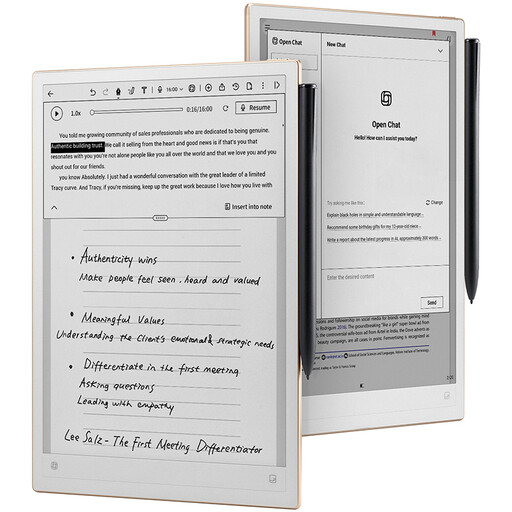
iFLYTEK AINOTE 2 e-ink notebook with protective case

iFLYTEK AINOTE 2 10.65-inch with protective case

Consider this larger e-ink notebook if viewing scanned letters on a sizeable screen matters more than carrying a compact tablet.

The product name specifies a 10.65-inch screen and 4.2mm thickness. Check a representative archive file for the PDF markup and offline reading routine you need.

The listing describes this model as having no reading light, so consider the lighting where you expect to read.

View on Joybuy
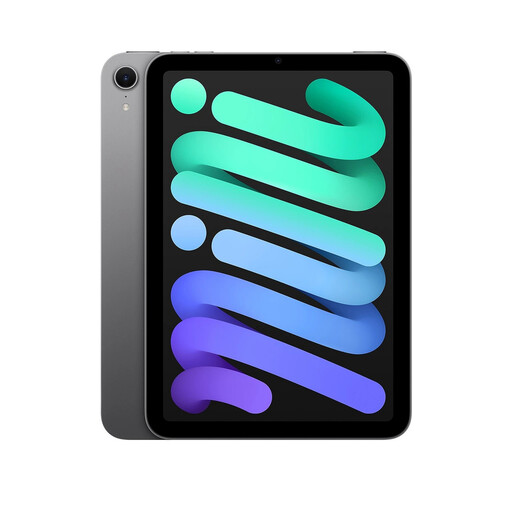
Apple iPad mini 7 A17 Pro, 512GB, Space Grey

Apple iPad mini 7 (A17 Pro), 512GB, Space Grey

Consider this compact tablet if carrying and holding the device easily matters more than seeing an entire manuscript page at once.

Apple lists an 8.3-inch display and a 293g weight for the Wi-Fi iPad mini. The smaller view may require zooming on handwritten scans; try your usual files and offline routine before buying.

Apple Pencil Pro is compatible but sold separately, so check the note-taking setup you intend to use.

View on Joybuy

Common questions

Which file should I try before buying a device for historical letters?

Try a representative original scan, preferably one of the largest PDFs you expect to read. Check handwriting at full-page size, zooming, page turns and landscape view; BOOX documents PDF viewing and zoom controls, while Amazon lists PDF review and annotation for Kindle Scribe.

Can I write directly on an archive PDF?

You can on some device-and-file combinations, but PDF permissions can prevent it. Kobo says its stylus cannot mark up DRM-protected PDFs or PDFs that disable annotations, so test a file from your archive before choosing a reader for handwritten notes.

Do I need a cellular tablet for reading on trains?

Not if you can download the letters and reference files you need before travelling. Consider cellular access if retrieving new archive material while away is important to you, but check that essential documents open offline regardless.

What if a tablet I buy in the UK is faulty?

UK government guidance confirms that consumers have rights when buying goods online or in person; a retailer's returns policy is separate from those rights. Keep your order record and evidence of the fault, and check the seller's process for raising the issue.