Choose a privately owned e-scooter only if every intended ride is on private land with the landowner’s permission: GOV.UK says it cannot be ridden in public, including on roads, pavements and in parks. Before comparing models, check the rider and site fit, the supplied charger and instructions, and whether you have a charging space away from escape routes. If the journey includes public travel, look at a compliant electrically assisted pedal cycle or the rules of an official rental e-scooter trial instead.
Who this decision affects
Riders with permission to use private land
If every ride will stay on land where the owner has given permission, the next decision is which scooter fits the rider and the site. GOV.UK distinguishes this use from riding a privately owned e-scooter in public.
People planning to charge and store a scooter at home
These consumers need space that does not obstruct an exit or escape route, as well as a charger authorised for the chosen model. The Office for Product Safety and Standards and Fire Kills both warn against charging where escape could be blocked.
People who also need to make public trips
If the intended journey reaches a road, pavement, cycle lane or public park, a privately owned e-scooter does not meet that travel need. GOV.UK sets out separate rules for electrically assisted pedal cycles and official rental e-scooter trials.
What to check before buying
For consumers considering a privately owned e-scooter, establish where every ride will take place before comparing models. Then check the charging arrangement and whether the exact scooter fits its rider and private site.
| Concern |
Buying checks |
Who this matters to |
| Permission and location |
Trace the entire riding area and confirm the landowner’s permission. GOV.UK says a privately owned e-scooter cannot be ridden in public. |
I want to ride on a contained site without finding that part of my route enters public space; around 42% of consumers would make permission and location their primary concern. |
| Charging and storage |
Confirm the supplied or manufacturer-authorised charger and instructions. Choose a charging spot clear of exits and combustible materials. |
If I will keep the scooter indoors, I need somewhere to charge it without blocking a way out; roughly 33% of consumers would put charging and storage first. |
| Rider and journey fit |
For private-site riding, check the exact model’s rider limits, tyres, brakes and storage dimensions. If the journey extends into public space, consider a different legal transport route. |
I need to know whether a scooter fits both the rider and the journey, especially if some travel is outside the site; about 25% of consumers would make that fit their primary concern. |
Purchasing mistakes to avoid
-
Buying a private scooter for a public commute
GOV.UK says privately owned e-scooters may be ridden only on private land with the landowner’s permission, not on public roads, pavements or in parks. Ride specifications cannot change that restriction.
Map the whole journey before buying. If it includes public travel, check whether a compliant electrically assisted pedal cycle or an official local rental trial meets your needs instead.
-
Assuming a generic replacement charger will do
A connector that fits does not establish battery compatibility. Department for Transport battery guidance and the Office for Product Safety and Standards warn about unsafe battery and charger combinations.
Keep the supplied charger and use a replacement only when the manufacturer authorises it for the exact scooter and battery.
-
Leaving charging space until after purchase
Charging in a hallway, bedroom or beside an exit can obstruct escape if a battery fails. Fire Kills advises against charging while asleep or where escape routes may be blocked.
Choose a location clear of exits and combustible materials before buying. Follow the model’s instructions, remain present while it charges and unplug it when charging is complete.
-
Applying a brand-wide claim to every model
Pure Electric, Segway and Xiaomi list different scooter models and configurations. A range, suspension or weather-resistance claim for one variant does not establish that another will suit a particular private site.
Read the exact model’s manual and check its rider limit, brakes, tyres, stated range conditions and charger and parts support against your intended use.
Brands to consider
Pure Electric
Pure Electric presents a UK-facing range that includes Air⁶, Flex and Escape models, with digital manuals available through its support centre.
- Its model documentation gives shoppers a starting point for checking the exact scooter and its instructions.
- Check charger and parts support for the chosen variant; the brand’s product claims do not make public riding lawful.
Segway
Segway’s UK eKickScooter catalogue covers several model categories, allowing a comparison of manufacturer-stated configurations.
- The listed models differ in stated ride specifications, so there are distinct configurations to examine.
- Check the exact model’s rider limits, equipment and instructions rather than assuming a category label establishes suitability or safety.
Xiaomi
Xiaomi’s UK catalogue lists several Electric Scooter series and model variants.
- The official catalogue can help distinguish model names and accessories before comparing a particular scooter.
- Commuting language in product marketing does not change the UK restriction on publicly riding a privately owned e-scooter; confirm the selected model’s charger and instructions.
Joybuy e-scooters for private-land use
These scooters are options to assess for riding entirely on private land with the landowner’s permission. One is described for younger riders; for each model, check the rider, site and charging arrangements before purchase.
 No image available
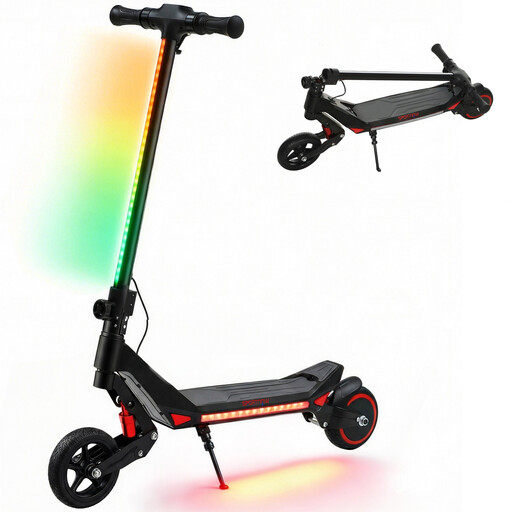
SPORTNOW AA1-132V70BK children’s electric scooter, black
For a younger rider on permitted private land, check that this model fits the rider and the space available for supervised use and storage.
The listing describes a foldable scooter for ages 6–14, with kick-to-start operation, a speed of up to 16 km/h and a stated maximum range of 12 km. Confirm the supplied charger, instructions and applicable marking information before buying.
View on Joybuy
 No image available
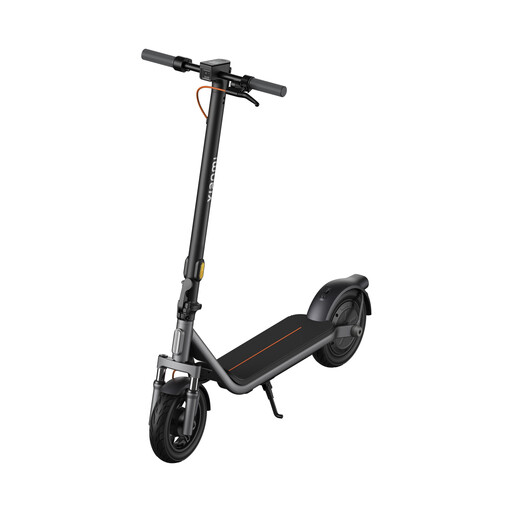
Xiaomi Electric Scooter 6 Lite
For permitted private-site riding, compare this model’s rider limits, tyres and folded size with the person, surfaces and storage space it must accommodate.
Before purchase, confirm the exact supplied charger, model-specific charging instructions and applicable marking information.
View on Joybuy
 No image available
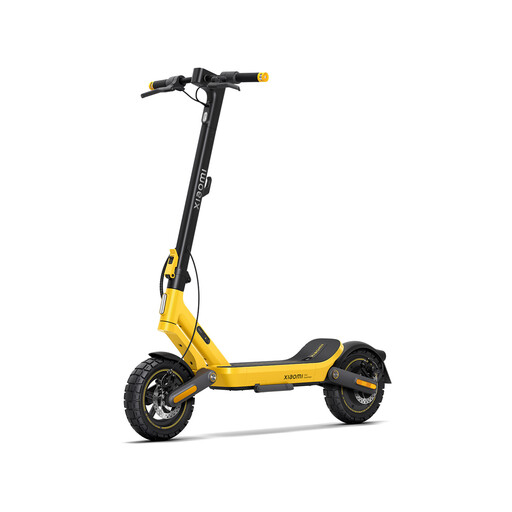
Xiaomi Electric Scooter 6 Ultra
If the permitted private site has rougher surfaces or the rider needs a different load limit, check this exact model’s stated limits and equipment against those needs.
Also check its handling and storage requirements, the charger supplied with this variant, its charging instructions and applicable marking information. Do not assume an optional charger is included.
View on Joybuy
Common questions
Can I ride my own e-scooter on a road, pavement, cycle lane or in a park?
No. GOV.UK says a privately owned e-scooter cannot legally be ridden in public; it may be ridden on private land with the landowner’s permission. Plan the full route, not just the section where the ride begins.
Do rental trial rules apply to a privately owned e-scooter?
No. Department for Transport guidance treats official rental trials separately from privately owned scooters. If rental is an option, check the current trial area and operator conditions rather than applying them to a scooter you own.
Which charger should I use?
Use the charger supplied for the scooter or a replacement authorised by its manufacturer for the exact model and battery. Department for Transport battery guidance warns against assuming that chargers and batteries are interchangeable; check the instructions before ordering a replacement.
Where can I charge and store an e-scooter?
Choose a place that keeps exits and escape routes clear, and follow the model’s charging instructions. The Office for Product Safety and Standards and Fire Kills advise against charging in bedrooms or obstructing hallways, and against leaving a scooter charging while asleep or away.
What if I need a personally owned vehicle for public travel?
Consider an electrically assisted pedal cycle that meets the applicable rules rather than a privately owned e-scooter. GOV.UK says a qualifying cycle needs usable pedals, a continuous rated motor output of no more than 250 watts and motor assistance that cuts out above 15.5 mph; check the exact vehicle against those conditions.


