Riders with permission for a private site
If your route stays on private land, establish who owns it and obtain clear permission before comparing scooters. GOV.UK makes that permission a condition of riding a privately owned e-scooter there.


Buy a privately owned e-scooter for this purpose only if the entire riding area is private land and the landowner has given permission, as GOV.UK requires. If the journey needs public roads or cycle lanes, consider an authorised rental scooter within an English trial area, subject to its rules, or an electric bicycle that meets electrically assisted pedal cycle (EAPC) requirements instead.
If your route stays on private land, establish who owns it and obtain clear permission before comparing scooters. GOV.UK makes that permission a condition of riding a privately owned e-scooter there.
Gravel, uneven paving or speed bumps make tyre, braking and suspension specifications worth comparing. Segway and Xiaomi describe such features for particular models; their specifications do not establish how a scooter will handle your site.
If you carry the scooter between permitted sessions, compare its folded size and weight with the space and lifting involved. Pure Electric publishes both measurements for its Advance Flex.
Choose when: All riding will remain on private land with the landowner's permission.
Trade-off: Ownership gives you a model to use at that site, not permission to ride it on public roads, pavements or cycle lanes, according to GOV.UK.
Choose when: The journey falls within an official English trial area and you meet the licence and operator requirements.
Trade-off: GOV.UK permits authorised rentals on roads, except motorways, and cycle lanes in trial areas, but not on pavements; rental does not provide your own scooter.
Choose when: You want a personally owned, pedal-assisted option for public-road cycling and the particular bike meets EAPC requirements.
Trade-off: An EAPC requires pedalling; GOV.UK treats a qualifying EAPC as a conventional pedal cycle for the stated legal purposes.
Choose when: Powered assistance is not essential to the intended use.
Trade-off: You supply the propulsion yourself, and should check the rules for any public place on the intended route rather than assuming access is permitted.
For a privately owned e-scooter, settle the permitted route first. Then compare the surface, length of each session and storage space against the particular model.
| Concern | What to check | Who this matters to |
|---|---|---|
| Permission and route | Confirm the landowner's permission and whether every part of the route remains private. | I need to know I can ride across the whole site without entering a public area. Around 36% of consumers put permission and route boundaries first. |
| Surface and control | Compare tyre type, braking and any stated suspension with the most uneven permitted section. | Gravel or repeated bumps make me more concerned about the scooter's stated handling features than its headline range; roughly 29% of consumers prioritise surface and control. |
| Range and charging | Compare the stated range conditions, battery capacity and charge time with your usual session and charging access. | I want to finish a session before needing to recharge, while allowing for conditions that can reduce range. About 21% of consumers make range and charging their primary concern. |
| Storage and carrying | Measure the storage space and compare it with folded dimensions and scooter weight. | Between rides, I need to lift and store the scooter in the space I have; around 14% of consumers put storage and carrying first. |
GOV.UK's private-land rule does not change when you buy a scooter. A route that needs a public road, pavement or cycle lane is not a private-scooter journey.
Trace the entire journey before ordering. For public-road travel, check whether an official rental trial covers it or whether a particular e-bike meets EAPC requirements.
A site's appearance does not establish its boundary or the landowner's permission, which GOV.UK requires for private e-scooter riding.
Identify who controls the riding area and secure clear permission covering every section you intend to use.
Segway says actual range varies with factors including rider load, temperature, surface, speed, tyre pressure and riding habits.
Compare the manufacturer's test conditions and charge time with your longest planned private-site session, leaving room for those variations.
Its range includes the folding Advance Flex, relevant when storage dimensions matter.
Particular eKickScooter models offer stated features to compare for variable private-site surfaces.
The Electric Scooter 4 provides stated tyre, deck and brake specifications for comparing use on a permitted private site.
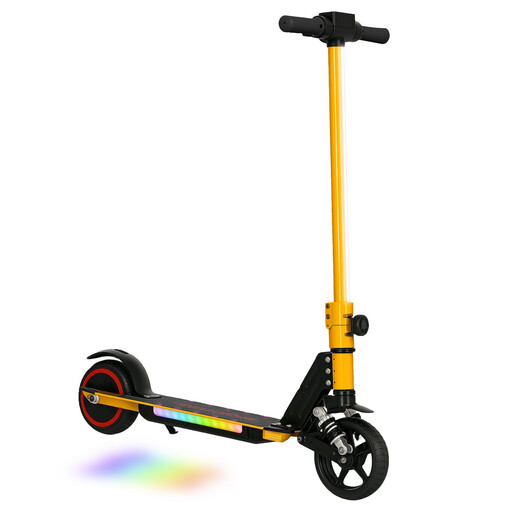
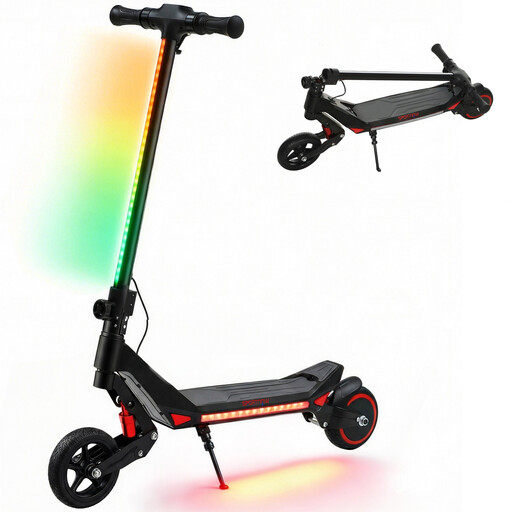
These two SPORTNOW models are child-focused electric scooters for permitted private-land sessions. Check the intended rider and site before comparing their stated features; neither is a choice for a journey that requires public riding.
 No image available
For a child aged 6–14 riding on permitted private land; check that the rider is within the model's stated load limit.
The product title states up to 14 km/h, a maximum range of 6 km and a weight of 6.8 kg, plus front suspension and dual brakes. Check whether the range conditions fit the intended session.
 No image available
For a child aged 6–14 riding on permitted private land; check the rider's weight against the model's stated limit.
The product title states up to 16 km/h, a maximum range of 12 km, kick-to-start operation and an LED display. Check range conditions, scooter weight and charge time if session length or carrying matters.
No. GOV.UK states that a privately owned e-scooter may only be ridden on private land with the landowner's permission. Rules for authorised rental scooters in official trial areas are separate.
Yes. GOV.UK requires the landowner's permission for riding a privately owned e-scooter on private land. Confirm who controls the entire intended riding area before buying.
Yes, if the journey is within an official English rental-trial area and you meet its licence and operator requirements. GOV.UK permits authorised rentals on roads other than motorways and in cycle lanes within trial areas, but not on pavements.
An e-bike that meets EAPC requirements is an option when you need personally owned pedal assistance for public-road cycling. GOV.UK says a qualifying EAPC can be treated as a conventional pedal cycle for the stated legal purposes; the rider must be at least 14.
No. Compare the stated test conditions and charging time with your planned private-site sessions. Segway notes that actual range can vary with rider load, temperature, surface, speed, tyre pressure and riding habits.