
24/7 Customer Support

Free returns

Same-day & Next-day Delivery

Quality Guaranteed

Unlock Your Welcome Offers: FREE Delivery | Up to 80% OFF | Free 30-day JoyPlus trial
Download the APP
As a Joybuy Product Recommendation Officer, my role is to help you navigate the crowded market of home health gadgets. The rise of the ear wax removal camera offers a new level of visibility for at-home ear care, but not all devices are created equal. Many UK shoppers are drawn in by promises of a quick, high-tech fix, only to be let down by poor performance or, worse, unsafe designs.
Before you add a visual ear cleaner to your basket, it’s crucial to understand the common pitfalls. Many products are plagued by a few recurring issues that can turn a helpful tool into a frustrating waste of money.
To avoid these traps, focus on a few key technical specifications. These non-negotiable features are what separate a reliable home ear wax removal tool from a potential hazard.
The entire purpose of a visual ear cleaner is to see clearly. Don't be swayed by vague marketing terms. Look for a specific camera resolution, ideally 5 megapixels (MP) or higher. A higher resolution provides a sharper, more detailed image, allowing you to distinguish between wax, skin and hair with confidence.
Equally important is the lighting. The device should have multiple built-in LED lights surrounding the lens. This ensures the ear canal is brightly and evenly illuminated without creating harsh shadows, which is essential for accurate depth perception. A good ear wax removal tool with light is a fundamental requirement.
This is a critical safety checkpoint. The part of the tool that enters your ear must be made from a soft, flexible and body-safe material. Look for devices that provide tips made from medical-grade silicone. This material is gentle on the ear canal and reduces the risk of scratches.
A quality ear cleaning kit with camera should also include a variety of scoop sizes and shapes. This allows you to choose a tip that is appropriate for your ear canal size and the type of wax you are removing, ensuring a more comfortable and effective experience.
A modern ear scope for iPhone or Android device relies on a seamless connection. Before purchasing, check user reviews for comments on the stability of the Wi-Fi connection and the functionality of the companion app. A reliable digital otoscope will have a dedicated, well-maintained app that provides a stable, real-time video stream. The setup process should be straightforward, allowing you to connect quickly without technical frustration.
After filtering products based on the essential safety and performance criteria above, one model consistently meets the requirements for a reliable and user-friendly experience.
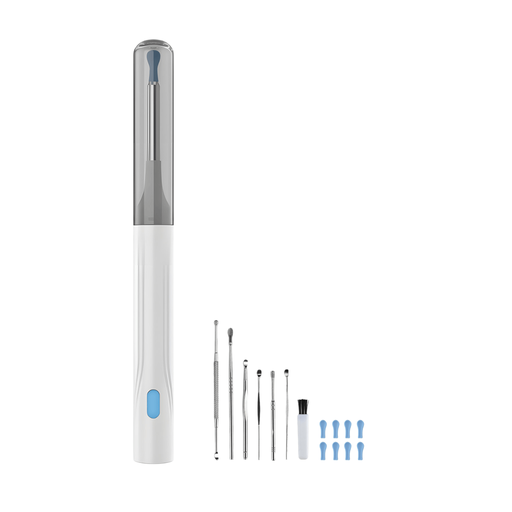
Why This Fits Their Persona: This device is well-suited for UK families or individuals who are comfortable using smartphone-connected gadgets. It provides the clarity and safety features needed for parents to confidently check their children's ears or for adults to manage their own ear hygiene with precision.
It directly counters the common pitfalls with its high-specification 8MP camera, which delivers a genuinely clear image and its inclusion of soft, 3.5mm silicone tips that prioritise the safety of the ear canal. The dedicated app ensures stable connectivity.
The combination of an 8MP camera and 6 bright LED lights provides an exceptionally clear and well-lit view, which is the most important factor for safe use. It also comes as a complete kit with multiple tips and traditional cleaning tools.
We have compiled a complete, real-time list of products that fully satisfy these strict selection criteria and UK safety regulations.
When used correctly, a safe ear cleaner with a camera can be a more controlled method than cleaning blindly with cotton buds. The key to safety is choosing a device with the features mentioned above—a clear camera, soft tips and good lighting. Always follow the manufacturer's instructions, never insert the tool too deeply into the ear canal and avoid using it if you have pain, an infection or a history of ear surgery. If in doubt, consult your GP or an audiologist.
Most modern devices are designed for simple setup. The process generally involves:
These tools are intended for inspection and the removal of excess, visible wax in the outer part of the ear canal. They are not meant for aggressive, daily "cleaning." The body produces earwax for protection, and over-cleaning can disrupt this natural process. It is advisable to use the device only when you feel symptoms of a blockage or for periodic checks, rather than as part of a daily hygiene routine.