Low-volume commentary listeners
If voices and score updates are difficult to follow, look for a comfortable seal and direct volume controls. Do not assume a sound profile intended for music will make speech clearer.


Choose earbuds that fit comfortably and let you adjust spoken commentary without turning it up to compete with background noise. Active noise cancellation (ANC) may help when there is noise around you, but it does not guarantee that nearby readers cannot hear your playback. Check the fit and volume at a restrained level, and make sure you can pause or hear an announcement when needed.
If voices and score updates are difficult to follow, look for a comfortable seal and direct volume controls. Do not assume a sound profile intended for music will make speech clearer.
If you expect to listen through several spells of play, compare the earbuds’ stated single-charge runtime with ANC on, rather than relying on a figure that includes recharging from the case.
If you may need to hear staff or announcements, consider how easily you can pause playback or switch to an ambient or transparency mode. Check that the controls work with the device you will use.
For cricket commentary in a quiet library, start with fit and a restrained listening volume. Then match the earbuds’ controls and single-charge runtime to the way you expect to follow a live session.
| Concern | What to check | Who this matters to |
|---|---|---|
| Speech at a restrained volume | Check the in-ear fit, ANC and whether you can adjust volume on the earbuds. | If I have to raise the volume to catch a change of speaker or a score update, I need a better way to follow the speech. Around 36% of consumers put low-volume speech clarity first. |
| Discretion and fit | Try the supplied tips for comfort and check for audible playback near another person at a low volume. | I want to follow the match without disturbing the reader beside me, but the earbuds must remain comfortable. Keeping playback discreet is the main concern for around 29% of consumers. |
| Session length | Compare stated single-charge playback with ANC on, not just total listening time with the case. | A live match may outlast a short study break, so I need the earbuds to last through the period I intend to hear. Around 21% of consumers prioritise session length. |
| Awareness and controls | Check how quickly you can pause, lower volume or switch listening modes. | When staff speak or an announcement starts, I need to respond without fumbling with my phone. Quick awareness and playback control come first for around 14% of consumers. |
ANC addresses sound reaching the wearer; it is not a promise that someone nearby cannot hear the commentary.
Choose a comfortable seal, start at a low volume and check whether spoken playback is audible to someone sitting close by before using the earbuds in a silent area.
Case-total listening time includes recharging and does not tell you how long the earbuds will play without interruption.
Compare each model’s stated single-charge runtime under the listening settings you plan to use. Manufacturer figures can vary with settings and use.
Tips that loosen or become uncomfortable can make it harder to listen at a restrained volume. Apple lists five tip sizes for AirPods Pro 3; Bose supplies three tip sizes and three stability-band sizes with QuietComfort Ultra Earbuds (2nd Gen).
Check the fit options for the exact model and assess comfort with spoken audio at a low volume.
According to their product information, Apple sells the AirPods Pro 3 USB-C charging cable separately, while Bose supplies a cable with QuietComfort Ultra Earbuds (2nd Gen) but not a power adaptor.
Check the contents of the exact listing against the charging equipment you already have.
You may need to supply a compatible cable or USB power adaptor.
Sony lists the WF-1000XM5 as a closed true-wireless model with ANC, Ambient Sound Mode, onboard volume control and multipoint connection.
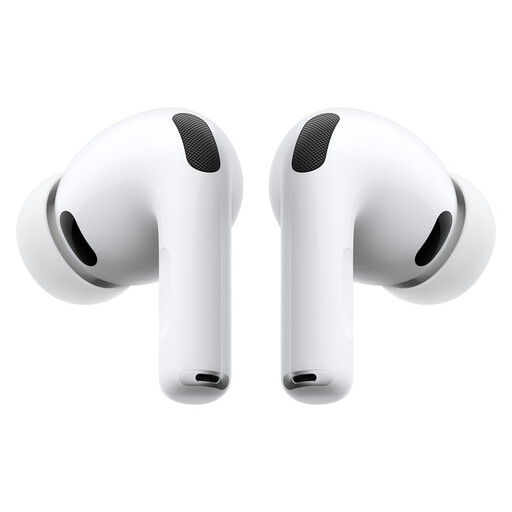
Apple lists ANC, Transparency, Conversation Awareness, swipe volume controls and five ear-tip sizes for AirPods Pro 3.
Bose QuietComfort Ultra Earbuds (2nd Gen) have adjustable noise cancelling, three ear-tip sizes and three stability-band sizes.
These in-ear noise-cancelling earbuds are options to examine for spoken commentary in a quiet shared space. Compare their fit, controls and listening time for your own session rather than treating ANC alone as a measure of discretion.
 No image available
Consider these if adjusting commentary volume on the earbuds and switching to hear someone nearby matter to you.
Apple lists ANC, Transparency, Conversation Awareness, swipe volume controls and five ear-tip sizes for AirPods Pro 3. Check the fit and your device’s available features; the USB-C charging cable is sold separately.
 No image available
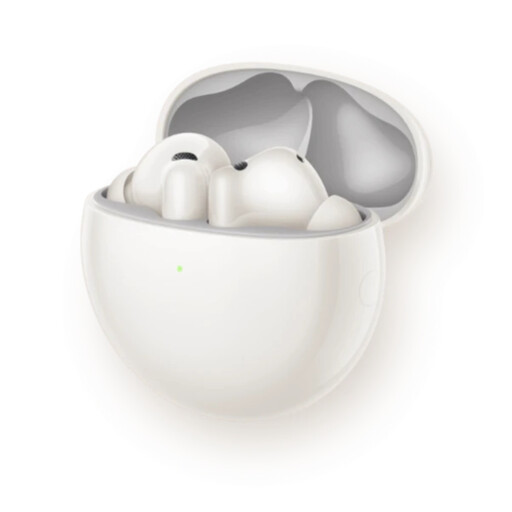
For spoken commentary in a shared space, assess whether these in-ear earbuds fit securely at a low listening volume.
Check the controls, listening modes and single-charge runtime for the settings you intend to use. Noise cancelling does not establish that playback will be inaudible to nearby readers.
 No image available
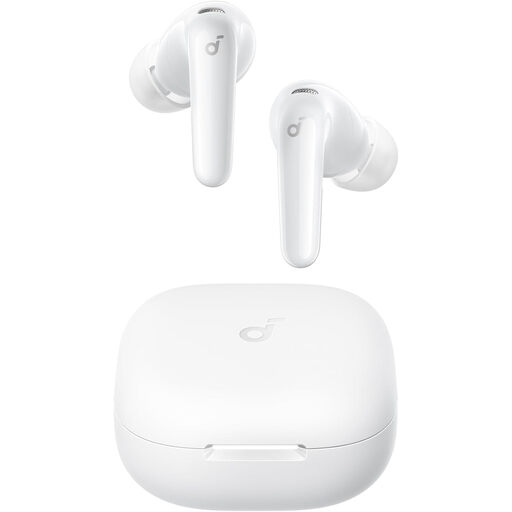
Consider these in-ear noise-cancelling earbuds if you can check their fit and playback controls before relying on them for a library session.
If hearing announcements matters, check how this model handles awareness or pausing. Test spoken audio at a restrained volume rather than assuming noise cancelling prevents leakage.
No. ANC is not a guarantee against sound leaking from the earbuds. Start with a secure, comfortable fit and a low volume, then check whether a spoken stream is audible to someone close by before using it in a silent study area.
Use an awareness mode when you need to hear staff, an announcement or someone addressing you; you need not leave it on throughout the commentary. Sony lists Ambient Sound Mode for WF-1000XM5, while Apple lists Transparency and Conversation Awareness for AirPods Pro 3. Check how to switch modes or pause on the earbuds you choose.
Use the lowest volume at which you can comfortably follow the speech. The World Health Organization advises keeping personal-audio volume below 60% of maximum and notes that listening risk rises with both sound level and duration; do not keep raising the volume to compensate for a poor fit or background noise.