For an Easter pasta meal, compare total sugars per 100g across sauces you would use in the same way, rather than choosing by a ‘no added sugar’ or ‘low fat’ claim alone. Then check salt, ingredients, allergens and how much sauce you will need: the sauce with the lower sugar figure may not fit every guest or dish.
Who is this for?
Hosts comparing total sugars
If you are making pasta for several people at Easter, compare the sugars figures per 100g on similar sauces before deciding how much to use. NHS food-label guidance explains that packs may also give figures per portion, which may differ from the amount you serve.
Cooks planning a shared meal
A ready-to-use sauce may suit a meal with little preparation time. Check the pack weight and stated servings against your number of diners rather than assuming one jar will cover the meal.
Hosts serving guests with different needs
Check the exact sauce’s ingredients, dietary labelling and allergen statement. If guests want different additions, a base sauce can leave room to prepare those separately.
What matters when choosing a sauce?
Start with comparable per-100g labels, then make sure the sauce works for the people you are feeding and the dish you intend to cook.
| Concern |
What to check |
Who this matters to |
| Total sugars |
Compare ‘of which sugars’ per 100g on similar sauces; read the ingredients if an added-sugar claim matters to you. |
If I am choosing between sauces for the same pasta dish, I want the total-sugars figures to guide me more than the wording on the front of the jar. About 50% of consumers put this comparison first. |
| Meal planning |
Check pack weight, stated servings and whether the sauce is ready to use or needs further preparation. |
When I am feeding a group, I need enough sauce and a preparation method that fits the time I have. Roughly 30% of consumers place that planning need first. |
| Guest suitability |
Read the exact pack’s ingredients, dietary information and allergen statement. |
If guests have different food requirements, I need to know who can eat the sauce before choosing additions for the dish. Around 20% of consumers make guest suitability their primary concern. |
Common buying mistakes
-
Reading ‘low fat’ as ‘no added sugar’
These claims describe different features. Sainsbury's lists 3.6g sugars per 100g for Dolmio Bolognese Low Fat Pasta Sauce, and its ingredients include sugar.
Read the sugars line and ingredients on the exact sauce, then check salt as well.
-
Assuming a ‘no added sugar’ claim gives the lowest total-sugars figure
The claim does not provide a like-for-like total-sugars comparison. A named no-added-sugar Bolognese sauce, for example, needs its own nutrition panel checked before it can be compared with another jar.
Compare the current packs’ per-100g sugars figures, and confirm that the particular sauce you want is available before planning the meal around it.
-
Comparing portions of different sizes
NHS food-label guidance notes that nutrition information is given per 100g or 100ml and may also be shown per portion. A manufacturer’s portion may not match the amount you put on each plate.
Use per-100g figures to compare jars, then work out quantities from the sauce you expect to serve.
-
Checking sugar but overlooking allergens
A sugars figure cannot establish whether a sauce suits a guest with an allergy. Marks & Spencer's Tomato and Basil Pasta Sauce, for instance, carries milk and egg allergy warnings.
Read the current allergen statement for each sauce you shortlist, including any toppings or other ingredients you plan to add.
Brands to consider for pasta sauce
Dolmio
Dolmio has Bolognese sauces with different label claims, so compare the particular variety rather than treating them as interchangeable.
- Sainsbury's lists 3.6g sugars and 0.7g salt per 100g for Dolmio Bolognese Low Fat Pasta Sauce 450g.
- That low-fat sauce lists sugar as an ingredient. A separately listed no-added-sugar Bolognese sauce needs its own total-sugars figure checked before comparison.
M&S
The Eat Well Tomato and Basil Pasta Sauce provides a labelled tomato-and-basil option to compare with other ready-to-use sauces.
- Marks & Spencer lists 4.3g sugars, 0.60g salt and 0.6g saturates per 100g for this sauce.
- Its ingredients include sugar, and its label warns that it is not suitable for people with milk or egg allergy.
Barilla
Barilla describes its Bolognese Base Sauce as a tomato-based sauce that can be served with pasta or developed into a ragù.
- The 400g base offers a way to plan additions separately when guests want different components.
- Check the current jar’s sugars and allergen information before comparing it with finished sauces or serving it to guests with specific requirements.
Pasta sauces on Joybuy
These selections cover a carbonara-style pasta bake sauce and tomato-based sauces for an Easter pasta meal. Choose the format for your dish, then check the current pack’s nutrition and allergen information before buying.
 No image available
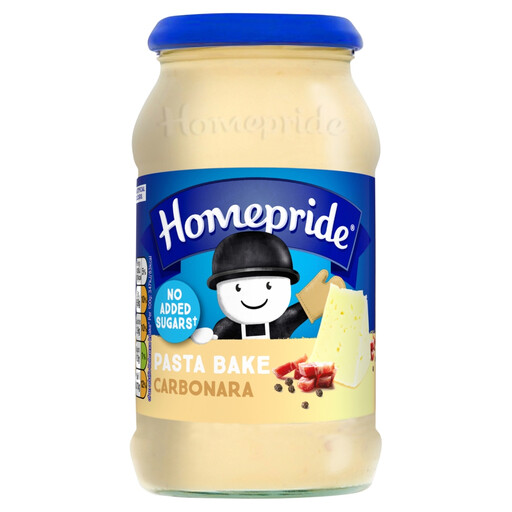
Homepride No Added Sugar Carbonara Pasta Bake 485g
Consider this for a carbonara-style pasta bake rather than a sauce to stir through cooked pasta. It contains bacon; if serving guests with allergies, check the current pack for milk, barley, celery and egg information. Use the 485g pack weight and your planned portions to decide how much you need.
View on Joybuy
 No image available
Heinz Tomato Mascarpone & Grana Padano Pasta Sauce 350g
Consider this when a tomato-and-cheese sauce suits the pasta you plan to serve. If avoiding added sugar matters to you, check the current pack’s claim and ingredients together, particularly the listed apple juice concentrate. Check the milk and egg allergen information before serving guests with allergies.
View on Joybuy
 No image available
Mutti Tomato & Chilli Pasta Sauce 400g
Consider this if tomato and chilli fit the dish and your guests’ preferences. Check the current pack’s warning about possible milk and nut traces when catering for allergies, and plan the amount to serve from the 400g pack weight.
View on Joybuy
Questions about pasta sauce labels
Does ‘no added sugar’ mean a pasta sauce has the lowest total sugars?
No. The claim and the total-sugars figure answer different questions. To compare sauces intended for the same dish, read ‘of which sugars’ per 100g on each current nutrition panel.
What should I compare besides sugars?
Check salt, saturates and the ingredients and allergen statement, as well as the amount you expect to serve. NHS food-label guidance recommends using per-100g information to compare products; per-portion figures are useful only when that portion resembles yours.
How do traffic-light labels help when choosing a sauce?
They give an at-a-glance indication for nutrients including sugars and salt where the label is provided. GOV.UK advises using traffic-light information to compare products; read the nutrition panel for the exact per-100g figures and your planned serving.
Is a vegan-labelled tomato sauce suitable for guests with allergies?
Not necessarily. Read the exact pack’s allergen statement: Marks & Spencer describes its Tomato and Basil Pasta Sauce as vegan and vegetarian, while also warning that it is not suitable for people with milk or egg allergy.
How should I store pasta sauce after opening?
Follow the storage and use-after-opening instructions on the particular jar. These directions can differ between sauces, so check them when planning how many jars to open for your meal.


