Hosts serving several people
If pasta is part of your Easter lunch, pack size and stated servings help you work out how much sauce to buy. Tesco, Sainsbury’s and Asda each list 500g tomato-based options, though their flavours differ.


For an Easter Sunday pasta lunch, start with a 500g own-label sauce if its flavour and stated servings suit your guest count. A bolognese jar, smaller stir-in sauce or fresh sauce may fit better when the recipe or storage needs differ; check the exact pack’s ingredients, allergens and date marking before serving.
If pasta is part of your Easter lunch, pack size and stated servings help you work out how much sauce to buy. Tesco, Sainsbury’s and Asda each list 500g tomato-based options, though their flavours differ.
If you want a defined recipe for a pasta main, Dolmio describes its 450g Original Bolognese jar as serving four and gives instructions using mince and pasta. Scale the ingredients to your guest count.
If guests have allergies or dietary preferences, check the ingredients, allergen declarations, dietary claims and storage directions on the exact pack you intend to serve.
Decide whether pasta is the main course or a side, then match the sauce’s format and flavour to that plan.
| Concern | What to check | Who this matters to |
|---|---|---|
| Making each pack go further | Compare pack weight and stated servings; check that the sauce suits the dish you plan to make. | If I am serving several guests, I want to avoid buying more sauce than the meal needs. About 40% of consumers put efficient use of each pack first. |
| Portions and meal format | Check servings for the exact product and whether it is a pasta-main sauce or a smaller stir-in format. | When pasta is the main course, I need enough sauce for everyone rather than assuming one jar will do. Roughly 30% of consumers prioritise portions and meal fit. |
| Ingredients and labels | Read the physical pack’s ingredients, allergens, dietary claim, storage directions and date mark. | If a guest has an allergy or dietary requirement, I need to check the sauce I will actually serve. Around 20% of consumers make label certainty their primary concern. |
| Flavour and preparation | Match mushroom, chilli, bolognese or sundried-tomato flavours to the menu; check how the sauce is used. | For a particular pasta dish, I want a flavour and preparation method that fit the recipe. About 10% of consumers put that match first. |
Pack weights and serving guidance vary, and a smaller stir-in sauce is not the same format as a 500g tomato sauce.
Count your guests, decide whether pasta is the main or a side, and use serving guidance for the exact product.
Sainsbury’s cited tomato-and-basil sauce contains mushrooms, Asda lists a spicy tomato option, and Napolina’s sundried-tomato sauce is designed to be stirred into hot pasta.
Choose the flavour and preparation method alongside the pasta dish and guests’ preferences.
Vegetarian and vegan descriptions apply to particular products. Tesco advises that ingredients and allergens can change when foods are reformulated.
Check the exact physical pack for ingredients, emphasised allergens and dietary claims before serving guests with specific requirements.
GOV.UK distinguishes use-by dates, which concern safety, from best-before dates, which concern quality.
Follow the pack’s storage directions and do not serve food after its use-by date. A best-before date calls for a different quality check, provided the food has been stored correctly.
These brands illustrate different sauce formats and recipes; check the exact product rather than treating a brand name as a guide to every jar it makes.
Tesco Groceries lists a 500g Tomato & Basil Sauce For Meatballs.
Sainsbury’s lists a 500g tomato, mushroom and basil pasta sauce described as serving four.
Asda lists 500g tomato-and-basil meatball sauce and a separate spicy tomato pasta sauce.
Dolmio describes its 450g Original Bolognese jar as serving four.
Napolina’s 250g Sundried Tomato & Basil Stir-In is designed to be mixed into hot pasta.
M&S describes a fresh 350g tomato-and-basil sauce and a separate 340g cupboard sauce.
These selections cover a pasta bake, bolognese sauces and tomato-and-basil sauces for an Easter lunch. Choose by recipe and pack size, and check each pack against your guests’ requirements.
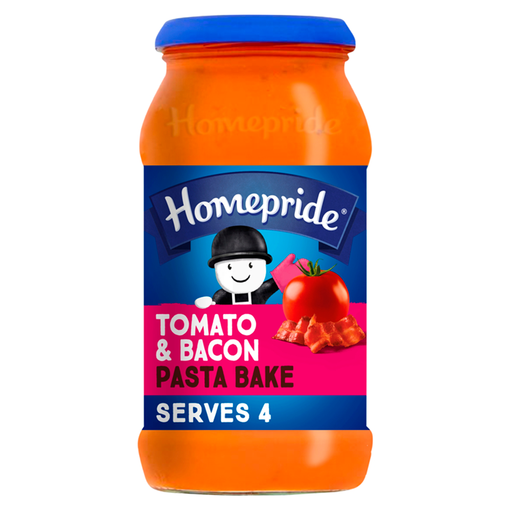 No image available
For a planned pasta bake, this 485g sauce has a creamy tomato-and-bacon flavour. Check the pack’s ingredients and allergens before serving guests with dietary requirements; the sauce alone is not the complete dish.
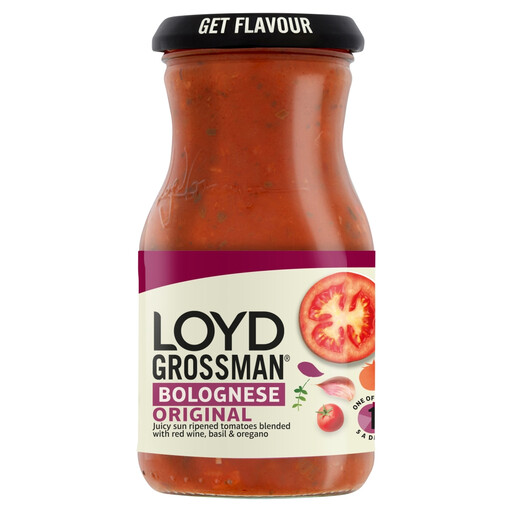 No image available
For a bolognese-style pasta dish, this is a 350g jar. Plan any additional recipe ingredients separately, and check the pack’s ingredients and serving guidance for your guests.
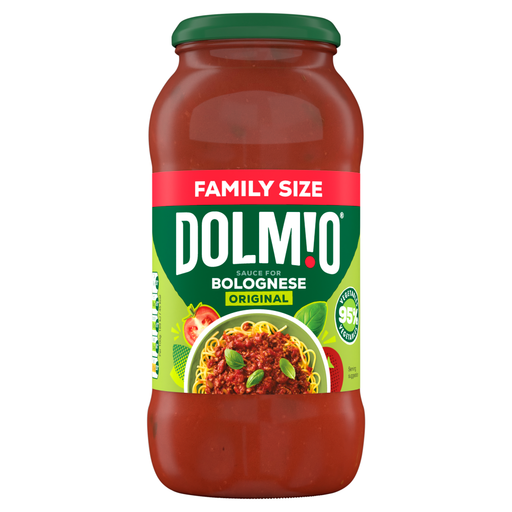 No image available
For a bolognese-style pasta lunch, this jar contains 675g. Work out the quantity needed for your guest count using guidance for this exact size; do not apply the serving count of Dolmio’s separate 450g jar.
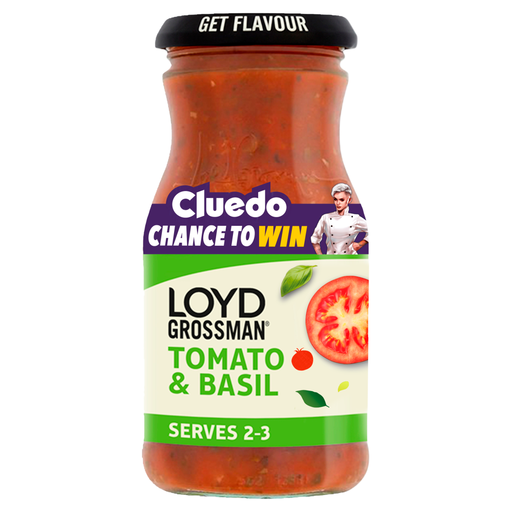 No image available
For a tomato-and-basil pasta dish, this is a 350g jar. Check serving guidance for the number of guests and read the physical pack’s allergen declaration before serving, particularly where nuts are a concern.
 No image available
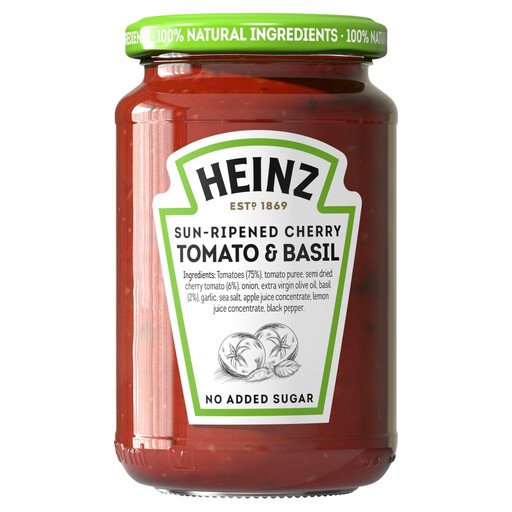
For a pasta dish where cherry tomato and basil suit the menu, this sauce comes in a 350g pack. Check its serving guidance and ingredients against your meal plan before deciding how many packs you need.
Start with the pack weight, stated servings and intended use of each sauce. Decide whether pasta is the main course or a side, then scale the sauce to the guest count rather than assuming a smaller stir-in pack replaces a larger tomato jar.
No: dietary claims apply to the exact product, not every tomato sauce. Asda labels its cited Tomato & Basil Sauce for Meatballs suitable for vegetarians, while M&S describes its cited fresh Tomato and Basil Sauce as vegan-friendly. Check the physical pack’s ingredients, allergens and claims for the sauce you will serve.
GOV.UK says use-by dates concern food safety, while best-before dates concern quality. Follow the sauce’s storage instructions and do not serve it after its use-by date; food past its best-before date needs a quality check and must have been stored correctly.
Yes, if you intend to make the sauce yourself. Napolina describes its passata as a sieved-tomato base for pasta sauce, not a direct replacement for a finished recipe; allow for the additional ingredients, seasoning and cooking your dish requires.