Households feeding a mixed-age group
Children and adults may want different amounts. Count the diners, consider what else is on the Easter lunch table and check how many pizzas the oven can cook in time for serving.


Choose a larger frozen pizza when guests are happy to share one topping and the oven can accommodate it; choose several smaller pizzas when toppings differ or pizza is being served with sides. Add a separately labelled option for a dietary requirement, checking the current pack rather than relying on its name. No pack weight or “family” description guarantees a guest count, so plan the number of pizzas around diners, appetites, sides and the space available to store and cook them.
Children and adults may want different amounts. Count the diners, consider what else is on the Easter lunch table and check how many pizzas the oven can cook in time for serving.
If one shared topping will not suit everyone, several smaller pizzas offer a way to divide the menu. Check that there is enough freezer and oven space for the number of packs chosen.
A separately labelled pizza may be needed, but its name is only a starting point. Read the current pack’s ingredients, allergen declaration and precautionary statements against the guest’s specific requirements.
Decide whether the meal centres on one shared pizza or needs a choice of toppings, then work out the quantity and cooking schedule from the exact packs you intend to serve.
| Priority | What to check | Your needs |
|---|---|---|
| Quantity | Compare each pack’s weight and nutrition reference portion. Count diners and side dishes; do not treat a reference portion as a guaranteed serving. | How much pizza will we need if some guests eat more than others, or the sides make up a substantial part of lunch? |
| Menu choice | Check the crust and toppings on each pack. One larger pizza offers one shared combination; several smaller pizzas allow different choices but take up more space. | One topping might suit our group, or we may need separate choices for guests with different preferences. |
| Storage and cooking | Check the frozen-storage directions, freezer space, oven temperature, shelf position, tray requirement and cooking time for every product. | Can I store the packs until Sunday and get every pizza cooked thoroughly in the oven time available? |
| Dietary suitability | Read the current pack’s full ingredients, allergens and “may contain” statements. Check a gluten-free or vegan product against every relevant requirement. | A guest needs a suitable separate choice, and I cannot decide that from the topping or front-of-pack wording alone. |
Pack weights and nutrition reference portions describe the product, not how much every guest will eat. A pizza-centred lunch may need a different quantity from a lunch with several sides.
Plan from the number of diners, likely appetites and the rest of the menu. If the group size or appetite is uncertain, decide whether an additional pizza can be stored and cooked.
Dr. Oetker’s gluten-free mozzarella pizza contains milk and may contain soya and mustard, while its vegan pepperoni-style pizza contains wheat and may contain traces of milk constituents.
Check the exact current pack against each guest’s dietary and allergen requirements before buying and serving it.
Different pizzas can call for different shelves, trays and cooking times. Chicago Town’s cited stuffed-crust pizza uses a baking tray, whereas Goodfella’s Stonebaked Thin Cheese & Ham is cooked directly on an oven shelf.
Check where the packs will fit in the freezer, then make an oven schedule from each pack’s directions rather than assuming they can all cook together.
The time on a pack is part of its cooking directions, not a reason to skip the finished-product check.
Follow the exact pack instructions and make sure each pizza is thoroughly cooked before serving. Allow hot toppings and crust to cool enough to handle before cutting.
These product examples show differences worth checking on the pack; a brand name alone does not establish portion size, cooking directions or dietary suitability.
Its Takeaway stuffed-crust range is one route to a larger pizza with a shared topping. Chicago Town lists its Loaded Pepperoni example as a 640g product.
Goodfella's Stonebaked Thin Cheese & Ham provides an example of a thinner pizza to consider when assembling a menu with more than one topping.
The Ristorante range includes standard flavours as well as separately labelled gluten-free and vegan variants, allowing different products to be considered for different guests.
These options cover larger stuffed-crust pizzas for a shared topping and one smaller Ristorante pizza for a menu with more than one choice. Use the pack weight to help plan quantities, not as a fixed number of diners.
 No image available
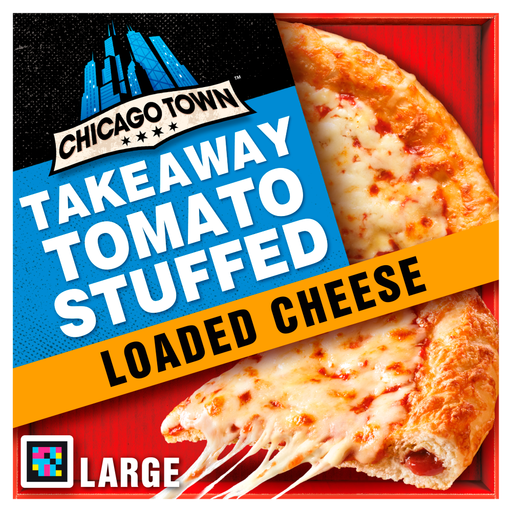
A 630g cheese-topped option when guests are happy to share one flavour. Its weight does not establish how many people it will feed; plan around appetites and sides. Contains milk and wheat and may contain mustard and soya, so check the current pack against guests’ requirements.
 No image available
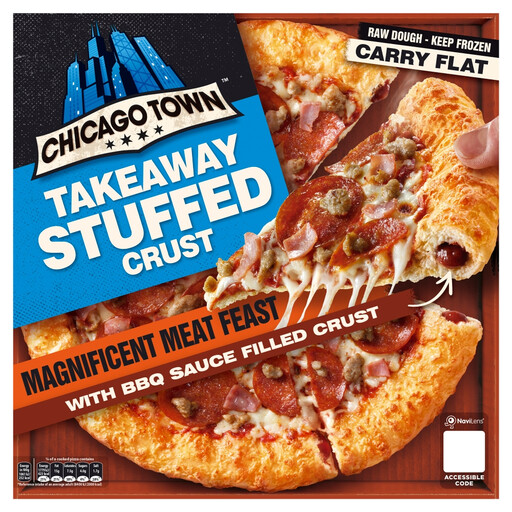
A 640g stuffed-crust choice for guests who want a shared meat-topped pizza; the toppings include pepperoni, ham and fennel sausage. Allow for sides when deciding how many packs to buy. Contains wheat, milk and barley, with further precautionary allergen statements to check on the current pack.
 No image available
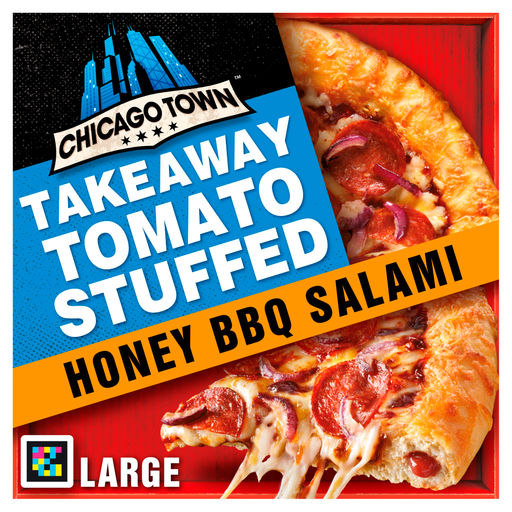
A 635g stuffed-crust pizza with honey BBQ and salami for a group sharing that topping. Do not use the pack weight as a promised headcount. Contains wheat and milk and may contain soya and mustard; check the current pack before serving guests with dietary requirements.
 No image available
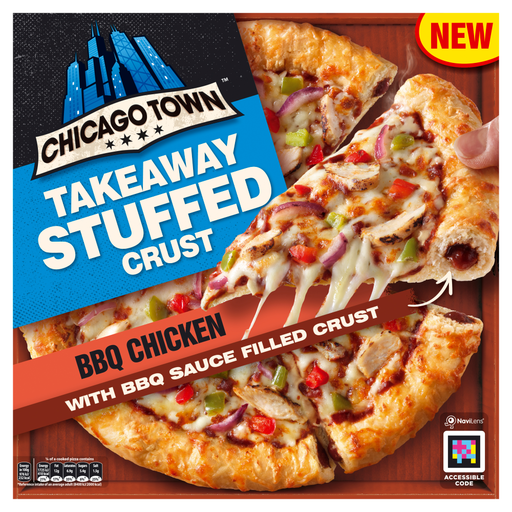
A 668g BBQ chicken pizza with a BBQ sauce-filled crust for guests sharing that flavour. The pack size does not guarantee a number of servings. Check its cooking temperature, time and tray or shelf directions before fitting it into the lunch schedule, and read the current ingredients and allergens.
 No image available
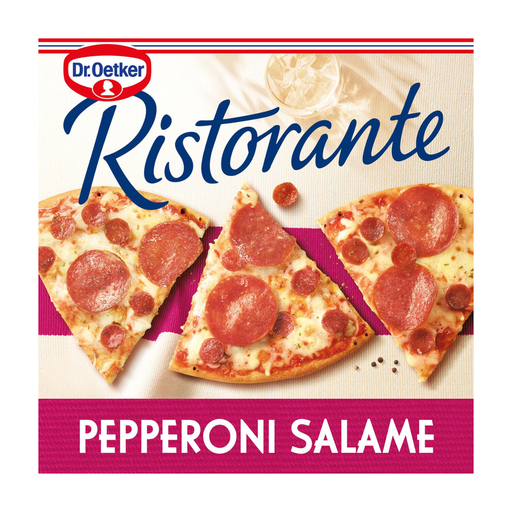
A 320g pepperoni salame option to consider when serving more than one pizza or offering sides. Work out the number of packs from the group and menu rather than assuming it replaces a larger sharing pizza. Contains wheat and milk; check the current pack’s full allergen statements.
There is no fixed number based on a “family” label or pack weight. Count the diners, consider their appetites and how much of lunch will come from sides, then compare the weights and reference portions on the exact packs. A nutrition reference portion is not a guarantee that it will satisfy every guest.
Only if you can follow each pack’s temperature, shelf or tray directions and cooking time while making sure every pizza is thoroughly cooked. For example, Chicago Town directs its cited stuffed-crust pizza onto a baking tray, while Goodfella's directs its cited thin pizza onto an oven shelf without a tray. Stagger cooking if the directions or available space require it.
No. Dr. Oetker’s cited gluten-free mozzarella pizza contains milk and may contain soya and mustard; its cited vegan pepperoni-style pizza contains wheat and may contain traces of milk constituents. Check the current pack against the guest’s particular requirements.
Check that the packs will fit in the freezer and follow each product’s storage directions. The cited Goodfella's thin pizza specifies storage at −18°C and says not to refreeze after defrosting; read the directions on every pack you choose rather than applying one product’s instructions to all of them.
Use it as an initial check, then read the packaging of the product received before serving. Goodfella's advises checking its pack for possible ingredient and nutrition changes, which matters when a guest needs to avoid a particular ingredient or allergen.