For an Easter fruit salad, topping or dessert where avoiding added sugar matters, start with tinned fruit in juice or water and check the exact pack’s ingredients and sugars per 100g. No added sugar does not mean sugar-free. Choose the fruit cut and pack size for the servings you need; light syrup remains an option when its sweetness is part of the recipe.
Who is shopping for Easter fruit?
Shoppers avoiding added sugar in desserts
If the fruit is going into a salad, yoghurt or a pudding, the packing liquid matters as much as the fruit on the front of the tin. The NHS advises choosing canned fruit in natural juice or water with no added sugar; compare the exact product’s ingredients and sugars per 100g as well.
Hosts planning several servings
For a family table, check how much fruit the pack contains after draining, not just its total weight. Match that amount to the portions you intend to serve and read the after-opening instructions if some will be left over.
Shoppers following a sweeter recipe
If the recipe calls for the sweetness or liquid from a syrup-packed tin, select that variant deliberately. Tesco Groceries and Princes Food and Drinks list peach products in both juice and light syrup, so the brand or fruit name alone will not settle the choice.
What matters when choosing a tin?
Decide whether avoiding added sugar, getting the right serving quantity or matching a recipe matters most; then check the exact variant rather than relying on its front label.
| Concern | What to check | Who this matters to |
|---|
| Added and total sugars |
Read the packing liquid and ingredients, then compare sugars per 100g between similar fruit products. Juice-packed fruit can still contain naturally occurring sugars. |
If I want fruit for an Easter pudding without choosing syrup by default, I need to distinguish added sugar from the sugars already in fruit and juice. About 42% of consumers put avoiding added sugar first. |
| Servings and leftovers |
Compare net and drained weights with the amount you plan to serve. Check the pack’s refrigeration and use-by instructions after opening. |
When several guests are sharing a dessert, I want enough fruit but not an opened tin I cannot use promptly. Getting the serving quantity right is the primary concern for about 33% of consumers. |
| Recipe fit |
Choose the fruit cut and whether the recipe needs juice or light syrup; check the precise variant before buying. |
For a dessert built around a particular sweetness or presentation, I may choose peach halves, slices or mixed fruit for the dish itself. About 25% of consumers make recipe fit their leading concern. |
Label and serving mistakes to avoid
-
Reading “no added sugar” as “no sugar”
Fruit and juice contain naturally occurring sugars. Sainsbury’s lists 13g sugars per 100g for its Nature’s Finest tropical fruit in juice, which is labelled no added sugar.
Use the ingredients to assess what has been added, and the sugars-per-100g figure to compare similar products.
-
Choosing by brand rather than packing liquid
Tesco Groceries lists Del Monte peaches in both juice and light syrup, while Princes Food and Drinks lists separate peach variants. One brand name can therefore cover different recipe choices.
Check the full variant name and ingredients on the tin you intend to serve.
-
Treating “reduced sugar” as “sugar-free”
A reduction describes a comparison; it does not tell you that the fruit contains no sugar or give its total sugars on its own.
Read the sugars-per-100g figure and compare it with a similar fruit product if that claim influences your choice.
-
Overlooking storage and fruit fragments
After-opening instructions differ between products. Sainsbury’s listings also warn that some juice-packed fruit may contain seeds, pit fragments or stems.
Choose a pack size you can use as directed, refrigerate leftovers according to its label and inspect fruit before serving, particularly to children.
Brands and retailers for reference
Del Monte
Tesco Groceries lists Del Monte peach products in juice and in light syrup.
- The two packing liquids make it possible to choose a variant for the intended dessert.
- The brand name alone does not identify which peach product is packed in juice.
Princes
Princes Food and Drinks lists peach slices with juice and a separate light-syrup peach line.
- Its peach-slices-with-juice listing names peaches, grape juice from concentrate and water, and gives 11.8g sugars per 100g.
- Check which peach line you are buying; the juice listing does not describe the light-syrup product.
Tesco
Tesco Groceries lists own-label fruit pots and branded products in its tinned-fruit aisle.
- The aisle includes different fruit forms and both juice-packed and light-syrup options.
- An aisle listing is not a substitute for checking each product’s ingredients and nutrition label.
Sainsbury’s
Sainsbury’s lists Nature’s Finest tropical fruit and mandarins in juice with no-added-sugar wording.
- The individual listings give ingredients, sugars per 100g and after-opening instructions.
- Check the physical pack when buying, as Sainsbury’s notes that product ingredients can change.
M&S
Marks & Spencer’s tinned-fruit range includes grapefruit segments and rhubarb chunks.
- Those fruit types may be useful when a recipe calls for something other than peaches or pineapple.
- Check the individual pack’s liquid, ingredients and nutrition values before treating it as a lower-added-sugar choice.
Joybuy fruit-in-juice selections
These juice-packed pineapple, peach and mixed-fruit products offer different cuts and pack sizes for Easter salads, toppings and desserts. Check each pack’s ingredients and sugars per 100g if avoiding added sugar or comparing total sugars is important to you.
 Image unavailable
Del Monte Pineapple Slices in Juice 435g
The sliced format is an option for arranging over a dessert or adding to a fruit salad. The tin is labelled 435g; compare its drained weight with the amount of pineapple you need, and follow the pack’s instructions for any leftovers.
View on Joybuy
 Image unavailable
Del Monte Peach Halves in Juice 415g
Peach halves suit a dessert where you want to serve or arrange larger pieces rather than slices. The tin is labelled 415g; check the drained weight for portion planning and the ingredients if avoiding added sugar is the deciding factor.
View on Joybuy
 Image unavailable
Princes Pineapple Chunks with Juice 432g
Chunks can go straight into a mixed-fruit dessert when slices are not needed for presentation. The can is labelled 432g; check its drained weight if your recipe specifies an amount of fruit, and read the after-opening storage directions.
View on Joybuy
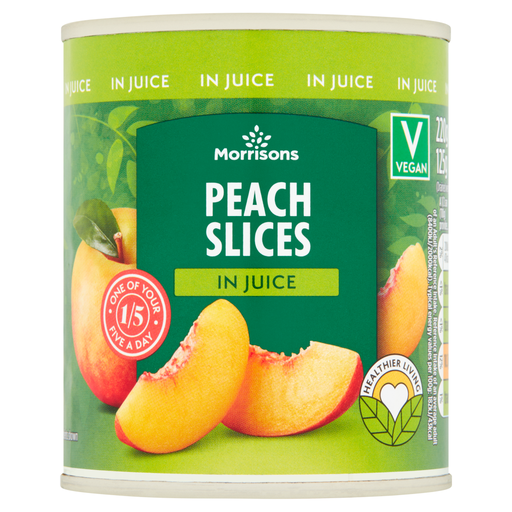 Image unavailable
Morrisons Peach Slices in Juice 220g
The 220g tin offers a smaller peach-slice format for a topping or a limited number of servings. Check how much fruit it provides after draining, and inspect the slices for stone fragments before serving, particularly to children.
View on Joybuy
 Image unavailable
Del Monte Fruit Cocktail in Juice 415g
A mixed-fruit tin is a way to serve several fruit types in one Easter dessert without choosing separate tins. The pack is labelled 415g; check its drained weight for serving quantities and its ingredient list if a particular fruit or colouring matters to your recipe.
View on Joybuy
Questions about tinned fruit
Does “no added sugar” mean tinned fruit is sugar-free?
No. Fruit and fruit juice contain naturally occurring sugars. Sainsbury’s lists 13g sugars per 100g for a Nature’s Finest tropical-fruit product labelled no added sugar, so compare both the ingredients and the sugars-per-100g figure on the product you choose.
Which packing liquid should I look for when avoiding added sugar?
The NHS advises choosing canned fruit in natural juice or water with no added sugar. Check the exact tin’s ingredients as well: products from the same brand can be packed in juice or light syrup.
How should I store fruit left after Easter lunch?
Follow the instructions on the product you opened. Sainsbury’s says to refrigerate its Nature’s Finest tropical-fruit pot after opening and consume it within three days; its Dole pineapple listing calls for transfer to a glass or plastic container, refrigeration and use within five days. Those timings should not be applied to every tin.
Should I inspect tinned fruit before serving it?
Yes, particularly when serving children. Read the product warning and inspect the fruit as you serve it: a Sainsbury’s listing for Nature’s Finest mandarins in juice warns that seeds, pit fragments or stems may be present.


