Easter hosts buying for mixed tastes
For a shared table, egg hunt or selection of gifts, white and dark chocolate offer different flavour directions. Choose formats that suit the occasion, and check what each item contains.


Choose white chocolate when a recipient or recipe calls for a sweet, creamy style; choose dark chocolate with a stated cocoa percentage when cocoa intensity matters. For an Easter table with mixed tastes, both can make sense, but check each product’s ingredients, allergens, format and current availability rather than assuming the two types are interchangeable.
The useful starting point is whether you are buying for one known preference, several tastes or someone whose ingredients need particular care.
For a shared table, egg hunt or selection of gifts, white and dark chocolate offer different flavour directions. Choose formats that suit the occasion, and check what each item contains.
If cocoa intensity matters for a treat or recipe, compare the percentage stated for the exact bar or egg. The word “dark” on its own does not tell you that percentage.
When buying for someone with an allergy or dietary restriction, read the current pack’s ingredients and precautionary allergen statements. Neither a dark colour nor vegan-recipe wording settles whether a product is suitable for that person.
Decide whose tastes and needs the chocolate must suit, then compare the exact products rather than relying on a white or dark category label.
Choose it for: A sweet, creamy Easter treat when that is the recipient’s preference or the recipe calls for white chocolate.
Bear in mind: It does not substitute for a specifically high-cocoa dark option; check fillings and allergens on the particular egg or gift.
Choose it for: A cocoa-forward preference when the product states a cocoa percentage that suits the recipient or recipe.
Bear in mind: “Dark” does not specify one cocoa content or allergen profile, and a bar is a different gift format from an Easter egg.
Choose it for: A shared Easter table or gifts for people with different chocolate preferences.
Bear in mind: Check every component of an assortment; fillings and individual chocolates need not have the same ingredients or cocoa percentage.
| Priority | What to check | Your needs |
|---|---|---|
| Flavour and cocoa | Look for a stated cocoa percentage on a dark product. Check whether that figure describes the egg, its filling or separate chocolates in an assortment. | I’m buying for someone who prefers a creamy white chocolate, or I want a clearly labelled, cocoa-forward dark option. |
| Nutrition panel | Compare sugars per 100 g on the exact products under consideration; also check serving information if portions differ. A cocoa percentage does not replace the nutrition panel. | If sugar content affects my choice, I want figures for the products I might actually buy, not an assumption about every white or dark chocolate. |
| Ingredients and allergens | Read the current pack’s ingredient list and precautionary statements, including those for individual pieces in a selection. Do not treat “dark” or “vegan recipe” as an allergy-safety statement. | When the recipient has an allergy or dietary restriction, I need to check the particular product before giving it to them. |
| Format and timing | Choose between eggs, bunnies, truffles and bars for the intended use. Check the current seasonal range and stock status before relying on a particular Easter item. | For an egg hunt I need an appropriate format; for a recipe or chocolate selection, a bar may also work. I need to know the chosen item is available when I order. |
In a Lindt Easter assortment listed by Waitrose & Partners, different dark components are labelled 48% and 70% cocoa minimum. One gift format can therefore contain chocolates with different cocoa declarations.
If you want a particular cocoa percentage, check which component it describes on the exact pack.
Lindt describes its Excellence 70% bar as made to a vegan recipe but says it is not suitable for people with a milk allergy. Lindt also advises customers to consult the product packaging for definitive ingredient information.
For an allergy-sensitive gift, check the current pack’s ingredients and precautionary statements rather than relying on the chocolate type or a recipe description.
Waitrose & Partners’ Easter category directs shoppers to return for Easter 2027, while its reviewed seasonal product listings are marked unavailable. A product page can remain visible outside its selling season.
Check current stock and the season’s range before planning a basket around a specific egg or gift set.
The Lindt white Easter egg listed by Waitrose & Partners states 56 g sugars per 100 g. That figure describes that product, not all white chocolate or its relationship to every dark product.
Use the per-100-g nutrition panels of the products you are considering for a direct comparison.
These range references can help narrow an Easter search, but the pack and current listing determine the details of any item you choose.
Lindt’s UK Easter range describes white and dark eggs and bunnies, while its Excellence range offers dark bars with stated cocoa percentages.
M&S Food’s 2026 Easter editorial identifies a Collection Single Origin 85% Dark Chocolate Egg and an egg combining 64% dark and blond chocolate.
Cadbury has UK Easter, white-chocolate and dark-chocolate range pages covering conventional gifting formats.
Waitrose & Partners’ listings can be used to compare the stated ingredients, nutrition and allergens of individual branded Easter chocolates.
Galaxy’s UK range highlights milk-chocolate bars and sharing formats, an alternative direction if the recipient prefers milk chocolate.
These Joybuy selections are dark chocolate bars and boxed truffles for the high-cocoa side of an Easter shop. They are not Easter eggs; check the current pack and availability if you need a particular gift format or cocoa declaration.
 No image available
A dark chocolate bar to consider when an Easter recipe or selection calls for a labelled cocoa percentage rather than a seasonal egg. The title states 85% cocoa and the bar weighs 100g.
For an allergy-sensitive purchase, check the current pack for soya and precautionary statements covering milk, nuts, peanuts and cereals containing gluten.
 No image available
A 100g dark bar presented for baking and desserts, with 72% cocoa stated in its title. Choose the bar format if it suits your Easter plans better than a filled egg.
Check the current pack for soya and precautionary statements concerning milk, nuts, peanuts and cereals containing gluten.
 No image available
This 100g dark bar is an option for a chocolate selection where a stated 85% cocoa product is wanted. It is a bar, not an Easter egg.
For allergy-sensitive shopping, check the current pack: the product information lists nuts, milk, soya and sesame seeds without clarifying their status.
 No image available
A 90g dark bar labelled 85%, suitable to consider when a bar fits your Easter selection or recipe. Check the pack if the precise cocoa declaration matters.
The product description gives precautionary warnings for almonds, hazelnuts, milk and nuts; read the current pack before an allergy-sensitive purchase.
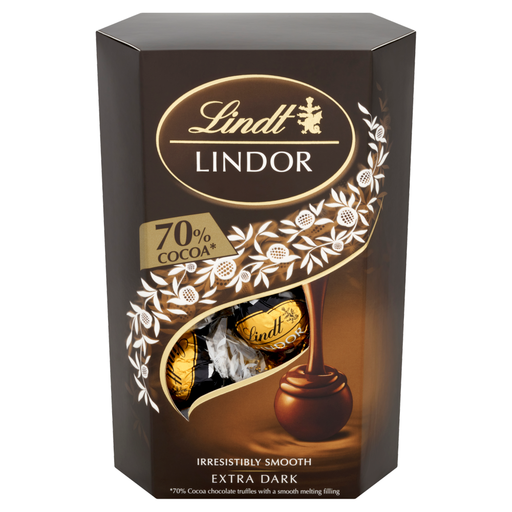 No image available
These 200g boxed dark chocolate truffles offer a sharing or gift format rather than an Easter egg. The title states 70% cocoa, but check the current pack if you need to know precisely which chocolate that percentage describes.
The product information identifies barley, milk and soya and gives a precautionary nut warning; check the pack for the recipient’s needs.
Not when the recipient or recipe specifically calls for a cocoa-forward dark chocolate. Choose white for a sweet, creamy style; for dark chocolate, check the cocoa percentage on the exact product rather than assuming its flavour from the word “dark”.
No. A Lindt Easter assortment listed by Waitrose & Partners includes dark components labelled 48% and 70% cocoa minimum. Read the declaration for the particular egg or piece you intend to buy.
Do not assume so. Lindt says its Excellence 70% bar is made to a vegan recipe but is not suitable for people with a milk allergy, and advises checking product packaging for definitive ingredient information. Check the exact current pack and its precautionary statements before giving chocolate to someone with an allergy.
Read the current pack’s ingredients, allergen statements, cocoa declaration where relevant and nutrition panel. For an assortment, check the information for its different components rather than assuming every piece has the same recipe.
Check the current range and stock status when choosing an item, then recheck before ordering. Waitrose & Partners’ Easter category points shoppers towards Easter 2027, while the reviewed seasonal Lindt listings are marked unavailable; a visible past-season page is not confirmation that an item can be bought now.