For an Easter pasta meal, start with a plain pasta base and check the sauce, tinned additions and salt added during cooking rather than focusing only on a reduced-salt pasta label. Compare salt on the same preparation basis and for the portions you plan to serve: a low-fat sauce is not necessarily reduced in salt, and a reduced-salt tin is not salt-free.
Who is this for?
Whole-meal salt checkers
For an Easter pasta meal, these consumers want to account for the sauce, tinned additions and cooking salt as well as the pasta. The NHS notes that salt already in food and salt added during cooking both count towards intake.
Scratch-cook Easter hosts
These consumers are willing to prepare a topping and decide on seasoning themselves while working out quantities for guests. Tesco and Asda each give a guide of 75g dry pasta per serving for the checked plain pasta products.
Convenience-first group cooks
These consumers want a manageable meal for several people but still need to read the salt figure for a jarred sauce or tinned accompaniment. The checked Dolmio sauce lists four portions, making its stated per-portion figure relevant to that choice.
What matters when shopping?
Choose the pasta and decide how you will prepare it, then check the salt information for the sauce and any tinned additions in the portions you intend to serve.
| Concern | What to check | Who this matters to |
|---|
| Salt across the meal |
Check sauce and add-in salt per serving; account for salt added to cooking water or at the table. |
If I am watching the salt in the finished meal, a plain pasta label alone cannot settle my choice. About 42% of consumers put whole-meal salt first. |
| Seasoning and comparable labels |
Identify whether pasta values are for dry or cooked product; compare salt on a like-for-like basis rather than relying on a low-fat claim. |
When I make the topping myself, I want to choose the seasoning and understand the figures before comparing packs. Controlling seasoning and reading labels is the primary need for about 33% of consumers. |
| Group portions and convenience |
Use the stated pasta serving guide and check sauce or tinned-ingredient salt for the amount each person will have. |
For a meal with several guests, I need quantities I can plan without overlooking what comes in each serving. About 25% of consumers put portion clarity and convenience first. |
What should you avoid overlooking?
-
Checking the pasta but not the finished dish
Tesco and Asda each list 0.02g salt per 100g cooked for the checked plain dried pasta, while Tesco Groceries lists 0.75g per stated portion for the checked Dolmio sauce. Cooking salt and additions also affect what is served.
Choose the pasta base, then check the sauce, tins and other planned additions before deciding where a swap matters.
-
Taking a low-fat claim to mean reduced salt
Tesco Groceries lists 0.67g salt per 100g for the checked Dolmio Low Fat Bolognese sauce and marks its salt level medium. The low-fat description does not answer the salt question.
Read the salt row and serving size on the sauce you intend to use.
-
Comparing dry and cooked pasta figures directly
A salt figure for cooked pasta and one for pasta as sold are stated on different bases. Treating them as identical can distort a comparison.
Check the basis printed beside each figure and compare like with like where possible.
-
Reading reduced salt as salt-free
Tesco Groceries says its checked Reduced Sugar and Salt Baked Beans contain 25% less salt than Tesco standard baked beans, yet lists 0.60g salt per half-can serving.
Check the amount of beans you will serve and include it alongside the rest of the meal.
Brands to consider
These examples relate to particular products and label details, not every pasta or accompaniment sold under each brand.
Tesco
A plain spaghetti example and a separately labelled reduced-sugar-and-salt tinned bean option.
- Tesco Groceries lists 0.02g salt per 100g cooked and 0.03g per 170g serving for the checked spaghetti.
- Its checked reduced-sugar-and-salt beans still list 0.60g salt per half can; check the current pack and the portion served.
Asda
A plain penne example with a stated dry-to-cooked serving guide.
- Asda Groceries lists 0.02g salt per 100g cooked and 0.04g per 180g serving for the checked penne; its guide says 75g dry typically yields 180g cooked.
- Use those figures for the checked product, rather than assuming every Asda pasta variant has the same label.
Barilla
Penne Rigate is an option when that pasta shape suits the sauce you are preparing.
- Barilla lists 0.013g salt per 100g on the checked Penne Rigate nutrition panel.
- Barilla’s cooking guidance suggests adding salt to the water. Decide on cooking salt separately from the pasta’s labelled figure.
Dolmio
The checked Low Fat Bolognese jar offers a ready-made sauce with four stated portions.
- Tesco Groceries lists four 112g portions for this sauce, giving group cooks a stated serving basis.
- The same listing gives 0.67g salt per 100g and 0.75g per portion, with a medium salt indicator; low fat does not mean reduced salt.
Joybuy products for this meal
These plain dried pasta options suit a meal where you choose the topping and seasoning separately. The reduced-sugar-and-salt baked beans are a tinned option if beans are part of your planned meal.
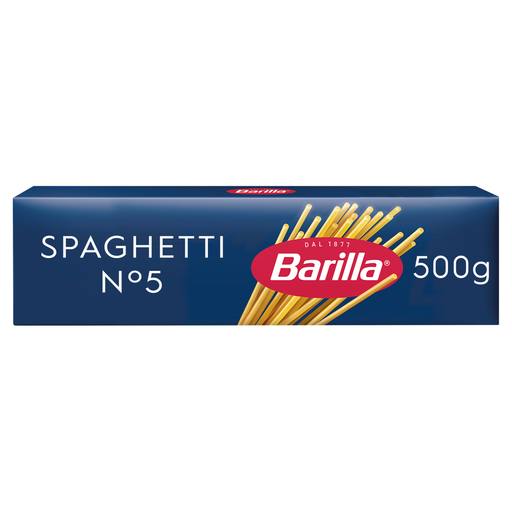 Image unavailable
Barilla Spaghetti 500g
A plain spaghetti base for an Easter meal with a separately chosen sauce. The pack is 500g; compare its current salt label on the stated preparation basis and decide separately how much salt to add during cooking.
View on Joybuy
 Image unavailable
Branston Reduced Sugar & Salt Baked Beans 4 x 410g
A tinned side or add-in if beans fit your Easter pasta meal. This is a four-pack of 410g tins labelled reduced sugar and salt; check salt for the amount you serve rather than treating the wording as salt-free.
View on Joybuy
 Image unavailable
Napolina Spaghetti 500g
Another 500g plain spaghetti option when you plan to select the sauce and seasoning yourself. Check whether its current nutrition figures describe uncooked or cooked pasta before comparing them with another pack.
View on Joybuy
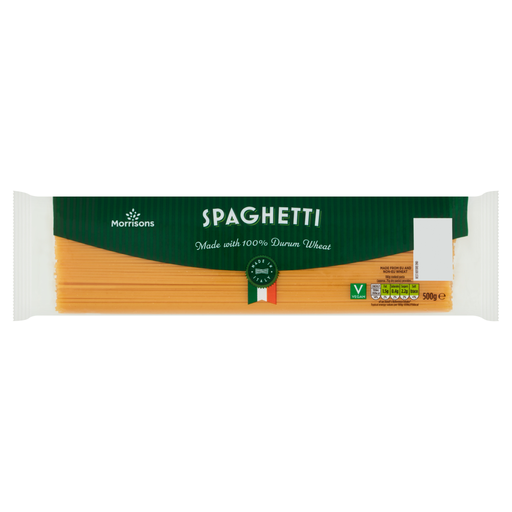 Image unavailable
Morrisons Spaghetti 500g
A 500g spaghetti pack to consider when planning portions for a group. If you need a precise salt figure for comparison, check the current pack rather than treating a qualitative label term as an exact amount; include any cooking salt in your meal planning.
View on Joybuy
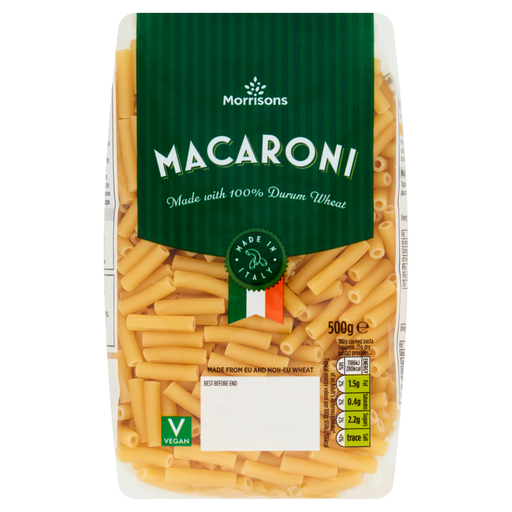 Image unavailable
Morrisons Macaroni 500g
A 500g macaroni option if you want this shape for a home-prepared pasta dish. Check the current pack for a numeric salt amount if that matters to your comparison, and assess the sauce and additions separately.
View on Joybuy
Common questions
Should I look for reduced-salt pasta for an Easter meal?
Check the complete meal before deciding that the pasta needs replacing. Tesco and Asda list 0.02g salt per 100g cooked for the checked plain dried pastas, while Tesco Groceries lists 0.75g per stated portion for the checked Dolmio sauce. Cooking salt and any additions need their own check.
Does a low-fat pasta sauce also have less salt?
Not necessarily. Tesco Groceries lists 0.67g salt per 100g and 0.75g per 112g portion for the checked Dolmio Low Fat Bolognese sauce, which has a medium salt indicator. Compare the sauce’s salt row and the amount you will serve.
What should I check on a reduced-salt tin?
Check the named comparison and the salt in your actual portion. Tesco Groceries says its checked Reduced Sugar and Salt Baked Beans have 25% less salt than Tesco standard baked beans, but lists 0.60g salt per half can.
Can I compare cooked-pasta and dry-pasta salt figures directly?
No. First check whether each nutrition figure refers to pasta as sold or after cooking. The checked Tesco and Asda pages state cooked-pasta values; use matching preparation bases where possible, then check sauce and add-ins for the portions served.


