
24/7 Customer Support

Free returns

Same-day & Next-day Delivery

Quality Guaranteed

Unlock Your Welcome Offers: FREE Delivery | Up to 80% OFF | Free 30-day JoyPlus trial
Download the APP
Choosing a new motorcycle helmet can feel like navigating a minefield of technical jargon and marketing claims. With the introduction of the new ECE 22.06 safety standard, the decision has become even more critical. As a rider in the UK, your helmet is the single most important piece of gear you own. Yet, many riders fall into common traps that compromise either their safety or their wallet.
Before you make a decision, be aware of these frequent purchasing pitfalls:
Bluetooth ready motorcycle helmet often just means it has shallow recesses for speakers. This doesn't guarantee your specific communication system will fit comfortably, potentially leading to painful pressure points on a long ride.modular motorcycle helmet offers great convenience, but not all are created equal. Unless a helmet has a 'P/J' rating, it is not certified to be used with the chin bar in the raised position while riding. Using it this way could compromise your safety in an accident.To make an informed choice, it's vital to understand the parameters that truly matter. Let's cut through the jargon and focus on what defines a quality helmet for UK roads.
The ECE 22.06 standard is a significant advancement in helmet safety. Unlike its predecessor, it mandates a more comprehensive testing regime. Helmets are now subjected to impacts at both higher and lower speeds, reflecting a wider range of real-world accident scenarios. Crucially, it also introduces testing for rotational acceleration – the twisting forces on the head and brain during an angled impact, which is a common cause of serious injury. An ECE certified helmet under this new regulation offers a demonstrably higher level of protection.
The choice between a full face motorcycle helmet and a modular (or flip-up) one depends entirely on your riding habits.
flip up helmet UK model will be 'P/J' dual-homologated, meaning it's certified for use with the chin bar both down (P) and up (J).Beyond the core structure, certain features offer real-world benefits:
motorcycle helmet with sun visor allows you to adapt to changing light instantly without fumbling for sunglasses. This is a major convenience and safety feature, especially when riding through tunnels or in dappled woodland light.Based on these practical criteria, we've identified several helmets that meet the latest safety standards while catering to different types of UK riders.
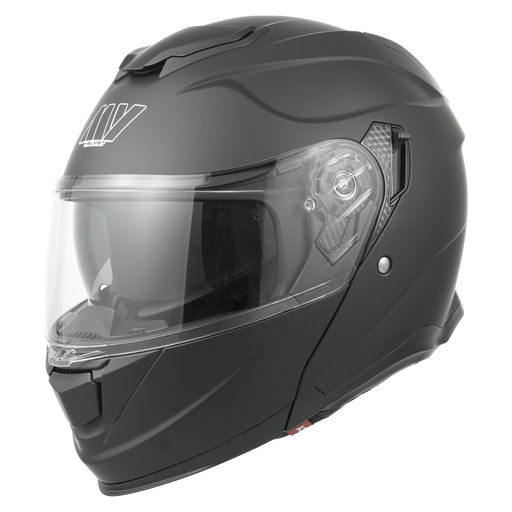
Why This Fits Their Persona: The flip-up design is perfect for the stop-start nature of city riding. It offers the convenience of an open-face helmet for brief stops without sacrificing the protection of a full-face lid on the move.
This helmet is fully ECE 22.06 certified, ensuring you get modern protection, not discounted old stock. It also features a dedicated slot for Bluetooth headsets, avoiding the poor fit of generic "ready" designs.
The dual-visor system, with a clear main visor and an internal sun shield, provides excellent versatility for all weather and light conditions. The stylish matte black helmet finish is a popular choice.
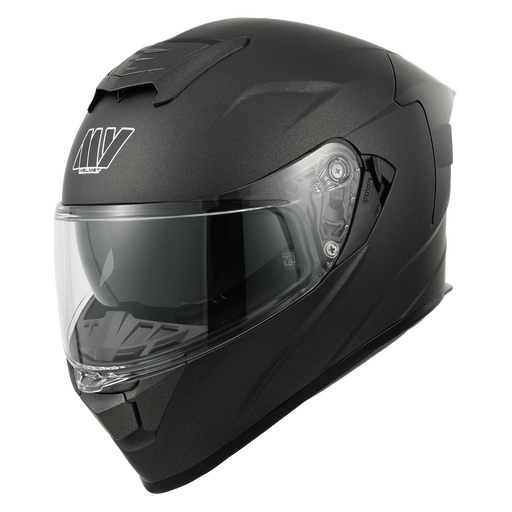
Why This Fits Their Persona: For riders covering high mileage on A-roads and motorways, the superior noise isolation and uncompromising structural integrity of a full face motorcycle helmet are paramount for comfort and safety.
This helmet provides the highest level of certified protection under the new ECE 22.06 standard, including the critical rotational impact tests, offering peace of mind on long, high-speed journeys.
The integrated motorcycle helmet with sun visor is a key feature for tourers, allowing instant adaptation to changing light. The skin-friendly, removable liner ensures comfort over many hours in the saddle.
We have compiled a complete, real-time list of products that fully satisfy these strict selection criteria and UK safety regulations.
Most manufacturers and safety bodies recommend replacing your helmet every 5 to 7 years from the date of manufacture, even if it looks fine. The materials used in the shell and the impact-absorbing EPS liner degrade over time due to exposure to UV light, sweat and atmospheric pollutants. More importantly, you must replace your helmet immediately after it has sustained any impact, as the protective structure may be compromised even if there is no visible damage.
Finding the correct size is crucial for both comfort and safety. To measure your head, use a soft tailor's tape. Wrap it around the widest part of your head, approximately one centimetre above your eyebrows and ears. Note the measurement in centimetres and compare it to the sizing chart provided for the specific helmet model you are interested in. When you first try on a new helmet, it should feel snug and consistent all around your head, without any specific pressure points. It should not move or rotate when you shake your head.
When the chin bar is closed and locked, a high-quality modular motorcycle helmet that is certified to the ECE 22.06 standard offers a high level of protection. The standard ensures it passes the same impact tests as a full-face model. However, the hinge mechanism is an additional component that is not present in a solid full face motorcycle helmet. For this reason, many purists and track riders prefer the absolute structural integrity of a one-piece full-face design. If you plan to ride with the chin bar up, ensure the helmet has a 'P/J' rating.