
24/7 Customer Support

Free returns

Same-day & Next-day Delivery

Quality Guaranteed

Unlock Your Welcome Offers: FREE Delivery | Up to 80% OFF | Free 30-day JoyPlus trial
Download the APP
Buying an ECE 22.06 motorcycle helmet is an important decision for UK riders, but product listings can make comparison difficult. A low price may hide limited sizing information, while a long feature list does not always explain whether the helmet suits commuting, touring or everyday road use.
Three common buying traps deserve attention:
The following points can help UK motorcyclists compare options more practically.
Look for clear reference to ECE R22.06 in the product listing and on the helmet’s approval marking. This standard relates to motorcycle helmet type approval and includes updated test requirements compared with earlier versions.
Certification should not be treated as a guarantee against every possible injury. A helmet must be the correct size, securely fastened and used according to its instructions. Avoid listings that use vague phrases such as “road ready” without identifying the relevant approval standard.
The MY 935 and MY 936 listings provided here specify ECE 22.06 approval and are described for adult motorcycling use.
An ABS motorcycle helmet uses acrylonitrile butadiene styrene for the outer shell. Inside, the MY 935 and MY 936 models use high-density EPS cushioning. The outer shell and EPS liner perform different roles, so it is useful to check that both are clearly described rather than focusing only on the shell material.
The helmet should also sit evenly around the head. A hard pressure point at the forehead, temples or back of the skull may become uncomfortable during a long commute, even if the measurement appears correct.
Measure around the widest part of your head, approximately above the eyebrows and around the back of the skull. Do this with a flexible tape and repeat the measurement to reduce errors.
The listed MY 936 sizing is:
The MY 935 sizing differs slightly:
Both listings identify an oval helmet shape. However, head shape varies, so circumference alone cannot confirm a good fit. The helmet should feel snug without causing sharp pressure, and it should remain stable when you gently move your head.
A full-face motorcycle helmet keeps the chin and face area enclosed while riding. This format may suit commuters and riders who prefer a fixed, enclosed design. The MY 936 full-face model includes an integrated inner sun visor, removable washable lining, ABS shell and high-density EPS liner.
A modular flip-up motorcycle helmet has a hinged section that can be raised when stationary, depending on the design and instructions. This can be useful for touring riders who make frequent stops or need easier access when speaking. The MY 935 listing adds a dual-visor design and a reserved Bluetooth headset slot beneath the chin pads.
The practical choice depends on your riding routine. For frequent motorway or longer-distance riding, compare the locking mechanism, visor operation, weight, ventilation and fit. For urban use, convenience features may be more valuable, but they should not replace checking the approval marking and correct fastening procedure.
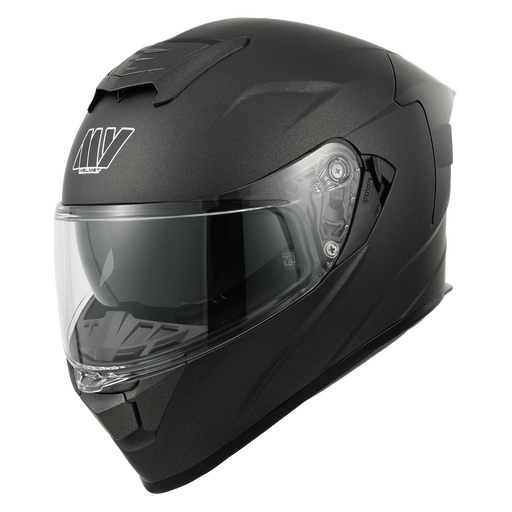
Why This Fits Their Persona: A straightforward option for riders wanting an everyday full-face helmet with sun-visor functionality and a mid-range 57–58 cm size.
The listing identifies ECE R22.06, the size range, an oval shape and a removable washable lining instead of relying only on general safety wording.
ABS shell, high-density EPS liner, integrated inner sun visor and removable washable lining.
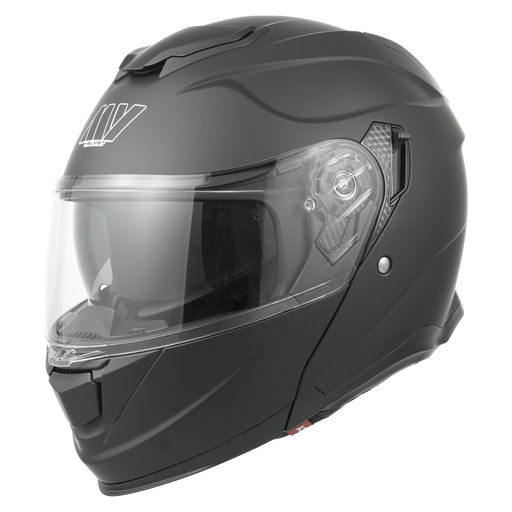
Why This Fits Their Persona: Suitable for riders who value a flip-up format, dual visor arrangement and communication-device preparation for regular touring.
It provides separate size measurements and identifies both the ECE 22.06 specification and oval shape, helping shoppers compare fit rather than appearance alone.
Dual visor design, high-strength ABS shell, high-density EPS and a reserved Bluetooth headset slot.
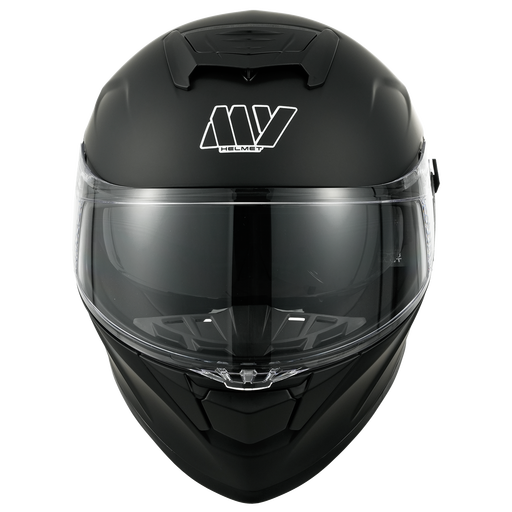
Why This Fits Their Persona: A practical match for commuters and touring riders who want flip-up convenience with an integrated sun visor.
The listing includes care guidance for the lining and visor, plus circumference ranges, so daily-use buyers can assess maintenance and fit before ordering.
Integrated sun visor, removable washable lining, ABS material and high-density EPS cushioning.
We have compiled a complete, real-time list of products that fully satisfy these strict selection criteria and UK safety regulations.
A washable removable lining is useful for regular riders because it can be hand-washed with mild soap and allowed to air dry. Clean the outer shell and visor with a damp microfibre cloth; abrasive products may mark the finish or visor.
Do not continue using a helmet after a significant impact, even if damage is not visible. Inspect the shell, EPS liner, visor, buckle and chin strap regularly. Avoid modifying the helmet or removing structural padding. A helmet also needs replacement when its condition, fit or components have deteriorated.
An ECE R22.06-approved helmet is designed for motorcycle use under that approval standard. Check the approval marking, ensure the helmet fits correctly and follow current UK road-use requirements and the manufacturer’s instructions.
There is no single replacement interval that applies to every helmet. Replace it after any impact, or sooner if the shell, EPS liner, strap, buckle, visor or internal padding shows damage or deterioration. Store it away from heat, chemicals and prolonged direct sunlight.
A dual visor design includes a clear outer visor and an additional tinted inner visor, so separate sunglasses may not be necessary in bright conditions. Lower the tinted visor only when visibility is suitable, and raise it before entering darker areas such as tunnels.