
24/7 Customer Support

Free returns

Same-day & Next-day Delivery

Quality Guaranteed

Unlock Your Welcome Offers: FREE Delivery | Up to 80% OFF | Free 30-day JoyPlus trial
Download the APP
Choosing an ECE 22.06 modular flip-up motorcycle helmet involves more than selecting a colour and a convenient flip-up chin bar. UK riders also need to consider certification markings, head measurements, visor design, liner care and whether the helmet suits everyday commuting or longer touring.
Marketing descriptions can make similar helmets appear very different. The practical approach is to separate useful specifications from vague promises and check whether the product matches your actual riding routine.
A listing that simply says “ECE helmet” may not tell you which standard applies. For a current road helmet, look for ECE R22.06 or ECE 22.06 wording and check the physical approval marking when the helmet arrives. Do not rely solely on a retailer title or a product photograph.
The MY 935 and MY 936 listings specify ECE R22.06 approval. Even so, confirm the label, instructions and supplied product details before riding.
Motorcycle helmet sizing is not the same as choosing a jumper. A helmet can feel comfortable initially but move excessively once the cheek padding settles if it is too large. A helmet that is too tight can create uncomfortable pressure points during a commute.
Measure around the widest part of your head, approximately above the eyebrows and around the back of the skull. Compare the result with the specific manufacturer’s chart. The same letter size may cover different measurements between models.
A dual visor motorcycle helmet may use an additional internal sun visor, while another design may combine a clear outer visor with a separate tinted component. Check how the visor is operated, whether it can be cleaned easily and whether the opening mechanism interferes with glasses or an intercom.
The MY 935 is listed with a double visor design and a reserved slot under the chin pads for a Bluetooth headset. The MY 936 is listed with an integrated sun visor and removable, washable lining. These are useful differences rather than interchangeable marketing terms.
ECE R22.06 is the relevant European motorcycle helmet approval standard shown in the supplied MY 935 and MY 936 product details. It relates to the helmet’s approval testing framework, but it does not mean every helmet will suit every rider. Correct sizing, fastening and condition remain essential.
Before purchase, check:
The featured helmets use an ABS motorcycle helmet shell with high-density EPS cushioning. ABS is a commonly used hard shell material, while EPS is the energy-absorbing liner inside the shell. These terms describe construction; they should not be treated as a promise that a helmet will prevent every injury.
Avoid helmets with unexplained shell materials, missing technical information or unclear manufacturer details. Also avoid buying a used helmet when its impact history is unknown. A helmet may look undamaged after an impact while internal materials have been compromised.
The MY 935 size chart lists:
The MY 936 chart lists slightly different measurements:
This is why checking the model-specific chart matters. Available listings include motorcycle helmet size S, M, L, XL and XXL, but the correct choice depends on your measurement and head shape. Both models are described as having an oval shape, which may suit some riders more comfortably than a rounder internal profile.
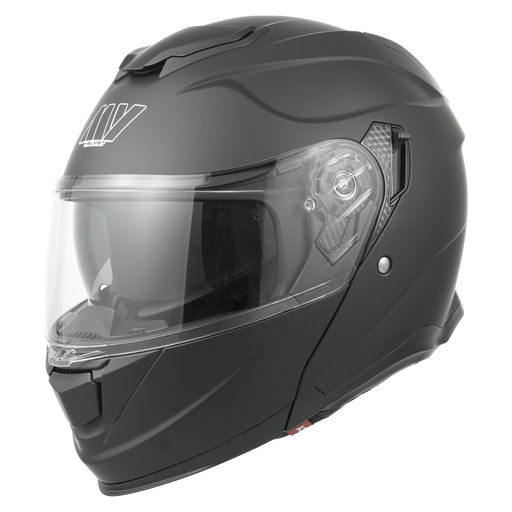
Why This Fits Their Persona: A practical option for adult riders beginning daily commuting by motorcycle, scooter or moped, provided the 57–58 cm measurement is suitable.
The product details identify ECE R22.06, list exact measurements and describe the visor arrangement instead of leaving these points unclear.
ABS shell, EPS liner, dual visor design and matte black finish; available in a broad XS–XXL range.
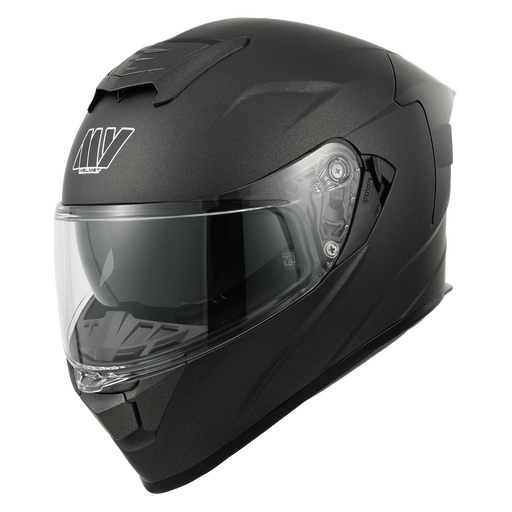
Why This Fits Their Persona: Suits riders who prioritise a clean full-face profile, built-in sun protection and a washable interior for frequent UK road use.
Its listing separates the integrated sun visor, removable lining and ECE R22.06 specification, making the feature set easier to verify.
Integrated sun visor, removable and washable inner lining, ABS shell and matte titanium finish.
Why This Fits Their Persona: A suitable starting point for touring or longer-distance riders who need the flexibility of a flip-up design and a 63–64 cm size option.
The product includes a stated size range and a reserved Bluetooth headset slot, avoiding assumptions about aftermarket communication installation.
Flip-up format, dual visor design, Bluetooth headset slot and high-density EPS cushioning.
A new helmet should be checked before its first ride. Confirm that the visor moves smoothly, the chin bar locks fully and the buckle holds securely. On a modular design, ride with the chin bar in the manufacturer-approved locked position unless the instructions specifically allow another configuration.
For routine care:
A flip-up helmet with Bluetooth headset slot can simplify intercom installation, but check the dimensions and mounting method of your chosen headset before ordering.
We have compiled a complete, real-time list of products that fully satisfy these strict selection criteria and UK safety regulations.
An ECE R22.06 helmet is designed around a recognised European approval standard. Check the approval marking, fasten it correctly and confirm that the product is suitable for your vehicle and intended road use. The MY 935 and MY 936 listings identify ECE R22.06 certification.
Measure your head circumference with a flexible tape, compare it with the exact model’s chart and check that the helmet sits firmly without painful pressure. For example, the MY 935 lists size M as 57–58 cm, while its XXL is 63–64 cm. Do not select a size based only on your usual hat size.