
24/7 Customer Support

Free returns

Same-day & Next-day Delivery

Quality Guaranteed

Unlock Your Welcome Offers: FREE Delivery | Up to 80% OFF | Free 30-day JoyPlus trial
Download the APP
Navigating the world of motorcycle helmets can be complex, especially with evolving safety standards. For any rider in the UK, ensuring your helmet is road legal is not just a matter of compliance, but of personal safety. The introduction of the ECE 22.06 standard has raised the bar for helmet protection. This guide is designed to help you understand what this new certification means and to highlight some practical options for your next ride.
As the Joybuy Product Recommendation Officer, my role is to provide clear, objective information to help you make an informed choice. Let's look at what you need to know when selecting a new helmet.
Choosing the right helmet goes beyond colour and style. With the latest regulations in place, here are a few key considerations for UK riders.
The two most common styles you will encounter are full-face and modular.
Your choice often depends on your riding habits. Daily commuters might appreciate the flexibility of a modular design, while others may prefer the solid feel of a traditional full-face helmet.
Beyond the basic style, several features contribute to a safer and more comfortable ride.
The ECE 22.06 certification is the latest and most stringent European safety standard. Any new helmet model sold in the UK must meet this standard. Compared to the older 22.05, it involves a more rigorous testing process, including:
Choosing an ECE 22.06 motorcycle helmet ensures you are wearing gear that has passed the most up-to-date safety assessments, making it a road legal motorcycle helmet UK riders can trust.
Here are a couple of ECE 22.06 certified helmets that balance modern features with the required safety standards.
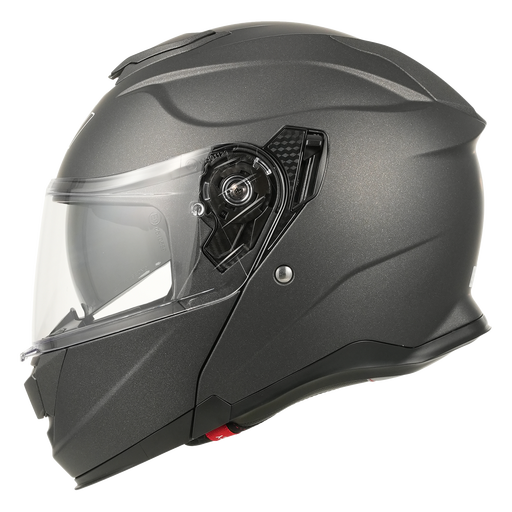
Why It Stands Out: This helmet combines the protective qualities of a full-face design with the convenience of a flip-up chin bar. It is fully ECE R 22.06 approved, featuring a high-strength Acrylonitrile Butadiene Styrene (ABS) shell and a shock-absorbing EPS buffer. The inclusion of a reserved slot for a Bluetooth headset is a practical touch for modern riders.
Pros:
Who is it for? This is an excellent option for commuters and touring riders who value flexibility. If you frequently stop to ask for directions, talk to fellow riders or simply want some fresh air without removing your helmet, the modular design is highly practical.
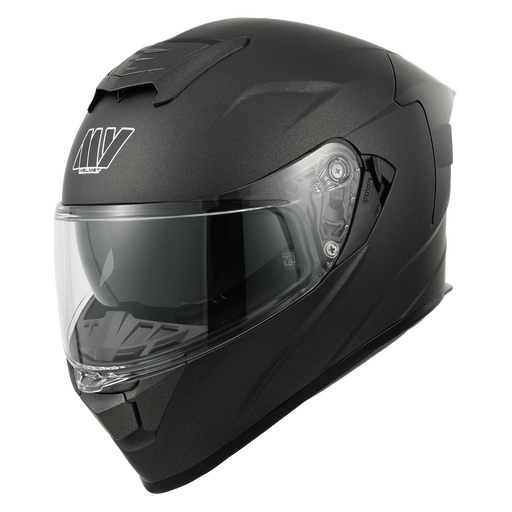
Why It Stands Out: For those who prefer the classic, robust feel of a traditional full face motorcycle helmet, the MY-936 delivers. It also carries the essential ECE R 22.06 approval, ensuring it meets current safety benchmarks. The design focuses on core protection and comfort, with a high-density EPS layer for shock absorption and a skin-friendly interior.
Pros:
Who is it for? This helmet is well-suited for riders who prioritise the structural integrity of a fixed full-face design. It's a dependable choice for daily commuting, weekend rides and anyone seeking straightforward, certified protection.
If the helmets featured here aren't quite what you're looking for, or if you ride a scooter and are seeking a different style, there are many other models to consider.
Explore our broader collection to find a helmet that fits your specific needs and style.
? Discover More in Our Scooter Helmet Category
1. What is the main difference between ECE 22.05 and 22.06 helmets? The ECE 22.06 standard introduces more comprehensive testing than its predecessor, 22.05. Key additions include testing at multiple impact speeds (both higher and lower) and a new test to measure a helmet's ability to manage rotational forces during an impact. This makes the 22.06 certification a more rigorous indicator of a helmet's protective capabilities.
2. Is an ECE 22.06 helmet a road legal motorcycle helmet in the UK? Yes, absolutely. As of 2024, all new helmet models introduced to the market must be ECE 22.06 certified to be sold in the UK and EU. This certification confirms that the helmet is fully road legal for use on motorcycles, mopeds and scooters.
3. How do I find the right size for a unisex moped helmet? To find your size, use a flexible measuring tape to measure the circumference of your head. Wrap the tape about one inch above your eyebrows and ears, at the widest part of your head. Compare this measurement (in centimetres) to the manufacturer's sizing chart. A new helmet should feel snug and secure, without any uncomfortable pressure points. It should not move or rotate on your head when you shake it.