
24/7 Customer Support

Free returns

Same-day & Next-day Delivery

Quality Guaranteed

Unlock Your Welcome Offers: FREE Delivery | Up to 80% OFF | Free 30-day JoyPlus trial
Download the APP
For UK motorcyclists, scooter riders and moped commuters, an ECE 22.06 motorcycle helmet offers a clear starting point when comparing road-legal head protection. However, a certification label alone does not guarantee that a helmet will suit your head shape, riding habits or daily routine.
As the Joybuy Product Recommendation Officer, my role is to filter product information and highlight the practical details that can be overlooked behind polished marketing claims. Before buying, pay close attention to certification, sizing, visor design and everyday usability.
An S, M or XXL label is not universal across helmet models. One manufacturer’s medium may fit differently from another’s, and the shape of the shell matters as much as circumference. The listed MY 935 helmet, for example, specifies 57–58 cm for size M, while the MY 936 lists 57–58 cm for size M but uses a slightly different size range overall.
Measure around your head approximately 2 cm above the eyebrows with a soft tape measure. The helmet should feel snug around the cheeks and crown without creating sharp pressure points. It should not rotate freely when you move your head.
A modular flip-up motorcycle helmet is convenient for urban stops, conversations and putting on glasses, but the chin bar must be locked securely before riding in the closed position. Check the release mechanism, buckle and locking action rather than choosing solely because the helmet opens.
A modular design can also be heavier than a basic open-face style. Consider the weight, interior padding and intended riding duration if you regularly commute through UK traffic or take longer touring trips.
A dual visor motorcycle helmet normally combines a clear outer visor with an internal tinted visor. This can be useful when sunlight changes during a ride, but the mechanism should be easy to operate with gloves and should not obstruct your view.
An integrated sun visor is not a replacement for checking visor condition, clarity and closure. Avoid using a scratched or damaged visor, particularly in low light or wet weather.
Look for clear product information stating ECE R22.06 approval or ECE R 22.06. This is the current UNECE helmet regulation commonly sought by UK riders when buying a compliant motorcycle helmet. Check the physical approval marking and product documentation when the helmet arrives, and consult current UK road-use guidance if you are unsure about accepted standards.
Certification should be treated as a non-negotiable starting point, not a substitute for correct fitting. A certified helmet that moves excessively or causes discomfort is unlikely to be suitable for regular use.
The listed helmets use an ABS motorcycle helmet shell with high-density EPS cushioning. ABS is a hard shell material, while EPS is the energy-absorbing liner inside the helmet. These components serve different functions and should be assessed together.
Do not assume that a larger shell or heavier construction automatically means a better choice. Focus on the stated materials, approval information, secure closure and fit. Replace a helmet after a significant impact, even if there is no obvious external damage.
For daily commuting, a motorcycle helmet with integrated sun visor can reduce the need to carry separate eyewear. The MY 936 range includes an internal sun visor and a removable, washable lining. The MY 935 range has a double visor and a reserved slot beneath the chin pads for a motorcycle helmet with Bluetooth headset slot setup.
A Bluetooth-ready recess does not necessarily mean that a headset is included. Confirm what is supplied before ordering. Also check that the lining can be cleaned and dried properly, especially if the helmet is worn frequently in damp UK weather.
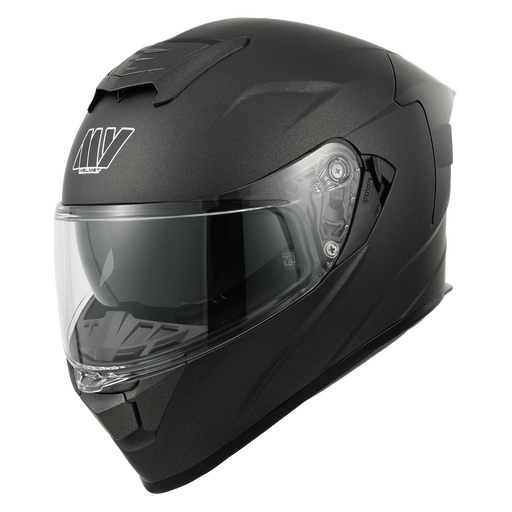
Why This Fits Their Persona: A practical option for riders wanting a straightforward full-face motorcycle helmet for commuting, scooter trips and leisure riding, with a listed 57–58 cm medium size.
The listing clearly identifies ECE R22.06 approval, size measurements and an integrated sun visor rather than relying only on general safety wording.
ABS shell, EPS liner, removable washable lining and integrated inner sun visor.
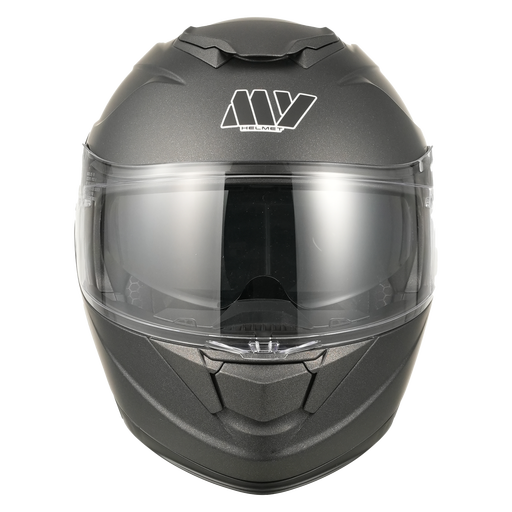
Why This Fits Their Persona: Suits riders who want a modular design, dual visor convenience and a matte titanium finish for regular road use or touring.
Its stated size range runs from XS to XXL, helping shoppers compare measurements instead of guessing from a letter size.
ECE R22.06 listing, ABS construction, dual visor and reserved Bluetooth headset slot.
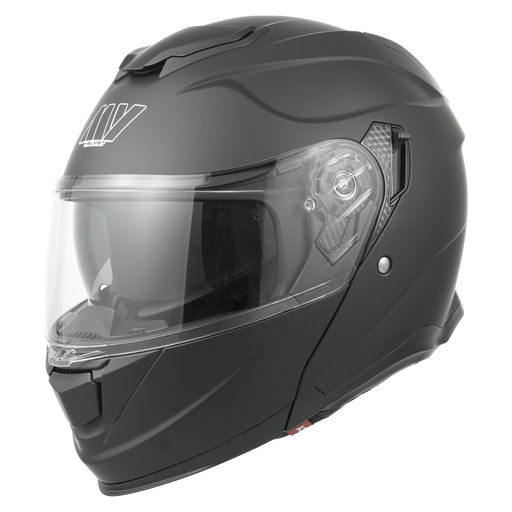
Why This Fits Their Persona: Designed for frequent commuters and touring riders who value a flip-up chin bar, internal sun protection and headset installation space.
The product information identifies the chin-bar operation, buckle closure, visor arrangement and Bluetooth slot, making daily-use features easier to check before purchase.
Matte black finish, oval shape, XS–XXL sizing and dual visor design with a headset recess.
We have compiled a complete, real-time list of products that fully satisfy these strict selection criteria and UK safety regulations.
Before your first ride:
An ECE R22.06 helmet is the regulation standard many UK riders look for when purchasing road-legal motorcycle headgear. Check the approval marking and current UK requirements before riding, particularly when buying from an unfamiliar seller or importing a product.
There is no single lifespan that applies to every helmet. Replace it after an impact, visible damage or significant deterioration of the liner, shell, strap or visor. Even without a crash, frequent use, sweat, cleaning and sunlight can affect materials over time. Follow the manufacturer’s care and replacement guidance.
A helmet with a reserved Bluetooth headset slot may make installation easier, but it does not confirm that a headset is included. Check the product description, select a compatible intercom and ensure installation does not interfere with the chin strap, visor or chin-bar locking mechanism.