
24/7 Customer Support

Free returns

Same-day & Next-day Delivery

Quality Guaranteed

Unlock Your Welcome Offers: FREE Delivery | Up to 80% OFF | Free 30-day JoyPlus trial
Download the APP
Buying an ECE 22.06 motorcycle helmet should be about more than finding a suitable colour or the lowest price. A helmet needs to fit correctly, provide the features you genuinely use and carry the appropriate approval marking for road riding.
For UK commuters, scooter riders, touring motorcyclists and weekend riders, modular and full-face designs offer different practical advantages. However, product listings can make it difficult to separate meaningful specifications from persuasive wording. The following guide highlights common buying traps and the details worth checking before you order.
An ECE R22.06 helmet has been assessed against the requirements of the UNECE Regulation No. 22.06 standard. This is an important point when comparing road helmets, but certification does not guarantee that every model will suit every head shape or riding style.
A certified helmet can still be uncomfortable if the internal shape is unsuitable. It may also feel impractical if the visor, chin bar or ventilation arrangement does not match your daily journeys. Check the product information, approval marking and sizing details rather than relying on the phrase “road-safe” alone.
New helmet padding often feels firm. That is not necessarily a fault, but excessive pressure at the forehead, temples or back of the head may indicate an unsuitable shape. Conversely, a helmet that moves when you shake your head is too loose.
Measure around your head approximately 2 cm above the eyebrows, then compare the result with the manufacturer’s size chart. For example, the MY 935 range lists sizes from XS at 53–54 cm through to XXL at 63–64 cm. The MY 936 range uses slightly different measurements, with XS at 54–55 cm and XXL at 61–62 cm. Do not assume that an L in one model will fit like an L in another.
A flip-up motorcycle helmet can be useful for urban stops, glasses wearers and riders who value easier communication. However, the chin bar must be lowered and locked before riding in the configuration intended for full-face coverage.
Similarly, an integrated sun visor can be convenient in changing light, but buyers should check how it is operated and whether the helmet also includes a clear outer visor. A dual visor motorcycle helmet may be more practical for mixed British weather than a dark replacement visor, which could reduce visibility in poor light.
Look for clear references to ECE 22.06 or ECE R22.06, and inspect the physical approval label when the helmet arrives. The marking should correspond with the product information and not simply appear as an unverified marketing phrase.
The standard is one part of a sensible purchase decision. Also check the fastening system, shell construction, fit guidance and instructions. A helmet is protective headgear, so it should be replaced after a significant impact, even when exterior damage is not obvious.
An ABS motorcycle helmet uses acrylonitrile butadiene styrene for the outer shell. The MY 935 and MY 936 product specifications list a hard ABS shell alongside high-density EPS cushioning. These are objective construction details, but they should not be interpreted as a promise that injury can be prevented in every collision.
Prioritise a stable fit, an intact liner and a chin strap that can be secured comfortably. A buckle that is easy to fasten correctly is more useful than a feature that remains difficult to adjust while wearing gloves.
For regular commuting or touring, consider:
The MY 935 includes reserved Bluetooth headset slots beneath the chin pads on both sides. This can simplify intercom installation, although the helmet does not include a Bluetooth device.
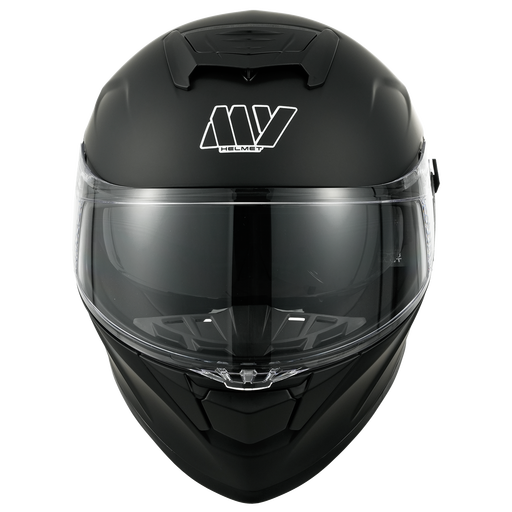
Why This Fits Their Persona: A practical option for newer commuters or scooter riders wanting a full-face style with an integrated sun visor and a matte black finish.
The listing provides ECE R22.06 information, size measurements and an oval shape specification instead of relying only on general safety wording.
Integrated inner sun visor, removable washable lining and ABS shell with high-density EPS cushioning.
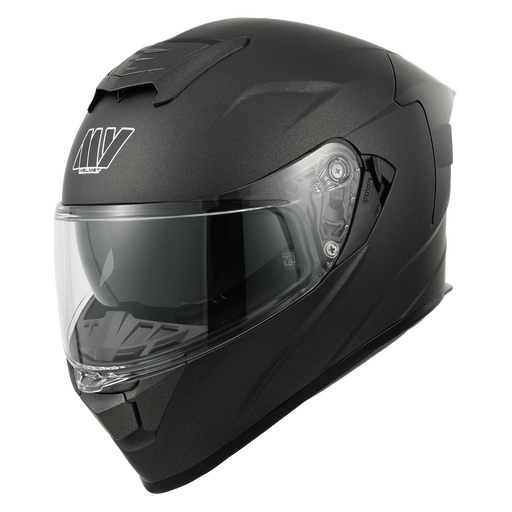
Why This Fits Their Persona: Suits riders who prefer a more enclosed full-face motorcycle helmet for regular road use, touring or leisure rides.
Its specification identifies the approval type, shell material, oval shape and available head measurements, helping buyers compare practical details.
ECE R22.06 listed, integrated sun visor, removable washable inner lining and ABS construction.
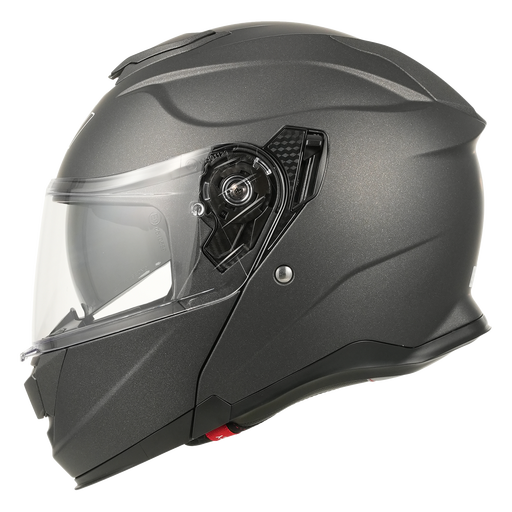
Why This Fits Their Persona: A modular motorcycle helmet for riders covering longer distances or using an intercom during touring and frequent commuting.
The dual visor design avoids depending on a permanently dark outer visor, while the listed Bluetooth headset slot addresses a common touring requirement.
Dual visor arrangement, ABS shell, high-density EPS cushioning and reserved intercom headset slots.
We have compiled a complete, real-time list of products that fully satisfy these strict selection criteria and UK safety regulations.
A helmet’s lifespan depends on its condition, use and storage. Inspect the shell, visor, strap, buckle and EPS liner regularly. Replace the helmet after a substantial impact, if the shell is cracked or if the internal cushioning has deteriorated.
Keep the helmet away from prolonged heat and direct sunlight when stored. Wash removable lining components according to the instructions and avoid harsh chemicals on the visor. Do not drill the shell to install a communication system; use the designated headset space where provided.
An ECE R22.06-approved helmet is a relevant option for UK riders, provided the approval marking is genuine and the helmet is worn and fastened correctly. Check the current UK road-use requirements and the physical approval label before riding.
Choose a flip-up motorcycle helmet if easier access, glasses compatibility or communication convenience is important. A conventional full-face design may appeal to riders who prefer a fixed chin bar. Whichever style you select, ensure the fit is secure and follow the manufacturer’s instructions for using the chin section.
Measure the widest part of your head, around 2 cm above the eyebrows and compare the measurement with the specific model’s chart. The helmet should feel evenly firm without painful pressure and should not move independently from your head when fastened.