
24/7 Customer Support

Free returns

Same-day & Next-day Delivery

Quality Guaranteed

Unlock Your Welcome Offers: FREE Delivery | Up to 80% OFF | Free 30-day JoyPlus trial
Download the APP
Buying an ECE 22.06 motorcycle helmet involves more than choosing a colour or relying on a low price. For UK commuters, scooter riders, touring riders and weekend motorcyclists, the right helmet needs to combine a recognised safety standard with dependable fit, practical visibility and manageable everyday care.
Marketing descriptions can make similar helmets appear very different. However, three common buying traps are worth checking before you place an order.
A listing may mention ECE in a title without making the certification details easy to verify. Look for a clear reference to ECE R22.06 and check the product information and helmet marking before riding. Certification does not make an incorrectly fitted helmet suitable, so approval and fit must be considered together.
Motorcycle helmet sizing is based on head circumference, not a standard small, medium or large used for clothing. Two helmets marked “L” may cover slightly different measurements. The MY 935 range lists L as 59–60 cm, while the MY 936 range lists L as 59–60 cm but uses different size ranges around it. Always check the model-specific chart.
A modular flip-up motorcycle helmet, dual visor motorcycle helmet and Bluetooth-ready motorcycle helmet can be useful, but each feature adds mechanisms or compatibility considerations. A commuter who rides mainly in town may value an integrated sun visor and washable lining more than a touring-focused communication slot. Choose features around your regular journeys rather than the longest list of claims.
For a road-going helmet, check that the listing specifies ECE R22.06 approval rather than only using broad wording such as “protective” or “motorcycle style”. The standard relates to the helmet’s approval requirements. It does not replace careful fitting, correct fastening or sensible riding habits.
The MY 935 and MY 936 models supplied for this guide are described as ECE R22.06-approved helmets. They also use a hard ABS shell with high-density EPS cushioning. These are objective construction details, but no helmet can remove every riding risk.
A full-face motorcycle helmet keeps the chin bar in place as part of its fixed structure. It may suit riders who prioritise a conventional enclosed design for commuting, leisure riding or longer journeys.
A modular helmet has a hinged or liftable chin section. This can make putting the helmet on, speaking at stops or managing changing conditions more convenient. Before moving off, ensure the chin bar is fully lowered and locked. A flip-up mechanism should not be treated as a substitute for checking the manufacturer’s instructions.
Measure around the head approximately 2 cm above the eyebrows, keeping the tape level. The helmet should feel snug without creating sharp pressure points. Cheek pads may feel firm when new, but the shell should not move independently when you gently shake your head.
Useful everyday features include:
A tinted or sun visor can assist with glare, but riders still need suitable visibility in low light and poor weather. Do not assume a visor is suitable for night riding unless its instructions say so.
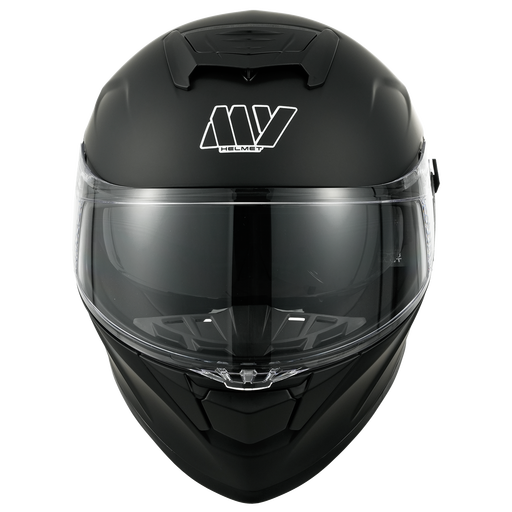
Why This Fits Their Persona: A practical option for new riders, scooter users and commuters seeking a modular format with an integrated inner sun visor and a listed L fit of 59–60 cm.
The product information states ECE R22.06 approval, ABS construction and a size chart, rather than relying only on a generic protective description.
Integrated sun visor; removable and washable inner lining; matte black finish; buckle closure.
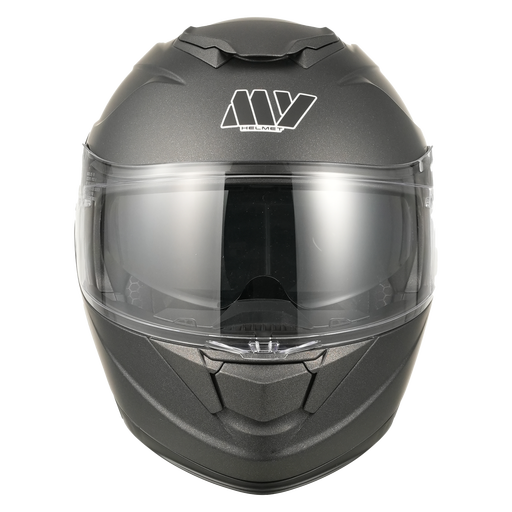
Why This Fits Their Persona: Suitable for riders who want a more feature-led modular helmet for regular commuting, touring preparation or mixed weather across the UK.
Its specifications state ECE R22.06 approval, a dual visor design and a model-specific size chart, helping separate listed features from vague advertising language.
High-strength ABS shell; dual visor design; reserved Bluetooth headset slot; oval shape and buckle closure.
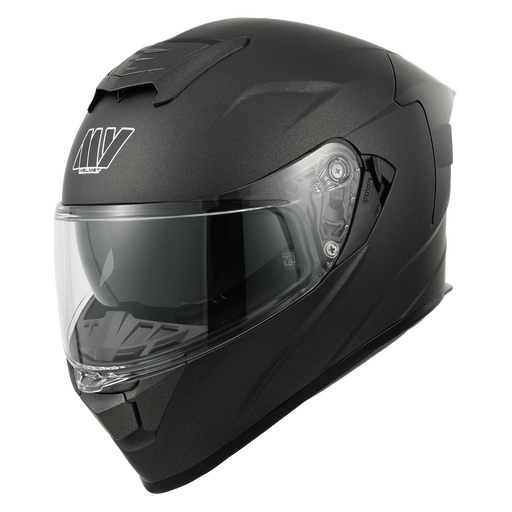
Why This Fits Their Persona: A fixed full-face design for riders who prefer an enclosed helmet for frequent road use, longer journeys and leisure riding.
It is presented as an ECE R22.06 full-face helmet with a clear size range, ABS shell, EPS cushioning and washable lining.
Full-face format; integrated inner sun visor; removable and washable lining; listed L measurement of 59–60 cm.
Clean the outer shell and visor with a damp microfibre cloth and a non-abrasive cleaner. Remove the lining and hand-wash it with mild soap where the instructions permit. Avoid solvents, heavy pressure and prolonged direct sunlight.
Replace a helmet after a significant impact, even if there is no obvious external damage. Also inspect the strap, buckle, visor and lining regularly. If the helmet has become loose, cracked, distorted or uncomfortable, stop using it and check the manufacturer’s replacement guidance.
We have compiled a complete, real-time list of products that fully satisfy these strict selection criteria and UK safety regulations.
An ECE R22.06-approved helmet is designed to meet the relevant European approval standard, but you should still confirm the approval marking, product documentation and current UK requirements before riding. Correct sizing and fastening remain essential.
Measure your head circumference above the eyebrows and compare it with the exact model’s chart. The helmet should sit securely, with even pressure and no movement when you turn or gently shake your head. It should not cause concentrated pain or prevent you from fastening the chin strap correctly.
Service life depends on use, storage, care and any impacts. Follow the manufacturer’s guidance, inspect the helmet regularly and replace it after an impact or when the shell, lining, visor or fastening system shows damage or deterioration.