
24/7 Customer Support

Free returns

Same-day & Next-day Delivery

Quality Guaranteed

Unlock Your Welcome Offers: FREE Delivery | Up to 80% OFF | Free 30-day JoyPlus trial
Download the APP
A modular helmet can make commuting, touring and scooter riding more convenient, but the wrong design may create frustrations from the first week. A flip-up motorcycle helmet needs to combine a secure fit, practical ventilation and a dependable visor system without relying on vague marketing language.
Before buying an ECE 22.06 modular motorcycle helmet, watch for three common pitfalls:
ECE 22.06 is the newer European motorcycle helmet approval standard, replacing the older ECE 22.05 standard for newly approved designs. It relates to a defined set of impact and helmet performance requirements. It is not a guarantee that every helmet will fit every rider or suit every riding style.
For UK use, check that the helmet carries the relevant approval marking and that its documentation is clear. The products featured here are listed with ECE R 22.06 approval, but always inspect the physical marking before use.
Construction details are also worth comparing. The MY 935 and MY 936 listings specify an ABS shell with high-density EPS cushioning. ABS is a common thermoplastic shell material, while EPS forms the energy-absorbing inner layer. These details are more useful than broad phrases such as “professional protection”.
Measure around the head approximately 2 cm above the eyebrows, keeping the tape level. Compare the result with the product’s size chart rather than selecting your usual hat size.
The listed measurements vary between models:
Both are listed with an oval head shape, but head measurements alone do not determine comfort. The helmet should feel evenly snug around the cheeks and crown, with no painful pressure points. It should not move independently when you gently turn your head.
A helmet that is too loose may shift during riding; one that is too tight can become distracting on longer journeys. Check the retailer’s return conditions before ordering, particularly when buying a fixed size such as L, XL or XXL.
A motorcycle helmet with integrated sun visor can be convenient for changing light conditions, avoiding the need to carry separate riding sunglasses. A dual visor motorcycle helmet normally combines a clear outer visor with a tinted inner visor. Check how the visor is operated and whether the clear visor remains securely closed.
The MY 936 includes an integrated inner sun visor and a removable, washable lining. This is useful for regular commuters who need a more manageable cleaning routine. The MY 935 uses a double visor design and includes a reserved slot beneath the chin pads for a compatible intercom headset, making it a Bluetooth-ready motorcycle helmet in terms of installation provision. The listing does not state that a Bluetooth unit is included, so riders should budget for a separate device.
Also consider the closure. Both models are listed with a buckle closure. Follow the supplied instructions and confirm that the strap is secure before every ride.
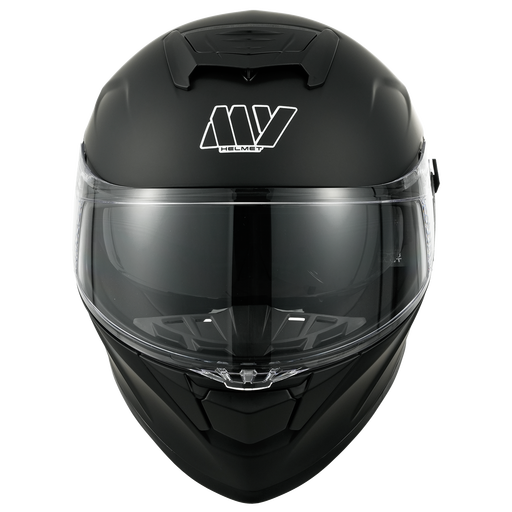
Why This Fits Their Persona: A practical option for new riders, urban commuters and scooter users who want one helmet for everyday trips and changing weather.
The listing gives a clear size range and identifies ECE R 22.06 approval, an ABS shell and EPS cushioning rather than relying only on appearance.
Integrated inner sun visor; removable and washable lining; matte black finish; unisex sizing from XS to XXL.
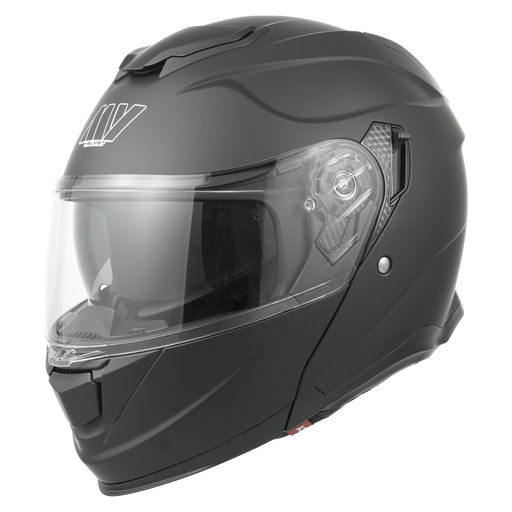
Why This Fits Their Persona: Suitable for riders who prioritise a dual-visor setup, a structured shell specification and a discreet matte black motorcycle helmet style.
Its specifications identify the ECE 22.06 standard, ABS shell, EPS layer and separate visor arrangement, helping you compare tangible features.
Dual visor design; reserved Bluetooth headset slot; ABS construction; sizes listed from XS to XXL.
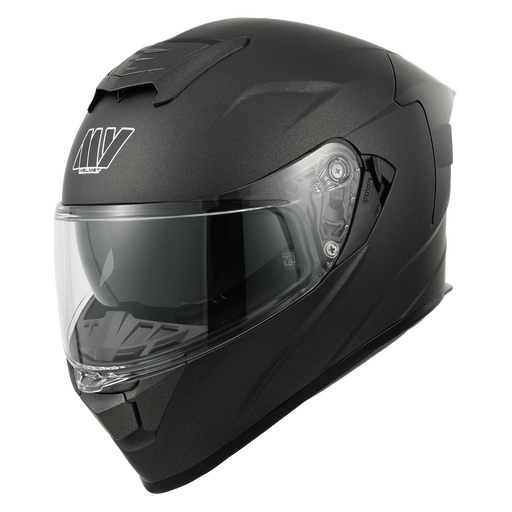
Why This Fits Their Persona: A match for riders who prefer a fixed full-face motorcycle helmet for regular road use and want cleaning access for frequent wear.
The removable, washable lining addresses hygiene and upkeep concerns that can be missed when comparing only shell colour or visor style.
ECE 22.06 approval listed; integrated sun visor; removable and washable lining; oval shape and ABS shell specification.
We have compiled a complete, real-time list of products that fully satisfy these strict selection criteria and UK safety regulations.
A motorcycle helmet is exposed to rain, road dust, sweat and repeated fastening. Follow the manufacturer’s cleaning instructions, use mild products where specified and allow the lining to dry fully. Do not modify the shell, EPS or chin-bar mechanism to install accessories.
Replace the helmet after a crash or significant impact, even if there is no obvious external damage. Also inspect it regularly for cracked components, damaged straps, loose visor fittings or deteriorating interior padding. For normal replacement timing, follow the manufacturer’s guidance rather than relying on a universal lifespan.
A helmet must meet the applicable UK requirements for motorcycle use and display the correct approval marking. Product-page wording alone is not enough, so check the physical label and documentation before riding. Keep the chin bar closed and locked when using the helmet as full-face protection.
Some helmets include space or a reserved slot for a compatible headset. The MY 935 listing specifies a Bluetooth headset slot beneath the chin pads, but the intercom itself is not included. Check the dimensions and installation instructions before purchasing a device.
An integrated sun visor is operated from inside the helmet and avoids carrying separate eyewear. A dual visor motorcycle helmet uses a clear outer visor and tinted inner visor. Compare the control position, visor coverage, cleaning access and your usual riding conditions before choosing.