
24/7 Customer Support

Free returns

Same-day & Next-day Delivery

Quality Guaranteed

Unlock Your Welcome Offers: FREE Delivery | Up to 80% OFF | Free 30-day JoyPlus trial
Download the APP
As a cat owner in the UK, you want what's right for your pet and your home. When it comes to cat litter, the shift towards eco-friendly options is clear. But the market is filled with claims that can be confusing. Choosing a natural cat litter shouldn't mean compromising on odour control, cleanliness or your cat's comfort.
This guide, from your Joybuy Product Recommendation Officer, is designed to help you navigate the options. We'll look at the common pitfalls to avoid and the key features that genuinely matter, helping you find a solution that works for your household, your cat and your environmental values.
Many products make appealing claims, but some can lead to frustration and wasted money. Here are two common traps to watch out for when shopping for eco-friendly cat litter.
1. The "Flushable" Promise: Many plant-based litters are marketed as "flushable." While technically biodegradable, flushing cat litter—even in small amounts—is not recommended by UK water authorities like Thames Water or Scottish Water. It can contribute to blockages in older household plumbing and municipal sewer systems. Faeces can also contain the Toxoplasma gondii parasite, which wastewater treatment may not always eliminate, posing a risk to wildlife. It's safer to dispose of used litter in your general waste or check local council guidelines for composting.
2. The "Completely Dust-Free" Illusion: A key reason many switch to natural litter is to reduce dust, which can affect respiratory health for both cats and humans. While many brands claim to be dust-free, very few achieve this in practice. A more realistic and helpful goal is to find a low dust cat litter. Significant dust can still be released when pouring or scooping, so it's important to look for products specifically processed for dust extraction rather than just relying on a label.
To make an informed choice, focus on these three practical considerations. They will have the biggest impact on performance, cost and ease of use.
The term "eco-friendly" is broad. Look for specifics about the material source.
This is a fundamental choice that dictates your cleaning routine.
Low dust is crucial for a healthy home environment, especially for cats or family members with asthma or allergies. Look for litters that specify they have undergone a dust-extraction process. Particle size and texture also affect "tracking"—how much litter gets carried out of the box on your cat's paws. Finer, sand-like litters may feel softer but can track more, while larger pellets tend to stay in the tray.
Instead of a one-size-fits-all approach, we've matched some effective options to different UK household needs.
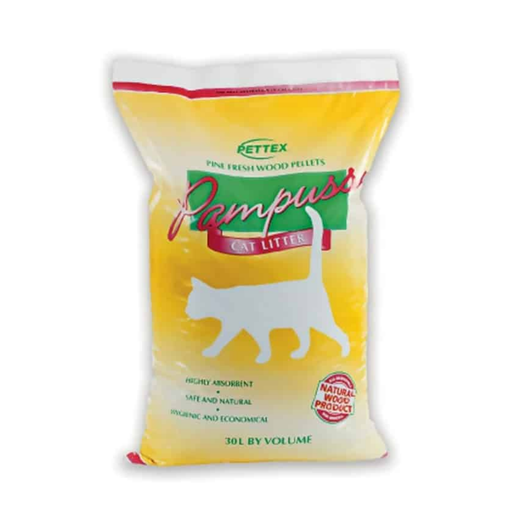
Why This Fits Their Persona: This large 30-litre bag offers excellent value for money. It's a straightforward, non-clumping wood pellet litter made from recycled materials, making it an economical and sustainable choice for single or multi-cat homes focused on running costs.
It's a non-clumping litter, so there's no misleading "flushable" claim. Its primary function is absorption, and the product description clearly states it has undergone superior dust extraction, addressing the dust concern head-on.
1. High absorbency and natural pine scent for effective odour control. 2. Made from 100% biodegradable recycled wood residues.
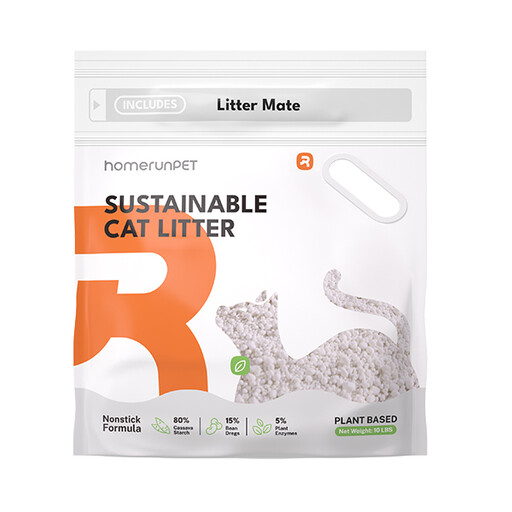
Why This Fits Their Persona: This litter is ideal for owners prioritising a clean-air home. Its formula, based on tapioca and soybean, is designed for ultra-low dust performance, making it suitable for households with respiratory sensitivities or asthma.
It directly tackles the "dust-free" illusion by providing a specific metric: "99.9% Dust-Free." This shows a commitment to low-dust performance. The product warning also advises against flushing, avoiding the plumbing trap.
1. Plant-based formula is non-toxic and safe if small amounts are ingested. 2. Special process prevents clumps from sticking to the bottom of the tray, making scooping much easier.

Why This Fits Their Persona: This litter is specifically designed for the demands of automatic litter boxes. Its cassava and corn formula creates dense, instant clumps that won't break apart during the machine's cleaning cycle, preventing smears and ensuring a smooth operation.
It is explicitly marked as "Not Flushable," providing clear and responsible disposal advice. It also quantifies its dust level as less than 0.5%, offering a tangible metric for its low-dust properties.
1. Forms solid clumps in under 3 seconds, ideal for automated scooping mechanisms. 2. Fine, rounded granules are designed to be gentle on paws and reduce tracking.
We have compiled a complete, real-time list of products that fully satisfy these strict selection criteria and UK safety regulations.
Cats can be sensitive to change. To transition them smoothly, start by mixing a small amount of the new natural litter with their old litter. Over the course of a week or two, gradually increase the proportion of the new litter while decreasing the old, until the box is filled entirely with the new product.
Neither is inherently "better"—it depends on your preference. Wood pellet litter is often more affordable and excellent for absorption and natural odour control, but requires a different cleaning method (sifting out sawdust). Clumping plant-based litter offers the convenience of daily scooping that many owners are used to, but can sometimes be more expensive.
This depends on the type of litter, the number of cats using it and the size of the litter tray. For non-clumping litters, a full change is typically needed every 1-2 weeks, or once most of the pellets have disintegrated. For clumping litters, if you are scooping daily, you may only need to do a full tray replacement every 2-4 weeks, topping up with fresh litter as needed. Always follow the manufacturer's guidance.