
24/7 Customer Support

Free returns

Same-day & Next-day Delivery

Quality Guaranteed

Unlock Your Welcome Offers: FREE Delivery | Up to 80% OFF | Free 30-day JoyPlus trial
Download the APP
Planning an event, running a food business or simply preparing for a summer of picnics often means reaching for disposable tableware. While convenient, the environmental cost of traditional plastic and polystyrene is a growing concern for many of us. This has led to a surge in "eco-friendly" alternatives, but navigating this market can be confusing.
Many well-intentioned buyers fall into common traps, spending money on products that aren't as green or practical as they seem. Before you buy, be aware of these pitfalls:
To ensure your choice is both practical and genuinely sustainable, focus on a few key parameters. These details separate the truly useful products from the marketing hype.
The raw material is the most significant factor in performance and environmental impact.
Consider the specific use case. A small plate for a slice of cake has different requirements than compostable takeaway containers for a food delivery service.
We have analysed the market to find options that balance performance, sustainability and value. Here are some recommendations matched to different needs.
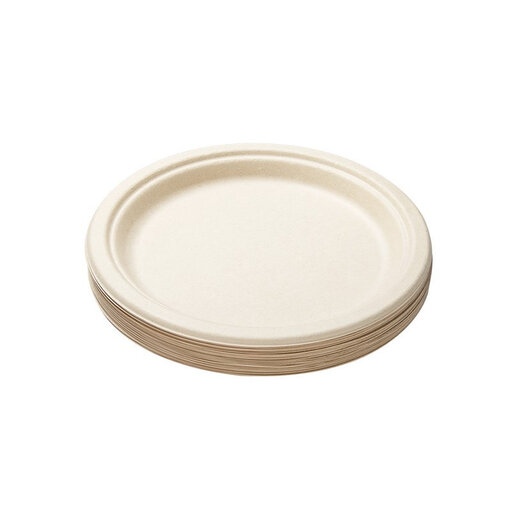
Why This Fits Their Persona: Ideal for family BBQs, children's parties or picnics. The 7-inch size is perfect for desserts, snacks or smaller portions. This user wants a straightforward, eco-conscious option without needing to buy in huge bulk quantities.
Made from sugarcane pulp (bagasse), it is sturdy and resists getting soggy with greasy foods, avoiding the "soggy plate syndrome." It is also fully biodegradable and compostable, steering clear of the vague "biodegradable" trap.
The material is a natural by-product, making it a strong sustainable choice. Its natural beige colour provides a rustic, stylish look for any casual event.
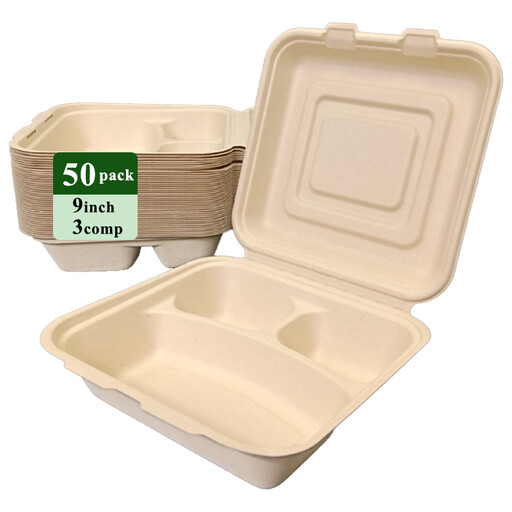
Why This Fits Their Persona: Perfect for food trucks, caterers or cafes offering takeaway meals. The 3-compartment design is professional and practical, keeping mains, sides and sauces separate. The 50-pack size offers good value for business use.
The sturdy bamboo fibre construction and clamshell design provide excellent structural integrity, preventing leaks and crushing during transport. This directly counters the issue of flimsy containers that fail in a commercial setting.
The 3-compartment layout is a significant advantage for food presentation and practicality. The bamboo fibre material is a clear, high-quality eco-friendly choice that customers will recognise and appreciate.
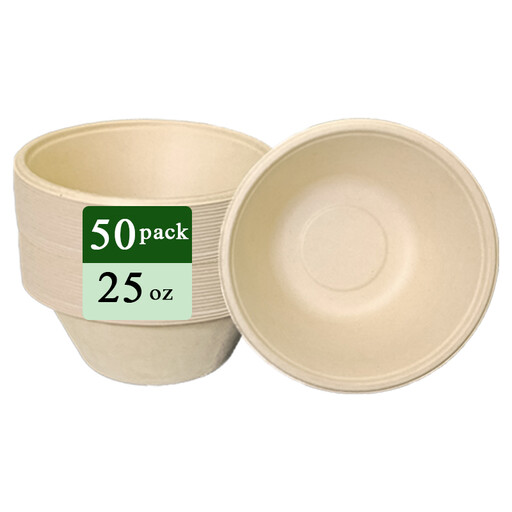
Why This Fits Their Persona: This user needs versatile bowls for everything from cereal on a camping trip to serving chilli at a garden party. They prioritise performance (no leaks) and genuine eco-credentials, and the microwave-safe feature is a huge plus for family convenience.
Its specified leak-resistant and microwave-safe properties directly address the performance pitfalls of inferior products. The material is clearly stated as bamboo fibre, avoiding misleading claims, and is compostable under the right conditions.
The 25oz (approx. 710ml) capacity is generous and highly versatile for soups, salads and pasta. Being microwave-safe adds a layer of convenience not found in all disposable bowls.
We have compiled a complete, real-time list of products that fully satisfy these strict selection criteria and UK safety regulations.
It depends entirely on the material. Many products made from bamboo fibre or sugarcane (bagasse) are designed to be microwave-safe for reheating purposes. However, you should always check the product's description or packaging for specific instructions. Paper plates, especially those with an unknown coating, should generally not be microwaved unless explicitly stated as safe.
In the UK, "compostable" is a more specific and useful term. A certified compostable product is guaranteed to break down into non-toxic, natural elements in a compost environment within a set period (e.g., 90-180 days). "Biodegradable" is a much vaguer claim, as almost everything will biodegrade over time, but it could take hundreds of years in a landfill and release harmful methane gas in the process. For a meaningful environmental choice, look for "compostable" and check if it's suitable for home or industrial composting.
Generally, yes. Plates made from pressed bamboo or bamboo fibre are renowned for their strength and rigidity. They hold their shape well and are resistant to grease and moisture, making them an excellent choice for eco-friendly picnicware and for serving heavier foods like burgers, salads and saucy dishes at a BBQ. They are significantly sturdier than typical uncoated paper plates.