
24/7 Customer Support

Free returns

Same-day & Next-day Delivery

Quality Guaranteed

Unlock Your Welcome Offers: FREE Delivery | Up to 80% OFF | Free 30-day JoyPlus trial
Download the APP
As a parent in the UK, you want what’s gentle for your baby and kind to the planet. The world of eco-friendly nappies promises both, but navigating the claims and options can be confusing. Many parents find themselves disappointed by products that don't live up to their green promises or, worse, fail on the performance front, leading to leaks and discomfort.
Before you spend your money, it's important to understand the common pitfalls. Many brands use vague terms like "natural" or "eco" without clear evidence, a practice often called greenwashing. Another frequent issue is the trade-off between sustainability and performance; some plant-based nappies simply don't offer the absorbency or fit required to keep a baby dry and happy. Finally, some "gentle" nappies can still contain hidden irritants like fragrances or chlorine, which is a major concern for parents of children with nappies for sensitive skin.
This guide will help you cut through the clutter, focusing on the key factors that truly matter when selecting a reliable and genuinely sustainable nappy.
To avoid disappointment, focus on these three non-negotiable areas. They are the true indicators of a nappy's quality, safety and environmental credentials.
The materials touching your baby's skin are paramount. Look for nappies made with a high proportion of plant-based nappies materials. Key terms to look for include:
For babies, especially those with sensitive or eczema-prone skin, certifications provide an essential layer of trust. Vague claims of being "gentle" are not enough. Instead, look for official, third-party endorsements:
A sustainable nappy is only practical if it works. Modern eco-friendly designs have advanced significantly and should not require you to compromise on performance. Check for features that ensure dryness and comfort:
We've identified products that align with these core principles, matching them to the specific needs of different families.
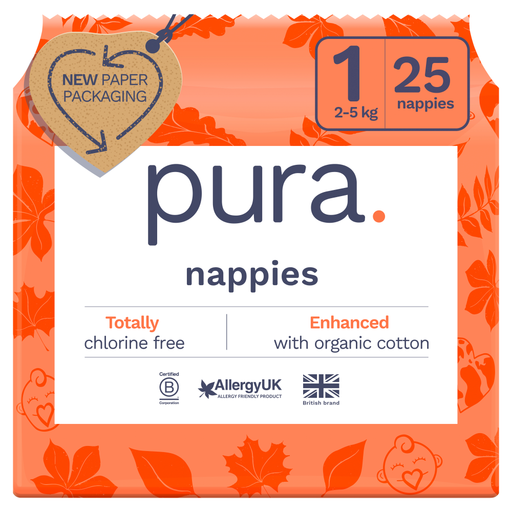
Why This Fits Their Persona: Parents of newborns need the gentlest care and maximum convenience. This nappy is specifically designed for a newborn's delicate needs, with an umbilical cord cutout to protect the sensitive belly area and a wetness indicator to simplify changes.
It avoids the "hidden irritants" trap by being explicitly free from fragrances, lotions and chlorine, and is Allergy UK certified, providing peace of mind for the most sensitive skin.
The umbilical cord cutout and colour-changing wetness indicator are practical features that make newborn care easier and more comfortable.
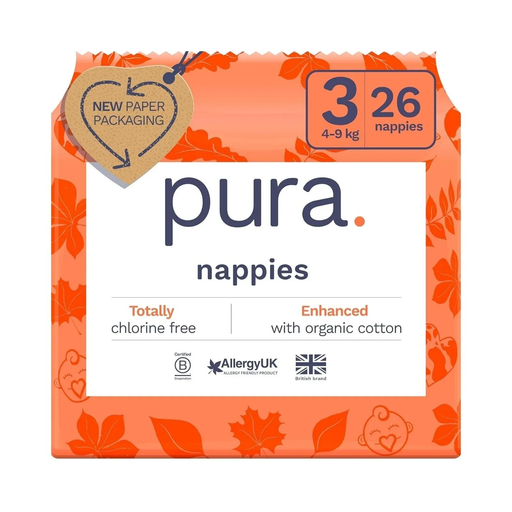
Why This Fits Their Persona: For families managing sensitive or eczema-prone skin, the primary goal is to eliminate all potential irritants. These Pura nappies are ideal because their skin-facing layer is enhanced with organic cotton and only plant-based materials touch the skin.
It sidesteps the "greenwashing" trap with verifiable credentials. Being Allergy UK certified and dermatologically tested provides concrete proof of its suitability for sensitive skin, going beyond simple marketing claims.
The combination of an organic cotton enhanced layer and a formula free from chlorine, perfume and lotions makes it a reassuring choice for preventing nappy rash and irritation.
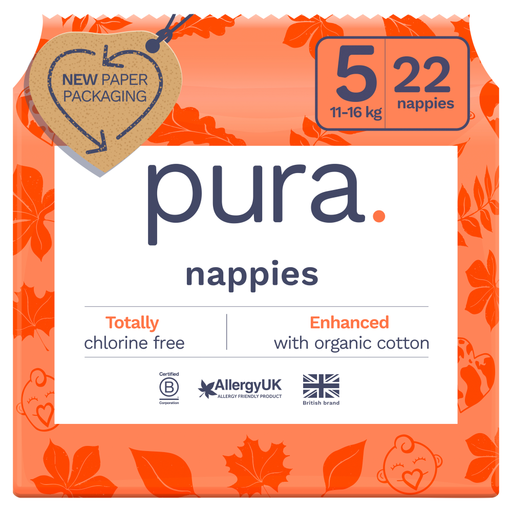
Why This Fits Their Persona: Parents of active toddlers prioritise leak-proof performance above all. This nappy is built for movement, offering a secure and comfy fit that stays in place during crawling, walking and playing, while providing up to 12 hours of dryness for uninterrupted nights.
It directly counters the "performance vs. eco" trap. The super-absorbent core and leak-free protection demonstrate that you don't have to sacrifice effectiveness for a sustainable, plant-based product.
Its main benefit is the combination of long-lasting absorbency and a flexible fit, ensuring reliable protection for active days and dry nights without compromising on soft, skin-friendly materials.
We have compiled a complete, real-time list of products that fully satisfy these strict selection criteria and UK safety regulations.
Genuinely sustainable nappies offer several environmental benefits. They often use materials from renewable resources, such as FSC-certified wood pulp and other plant-based fibres, which reduces reliance on petrochemicals. Many are produced in carbon-neutral manufacturing plants. Furthermore, brands like Pura use recyclable paper packaging, which helps to reduce plastic waste compared to conventional nappy packaging.
This is a common concern, but modern eco-friendly nappies are designed for high performance. The technology has evolved significantly from early versions. Reputable brands now use a highly effective super-absorbent core and features like secure leg cuffs and leak-barrier channels. When sized correctly, they offer protection that is comparable to leading conventional brands, often providing up to 12 hours of dryness.
Sizing for eco-friendly nappies is consistent with standard nappies and is primarily based on your baby's weight in kilograms (kg). Each pack will clearly state the recommended weight range (e.g., Size 3, 4-9kg). For the best fit, always choose the size that corresponds to your baby's current weight. If your baby is near the upper end of a weight range, you may find that moving up to the next size provides a more secure and comfortable fit, especially overnight.