
24/7 Customer Support

Free returns

Same-day & Next-day Delivery

Quality Guaranteed

Unlock Your Welcome Offers: FREE Delivery | Up to 80% OFF | Free 30-day JoyPlus trial
Download the APP
Hosting a party or event brings people together, but the clean-up afterwards can be a daunting task. While disposable plates offer undeniable convenience, the environmental impact of traditional plastic tableware is a growing concern for many of us. The good news is that you no longer have to choose between convenience and sustainability.
The market for eco-friendly party plates has expanded significantly, offering stylish, practical and greener alternatives. This guide is designed to help you navigate the options, understand what to look for and find the right disposable tableware for your next gathering. As the Joybuy Product Recommendation Officer, my role is to provide clear, practical advice to help you make an informed choice.
Before you add anything to your basket, it helps to know what makes a disposable plate a more responsible choice. Here are a few key points to consider.
The material is the most important factor. The two most common options are paper and bamboo.
To ensure you are buying a genuinely more sustainable product, check that it complies with current standards. In the UK, the Single-Use Plastics Directive has led to a ban on many single-use plastic items. Reputable manufacturers will state that their disposable tableware range is compliant, giving you confidence that you are making a better choice for the environment.
Finally, think about your event. Are you hosting a child's themed birthday party, a casual summer barbecue or a more elegant garden party? The style, size and durability you need will vary. For saucy foods, look for plates described as leak-resistant. For larger events, buying in bulk can offer better value.
Here are a few recommendations that balance style, function and environmental considerations.
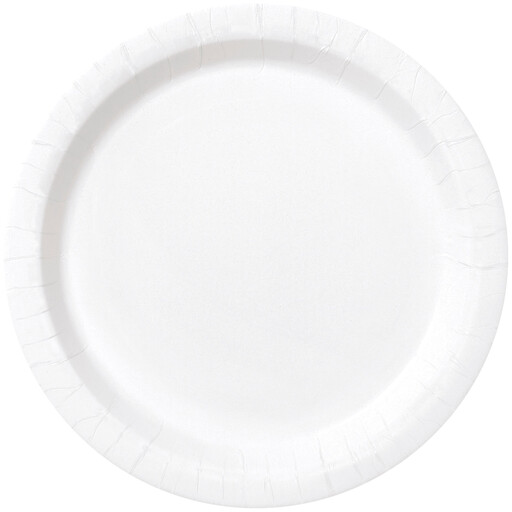

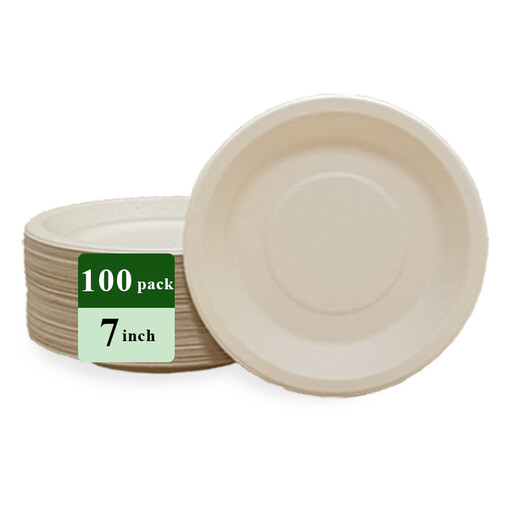
While these three options cover a range of needs, they are just the beginning. Different events call for different styles, sizes and materials. If you are looking for something specific or simply want to browse more designs, there are many other choices available.
Explore our full collection to find the perfect match for your next event.
Discover More Eco-Friendly Disposable Plates
1. Are paper plates really better for the environment? Paper plates, particularly those made from responsibly sourced materials and without plastic coatings, are generally a more sustainable choice than traditional polystyrene or plastic plates. They are derived from a renewable resource and can often be recycled or composted, reducing landfill waste.
2. What is the difference between compostable and biodegradable plates? These terms are often used interchangeably, but they mean different things. Compostable plates are certified to break down completely into non-toxic components in a specific timeframe under controlled composting conditions. "Biodegradable" is a broader term, simply meaning the item will break down over time, but this could take many years and potentially leave behind micro-residues. For a clearer environmental benefit, look for products labelled as "compostable".
3. Can you put hot food on bamboo plates? Yes, most plates made from bamboo or bamboo fibre are designed to be quite sturdy. Many, like the Rui bamboo plates featured above, are also specified as leak-resistant and microwave-safe, making them well-suited for serving a variety of hot and cold foods without becoming soggy or weak. It is always a good idea to check the product's specific features.