
24/7 Customer Support

Free returns

Same-day & Next-day Delivery

Quality Guaranteed

Unlock Your Welcome Offers: FREE Delivery | Up to 80% OFF | Free 30-day JoyPlus trial
Download the APP
For sea anglers, charter-boat fishers and freshwater trollers, choosing a lure for deep water is not simply a matter of picking the largest body or brightest colour. A lure may look convincing in a product photograph yet fail to reach the advertised depth, swim steadily behind a moving boat or withstand repeated contact with saltwater.
The ECOODA 165DD deep diving trolling lure is designed for anglers looking for a fish-shaped hard lure with a stated diving depth of up to 10 metres. Before buying, however, it is worth checking the specifications that have the greatest effect on practical use.
A listing may state a maximum depth, but the lure’s actual position in the water can vary with trolling speed, line diameter, line length, current and terminal tackle. “Up to 10 m” should therefore be treated as a specification under suitable conditions rather than a fixed depth in every situation.
If you need a lure to work close to a particular contour, allow time to tune your setup and observe how it swims. A 10 m diving lure is more useful when matched with appropriate line and boat speed.
A cyan blue finish can be visually appealing, but colour does not replace the lure’s diving structure, action or hardware. Bright colours may be useful in some water conditions, while natural or reflective finishes can suit others. The more important first checks are the body size, bill dimensions and hook arrangement.
Even a hard plastic fishing lure can suffer from neglected hooks, split rings or connection points. Salt residue and moisture can lead to corrosion, particularly when tackle is stored damp in a closed box. Rinsing with fresh water, drying thoroughly and checking the hooks should be part of the routine after every saltwater trip.
The 165DD model is described as a deep-dive lure with a maximum depth of 10 m and a 130 mm dive length. Its bill measures 66 mm long and 37 mm wide. These dimensions form a substantial front diving structure intended to help the lure work below the surface when trolled.
For offshore fishing, check whether your rod, line and boat speed are suitable for a deep-diving minnow lure. In freshwater, the same design may be useful around deeper channels or drop-offs, but local conditions still determine how closely it follows the stated depth.
This is a 165 mm minnow lure weighing 64 g. A longer, heavier body can provide a visible profile for anglers targeting larger predatory fish, but it also needs suitable tackle. Confirm your rod’s casting or trolling rating and the capacity of your reel before adding a large lure to the rig.
The body is made from hard plastic and has a fish-shaped minnow profile. The stated dimensions are:
These details help distinguish a substantial offshore fishing lure from smaller shallow-running models.
The lure is supplied with SIKE 3509 5X #2 hooks. “5X” indicates the listed hook strength classification, but anglers should still inspect the points and attachment hardware before use. Hook strength does not remove the need to match the lure with appropriate line, knots and tackle.
Tie the fishing line directly to the front eyelet with a secure knot, such as an improved clinch or Palomar knot. Always check that the eyelet, hooks and body are undamaged before launching.
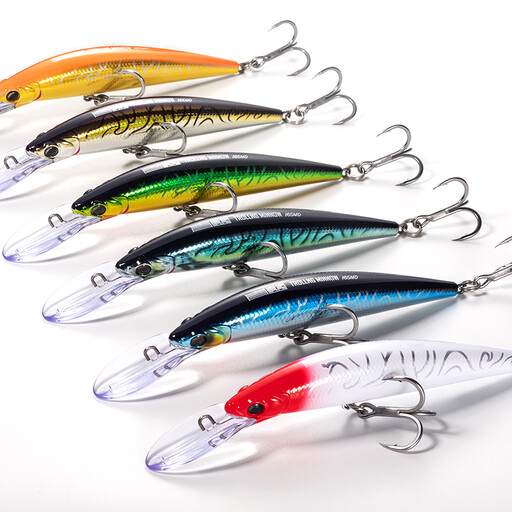
Why This Fits Their Persona: The 165MD option is a practical starting point for anglers who want a large cyan blue minnow profile but do not always need the deepest-running model. Check the product listing for its specific diving details before purchase.
It encourages a specification-led choice rather than assuming every 165 mm lure reaches the same depth.
165 mm fish-shaped body; cyan blue colour; suitable for comparing medium- and deep-diving trolling options.
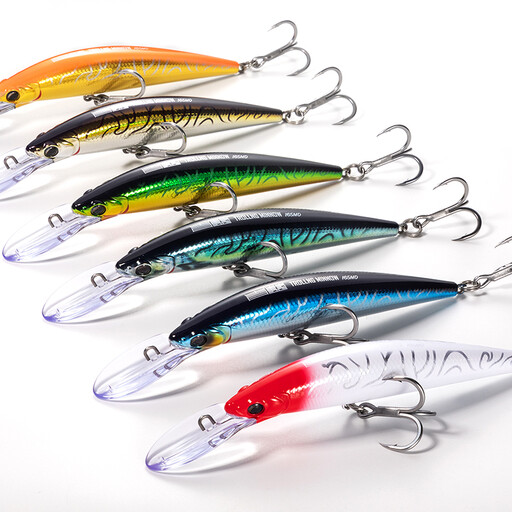
Why This Fits Their Persona: This model suits anglers who want clearly listed dimensions, a deep-diving structure and specified hooks for offshore or deep-water trolling.
The stated 10 m maximum depth, 64 g weight and bill measurements make it easier to compare the lure with your intended trolling setup.
Hard plastic body; SIKE 3509 5X #2 hooks; listed 10 m maximum depth.
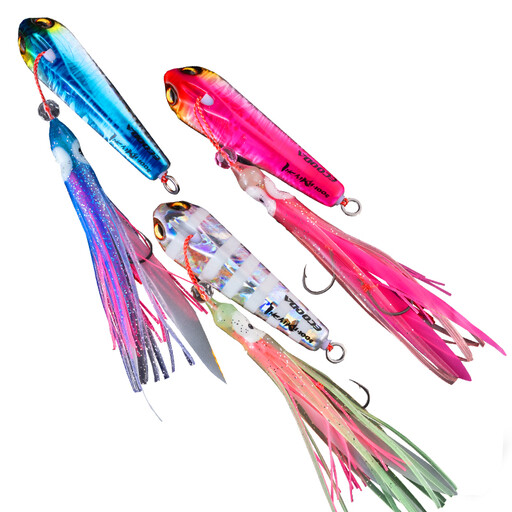
Why This Fits Their Persona: The 150 g weight and six-colour selection suit boat anglers comparing heavier vertical or deep-water lure options rather than a conventional minnow trolling profile.
Its stated weight makes the tackle requirement visible, helping prevent buyers from treating a heavy jig as a direct substitute for a 64 g trolling minnow.
150 g listed weight; six colours available; intended for anglers comparing heavier lure formats.
Use a secure knot at the front eyelet and check the lure’s swimming action beside the boat before sending it out. Keep the line clear of propellers and other lines when trolling from a charter or offshore boat.
After use, particularly with a saltwater trolling lure, rinse the body and hooks with fresh water. Dry the lure fully, inspect for rust or dull points and store it in a dry tackle box away from direct sunlight. Replace or service damaged hooks before the next trip. The same checks are useful for a freshwater trolling lure, especially after fishing muddy or weedy areas.
We have compiled a complete, real-time list of products that fully satisfy these strict selection criteria and UK safety regulations.
The product specification lists a maximum depth of up to 10 m. Actual running depth depends on factors including trolling speed, line length, line diameter, current and lure positioning.
The 64 g weight and 165 mm body make it a substantial option for trolling, but suitability depends on your rod, reel, line and target species. Check your tackle ratings before use, particularly when targeting large predatory fish.
Rinse it with fresh water after use, dry it completely and inspect the hard plastic body, eyelet and SIKE 3509 5X #2 hooks. Store it dry and out of direct sunlight. Handle the hooks carefully and keep the lure away from children, swimmers and anyone nearby during casting or retrieval.