
24/7 Customer Support

Free returns

Same-day & Next-day Delivery

Quality Guaranteed

Unlock Your Welcome Offers: FREE Delivery | Up to 80% OFF | Free 30-day JoyPlus trial
Download the APP
Choosing an ECOODA AVANZATO fishing lure is not simply a matter of selecting the most colourful option in a tackle listing. UK anglers may need one lure for a rocky shore, another for boat fishing over deeper water and a different design for trolling. Weight, swimming action, dive depth and maintenance all affect whether a lure suits your setup.
This guide filters the main choices by practical fishing use, helping you avoid common buying traps before you spend money.
A heavier lure is not automatically more suitable. A 60 g fishing lure may be easier to cast with lighter tackle, while a 120 g or 150 g fishing lure can reach depth more effectively in stronger tide or offshore current. However, the lure must stay within your rod and reel setup’s casting or jigging range.
Always check:
A jig, sinking pencil, vibration jig and minnow trolling lure are designed for different retrieval styles. A lure that performs a vibrating action during a steady retrieve will not behave like an inchiku jig worked close to the seabed.
Product titles can sometimes make a lure sound versatile without explaining the practical difference. Look for a clear description of its intended action, weight and depth range before buying.
Salt, sand and moisture can affect hooks, split rings and metal finishes. Even a hard-plastic deep-diving fishing lure needs cleaning after use. If a product listing does not provide much maintenance information, plan to rinse the lure with fresh water, dry it thoroughly and inspect sharp components after every saltwater session.
The main ECOODA AVANZATO range includes several useful formats:
Match the action to your fishing method rather than choosing solely by colour. For example, a sinking pencil may suit a shore angler covering water, while an inchiku design may be more practical for vertical offshore fishing.
The supplied ECOODA AVANZATO options include 80 g, 100 g, 120 g and 150 g inchiku models, alongside 60 g vibration and sinking designs. The correct choice depends on how quickly you need the lure to reach its working depth.
A useful starting point:
Weight does not tell you the exact running depth. Retrieve speed, line diameter, boat drift and current all influence where the lure travels.
The ECOODA Cyan Blue 165DD minnow is listed with a hard-plastic body, SIKE 3509 5X #2 hooks, a 64 g weight and a stated maximum dive depth of 10 m. Its listed body length is 165 mm, with a 130 mm dive length, 37 mm bill width and 66 mm bill length.
These are useful specifications for anglers targeting larger predatory fish while trolling, but they should not be treated as a guarantee of catches. Check the condition of the hooks before use and replace or sharpen them if they show corrosion or damage.
For any saltwater fishing lure:
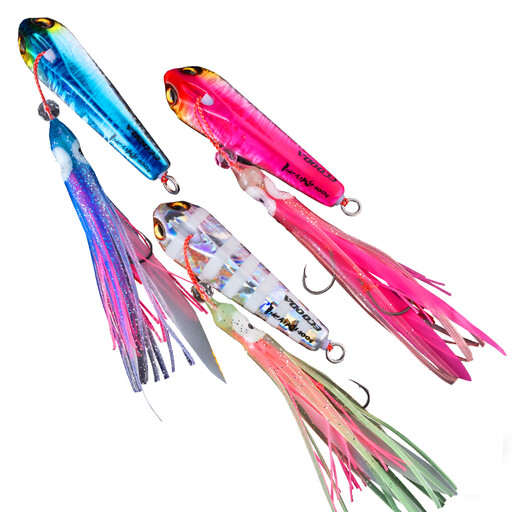
Why This Fits Their Persona: The 60 g format gives newcomers a manageable starting point for lure fishing when their rod is not designed for heavy offshore jigging. Six colour options also allow basic experimentation without immediately buying several lure types.
Its stated 60 g weight and vibration format make the intended setup clearer than a generic lure listing. Confirm that your rod’s weight range includes 60 g before ordering.
60 g weight; six colours available; vibration-style presentation.
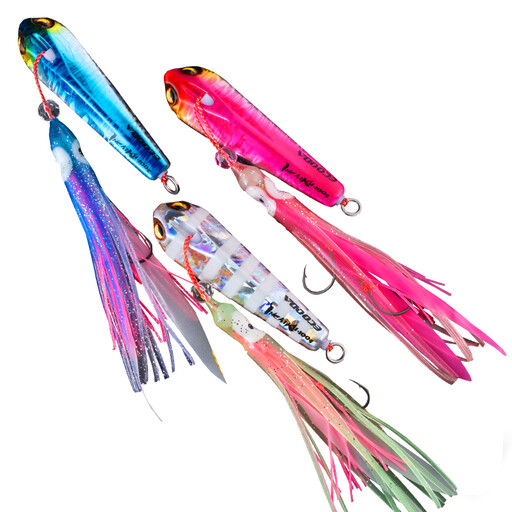
Why This Fits Their Persona: Anglers who want a clearly specified inchiku format can choose a 100 g model and compare six colour options for different light and water conditions.
The product name identifies the lure style, weight and colour availability, reducing uncertainty when comparing it with an unclassified metal lure.
100 g weight; inchiku jig format; six colours available.
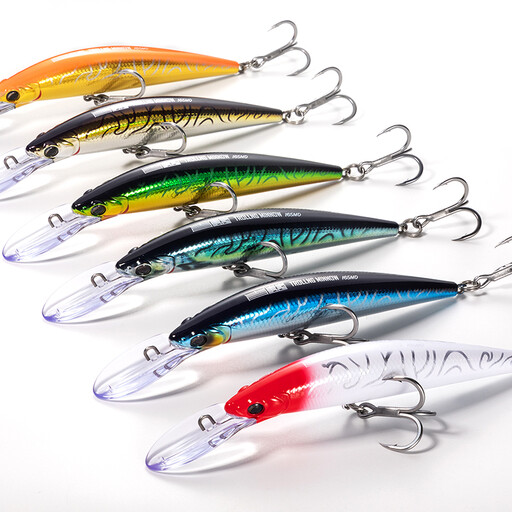
Why This Fits Their Persona: Boat anglers targeting deeper water can consider this hard-plastic minnow for trolling. Its listed 165DD design reaches up to 10 m and weighs 64 g.
The listing provides a stated dive depth, body dimensions, weight and hook specification, so buyers can compare it with trolling lures using measurable details.
Hard-plastic minnow body; stated dive depth up to 10 m; SIKE 3509 5X #2 hooks.
For more size and action combinations, browse the wider saltwater fishing lures category. You can also compare the 80 g, 120 g and 150 g ECOODA AVANZATO inchiku options, plus the 80 g long-cast sinking pencil lure.
We have compiled a complete, real-time list of products that fully satisfy these strict selection criteria and UK safety regulations.
It may suit UK saltwater lure fishing, boat jigging or trolling when its weight and action match the conditions. Check your rod rating, local fishing rules, weather, tide and the intended target species before use. Product suitability does not guarantee a catch.
Start with your tackle and fishing depth. Choose 60 g or 80 g for lighter casting conditions, 100 g for a middle-weight inchiku option and 120 g or 150 g where deeper water or stronger current requires more control. Never exceed your rod’s stated lure or jig range.
Rinse it with fresh water after each session, dry it fully and inspect hooks, rings and eyelets. Store it in a dry tackle box. Replace damaged or corroded components before your next trip and handle all hooks away from children, pets and other people.