
24/7 Customer Support

Free returns

Same-day & Next-day Delivery

Quality Guaranteed

Unlock Your Welcome Offers: FREE Delivery | Up to 80% OFF | Free 30-day JoyPlus trial
Download the APP
Choosing among ECOODA fishing lures is not simply a matter of selecting the most colourful pattern. UK anglers need to match lure design, running depth, weight and intended water to the fishing conditions. A lure suitable for sheltered freshwater may not cast, swim or withstand the same conditions as a saltwater fishing lure used from a boat.
This guide explains the practical details to check before buying, then matches several ECOODA options to different angling profiles.
A deep-diving fishing lure may be advertised with an impressive maximum depth, but its real running depth depends on line diameter, trolling speed, current, lure position and the amount of line released. A lure’s bill shape and length also influence how quickly it reaches depth.
Treat a depth figure as a reference rather than a guarantee. Check whether the product listing specifies a maximum depth, dive length or model type. The ECOODA 165DD, for example, is listed as a deep-dive model reaching up to 10 metres, whereas an MD model should not automatically be assumed to reach the same depth.
A 60g fishing jig, 100g fishing jig or 150g fishing jig can behave very differently in wind, tide and current. Heavier lures generally help maintain contact in deeper water, but they require a rod, reel and line set-up rated for the load. Using a heavy jig on unsuitable tackle can make casting uncomfortable and reduce control.
For boat fishing, compare lure weight with the depth and current. For shore fishing, also consider whether the rod can cast the lure safely. Do not select a weight simply because it is larger.
Colour can help visibility in clear, cloudy or deep water, but action is equally important. A minnow lure creates a swimming profile, an Inchiku jig is designed for vertical presentations and a vibrating swim lure produces movement and vibration during a retrieve.
Marketing images may show several attractive colours, but the more useful question is whether the lure’s design suits your technique. For sea bass fishing, for example, retrieve speed, tide direction and lure depth can be more relevant than choosing the brightest finish.
Match the lure to how you fish:
The most important figures to compare are lure weight, maximum depth, body length and, where provided, dive length. The ECOODA 165DD is listed at 64g, with a 165mm body, 130mm dive length and a maximum depth of 10m.
For jigs, consider the depth and current first. The ECOODA range includes 60g, 80g, 100g, 120g and 150g options. A lighter Inchiku jig may be easier to work in shallower water, while a heavier version can be more suitable where current makes it difficult to maintain a vertical presentation. Always check your rod and reel ratings before use.
A lure body made from hard plastic can provide a firm structure for repeated use, but the hooks and split rings still require inspection. The ECOODA 165DD listing specifies a hard plastic body and SIKE 3509 5X #2 hooks.
After saltwater use, rinse the lure with fresh water, dry it fully and check for corrosion, blunt points or damaged attachment points. Store it away from direct sunlight and avoid leaving wet tackle in a sealed box. Hooks are sharp: inspect the lure before use and keep it away from faces, children and other people during casting.
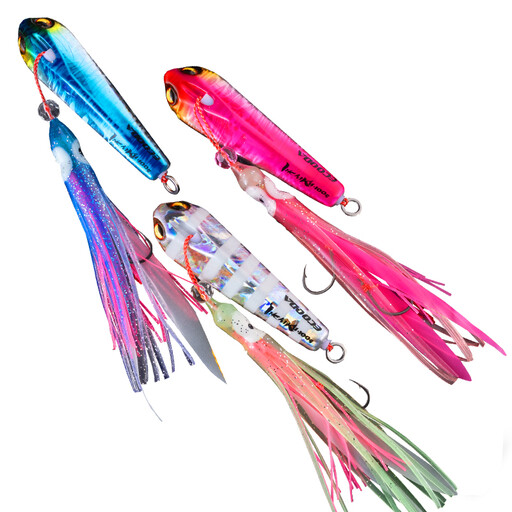
Why This Fits Their Persona: The 60g format gives beginners a manageable starting point for learning vertical jig control without immediately moving to heavier tackle. Six colour choices allow anglers to select a finish for different light and water conditions.
It focuses on a clearly stated weight and lure type rather than relying only on colour claims or vague depth promises.
60g weight; six available colour options; Inchiku format for vertical presentations.
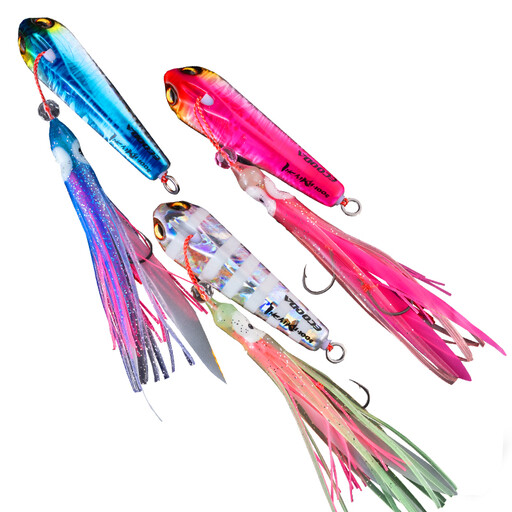
Why This Fits Their Persona: Anglers who regularly fish deeper water or stronger tides can consider a 150g Inchiku jig, subject to their rod and reel specifications. The silverfish profile and six colour options provide choice for boat-based saltwater sessions.
Its stated 150g weight makes the intended heavy-jig application clearer than products using unspecified “deep water” language.
150g weight; Inchiku construction; six listed colours.
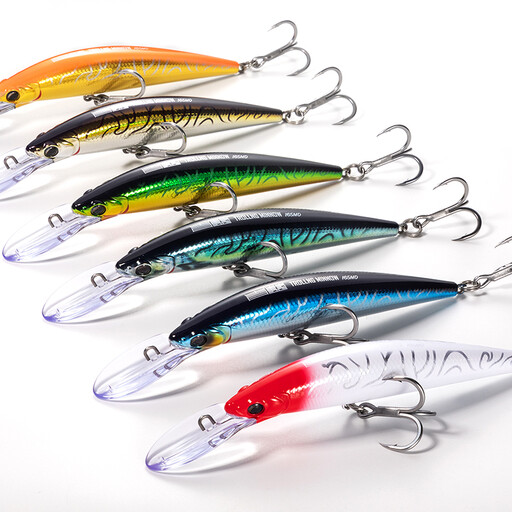
Why This Fits Their Persona: This model is aimed at anglers specifically looking for an offshore trolling lure or deep-diving minnow lure. Its listed 10m maximum depth makes it relevant to deeper trolling plans where the lure must work below the surface.
The listing provides measurable depth, weight and dimensions, helping buyers compare it with their target water rather than relying on broad “deep action” wording.
Up to 10m listed depth; 64g weight; 165mm body; SIKE 3509 5X #2 hooks.
We have compiled a complete, real-time list of products that fully satisfy these strict selection criteria and UK safety regulations.
Some listed models are described for saltwater or freshwater use, but suitability depends on the lure type, hooks, target species and tackle. After sea fishing, rinse the lure with fresh water and dry it before storage to reduce corrosion.
Choose according to depth, tide, current and your rod’s casting or jigging rating. A 60g fishing jig may suit lighter set-ups and calmer conditions, while 100g, 120g or 150g fishing jigs may offer more control in deeper or faster-moving water. Check your equipment limits before buying.
Inspect the body, eyelet, hooks and split rings before each trip. Rinse saltwater tackle with clean water, dry it thoroughly and store it in a ventilated tackle box. Replace hooks when they show rust, damage or reduced sharpness.