
24/7 Customer Support

Free returns

Same-day & Next-day Delivery

Quality Guaranteed

Unlock Your Welcome Offers: FREE Delivery | Up to 80% OFF | Free 30-day JoyPlus trial
Download the APP
Choosing ECOODA fishing lures involves more than selecting an attractive colour. UK sea anglers need to match lure type, weight, diving behaviour and tackle to the conditions. A lure designed for a boat drifting over deep water will not necessarily suit casting from a rocky shoreline, while an offshore trolling lure may be unnecessarily heavy for lighter inshore work.
This guide highlights common buying traps, explains the specifications that matter and presents suitable options for different fishing profiles.
A lure’s working depth depends on line diameter, trolling speed, current, boat movement and the amount of line deployed. A deep-diving lure described as reaching 10 metres should therefore be viewed as a design capability rather than a guaranteed depth in every situation.
The ECOODA 165DD deep-diving lure lists a maximum depth of 10 m, a 130 mm dive length and a 64 g body. These figures provide a useful comparison point, but anglers should still allow for sea state and line set-up.
A 60 g jig may be easier to work with on lighter tackle, but stronger tides can quickly move it away from the intended depth. Conversely, a 200 g fishing jig can be harder to retrieve repeatedly and may require a rod and reel designed for heavier loads.
Weight should be selected according to water depth, current speed, boat drift and tackle rating, not simply the size of the target fish.
Colour and reflective finishes can help a lure remain visible in different water conditions, but no colour guarantees a catch. Clear water, cloud cover, depth and forage species all influence how a lure appears.
A practical tackle box usually contains contrasting finishes rather than several near-identical colours. The ECOODA Inchiku jig range and Silverfish Inchiku jig lure options are available in six colours, allowing anglers to vary presentation without changing lure style.
Different lure designs create different actions:
Before ordering, check whether the lure is intended for casting, trolling, vertical jigging or a combination of techniques.
Common ECOODA jig weights include 60 g, 80 g, 100 g, 120 g, 150 g and 200 g. Lighter weights can be more manageable for shallower water and reduced current. Heavier versions are more suitable where maintaining contact with the seabed is difficult.
For trolling, compare the model designation carefully. The 165DD is identified as a deep-diving model, while the 165MD trolling lure is a medium-diving minnow design. Do not assume that two lures with the same 165 mm naming convention will dive in the same way.
Also check:
Hard-plastic bodies are commonly used for minnow-style lures because they retain a shaped profile and can support a diving bib. The ECOODA 165DD product listing specifies a hard plastic body and SIKE 3509 5X #2 hooks.
Hooks must be inspected before every trip. Sharp hooks can cause injury, and saltwater can encourage corrosion if tackle is stored damp. After use, rinse lures with fresh water, dry them fully and check for rust, dull points, cracked bodies or damaged split rings. Store them in a dry tackle box away from prolonged direct sunlight.
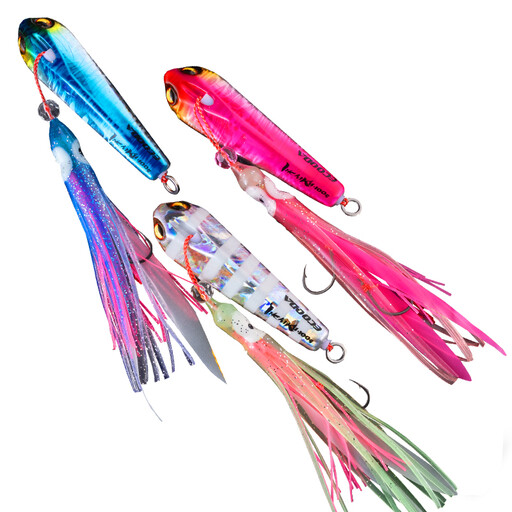
Why This Fits Their Persona: The 60 g format gives newcomers a lighter entry point for boat jigging in suitable depths and moderate conditions around UK waters.
Its stated weight is clear, helping buyers avoid choosing a heavy jig without considering rod and current conditions.
60 g weight; six colour options for varying light and water conditions.
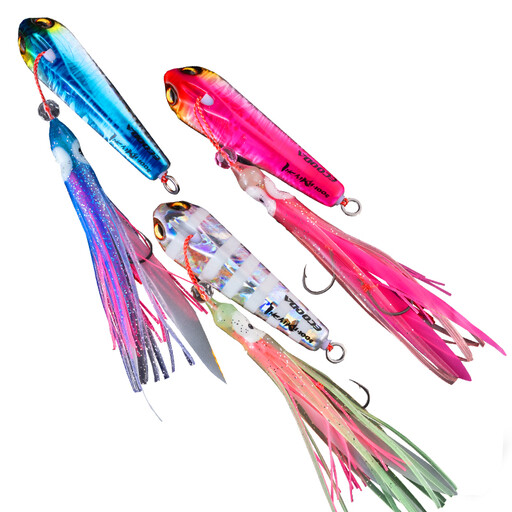
Why This Fits Their Persona: Anglers who prioritise a clearly defined offshore jigging format may prefer the 150 g Silverfish profile for deeper boat sessions where a heavier lure is appropriate.
The listed 150 g weight makes it easier to compare with the rod, line and depth before purchase rather than relying on appearance alone.
150 g specification; six colour choices within the Silverfish Inchiku jig range.
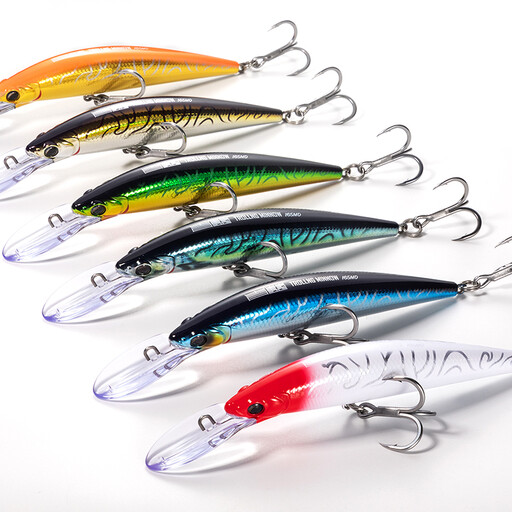
Why This Fits Their Persona: Offshore boat anglers seeking a stated deep-diving specification can use this minnow-style lure for trolling scenarios in saltwater or freshwater.
The listing provides maximum depth, body dimensions, weight and hook details instead of only using broad claims about performance.
Maximum listed depth of 10 m; 64 g hard-plastic body with SIKE 3509 5X #2 hooks.
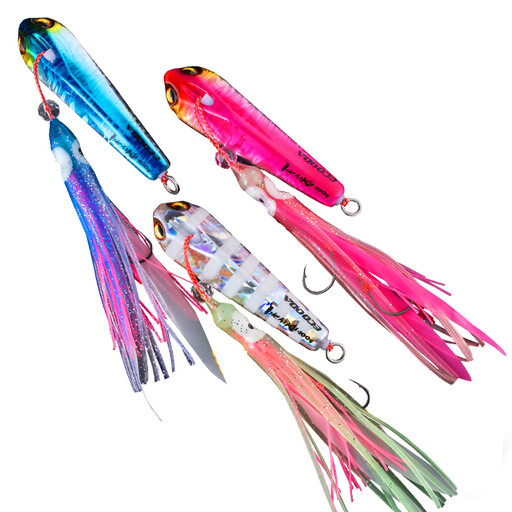
Why This Fits Their Persona: An 80 g sinking pencil format may suit anglers who want a lure that can be cast from a UK shoreline or used from a boat when a sinking presentation is preferred.
Its product name identifies both the long-cast and sinking format, making the intended presentation clearer before ordering.
80 g weight; six colour options; sinking pencil design for variable retrieve depths.
Anglers who prefer vibration can compare the ECOODA AVANZATO 60 g Vibrating Swim Lure with the 60 g Vibrating Sinking Pencil Lure. Although both are 60 g, their names indicate different actions and sinking behaviour. For deeper jigging, the 80 g, 100 g, 120 g, 150 g and 200 g Inchiku options allow a more precise match to current and depth.
For a medium-depth trolling set-up, compare the available ECOODA 165MD trolling lure listings carefully, checking the individual product page for the exact colour, components and stock information.
We have compiled a complete, real-time list of products that fully satisfy these strict selection criteria and UK safety regulations.
Several listed formats are intended for saltwater or offshore-style use, including trolling minnows, Inchiku jigs and sinking lures. Confirm the lure weight, hooks and intended method are compatible with your rod, reel and local conditions.
Start by checking water depth and current. A 60 g or 80 g jig may suit lighter conditions, while 100 g, 120 g, 150 g or 200 g models can help maintain contact in deeper or faster-moving water. Always remain within the tackle manufacturer’s stated rating.
Rinse the lure with fresh water, dry it thoroughly and inspect hooks, split rings and the body. Replace or sharpen damaged hooks where appropriate, then store the lure in a dry tackle box. Handle all hooks carefully during rigging, casting and transport.