
24/7 全天候客户支持

免费退货

当日/次日达

品质保障

开启新人专享福利: 全场免邮 | 低至 2 折 | 免费试用 30 天 JoyPlus 会员
下载 Joybuy
As a UK angler, you know that the right rod is more than just a piece of equipment; it's an extension of your skill and a crucial tool for success. Whether you're casting lures for bass along the coast or targeting carp in a quiet lake, selecting a rod that matches your specific discipline can be a challenge. With so many specifications and technical terms, it's easy to feel overwhelmed.
My name is Joybuy, and as the Product Recommendation Officer at Joybuy, my role is to help you navigate these choices. This guide focuses on the ECOODA range, offering clear insights into how to select a rod that aligns with your angling needs, without the marketing hype.
Before we look at specific models, let's cover a few key considerations that will help you make a more informed decision.
The ideal rod is designed for a specific purpose. A powerful, stiff rod built for casting heavy lures into a headwind is very different from a sensitive rod designed to detect subtle bites when jigging.
The quality of a rod is often found in its details. High-performance components can significantly improve casting distance, sensitivity and durability. For instance, guide rings from recognised manufacturers like Fuji are often specified on higher-quality rods. Silicon Carbide (SiC) rings are valued for their hardness and low-friction properties, which can help improve casting performance and reduce line wear, especially when using braided lines.
For many anglers, a one-piece rod is not practical. A two-piece or multi-section travel fishing rod offers a great balance of performance and convenience. Modern two-piece rods have come a long way, and the ferrules (the joints) are now designed so well that the action feels almost seamless, making them a reliable choice for anglers on the move.
Here are a few standout models from the ECOODA range, selected for their specific applications and features that are well-suited to UK angling.
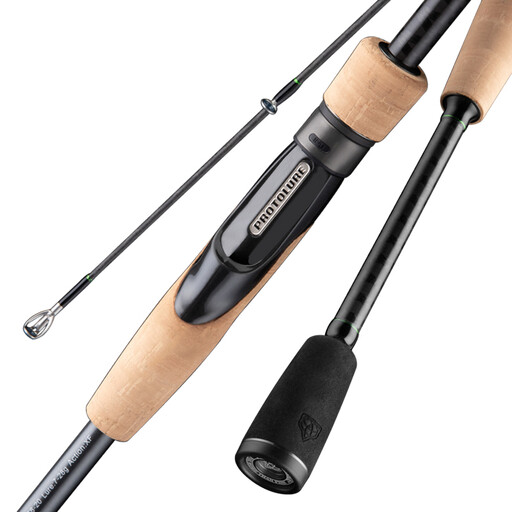
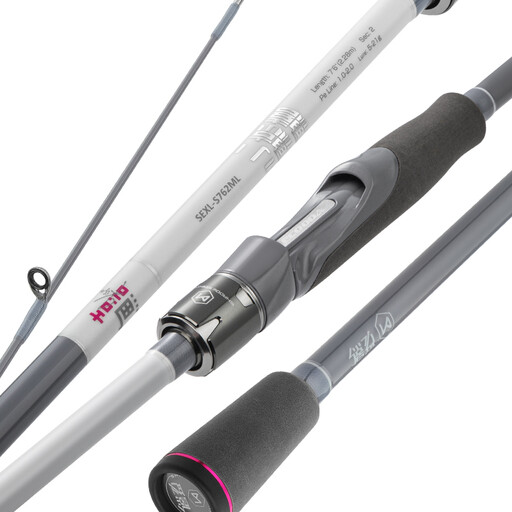
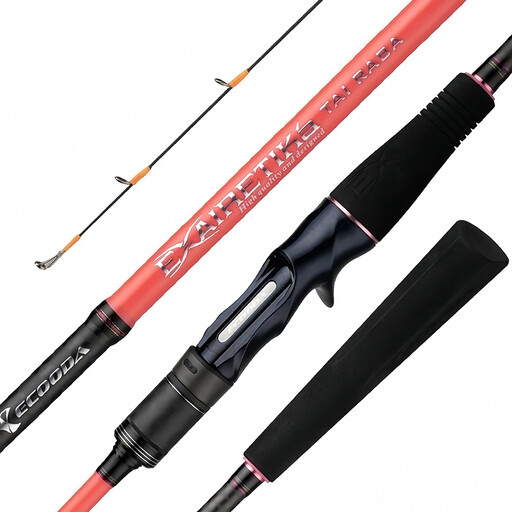
The rods highlighted here are excellent choices for lure, sea and jigging applications. However, if your angling style is different—perhaps you prefer traditional bait methods—you may be looking for something else. For those who enjoy watching a float dip below the surface, a different type of rod is required.
Explore our wider selection of float fishing rods to find the perfect match for your technique.
Yes, several models in the ECOODA rods UK range are designed with saltwater use in mind. The ECOODA Protolure CC, for example, is specifically listed as a sea bass rod suitable for saltwater. When choosing any rod for sea angling, it's always good practice to check for corrosion-resistant components and to rinse the rod with fresh water after each trip.
A standard spinning rod is typically designed for casting and retrieving lures horizontally. It usually has a faster action for casting distance and hook-setting power. A jigging rod, on the other hand, is built for fishing vertically from a boat. It often has a more parabolic or moderate action, which helps to impart the correct movement to the jig and absorb the powerful runs of fish hooked directly below.
The most common lengths for a carp fishing rod in the UK are between 10ft and 13ft. A 12ft rod is a great all-rounder, offering a good balance of casting distance and fish-playing ability. Shorter 10ft rods are becoming popular for fishing at closer ranges or in tighter swims, while longer 13ft rods are generally used for casting to extreme distances on large pits. Your choice will depend on the size of the waters you typically fish.