
24/7 Customer Support

Free returns

Same-day & Next-day Delivery

Quality Guaranteed

Unlock Your Welcome Offers: FREE Delivery | Up to 80% OFF | Free 30-day JoyPlus trial
Download the APP
Choosing ECOODA AVANZATO fishing lures is not simply a matter of picking the most colourful design or heaviest weight. Sea anglers in the UK need to match lure style, sinking behaviour and weight to the fishing location, tackle and target species. A lure that works from a boat over deeper water may be awkward to cast from a rocky shore.
There are also several common buying traps. Product names can sound impressive while leaving out practical details, and a lure may be unsuitable for your rod or local conditions. Use the following checks before buying.
A 60 g fishing lure is not automatically suitable for every spinning rod, while a 200 g fishing lure may exceed the recommended casting range of lighter shore equipment. Always compare the lure weight with your rod’s casting rating and the capacity of your reel and line.
For boat fishing, heavier lures can help reach deeper water and maintain contact with the bottom. From the shore, however, weight must be balanced with safe casting technique and the rod’s stated limits.
A sinking pencil lure, vibrating swim lure and inchiku jig lure behave differently in the water. “Realistic” appearance alone does not tell you how a lure should be retrieved.
Buying the wrong style can lead to poor control, even when the finish and colour look suitable.
Six available colours provide useful choice, but no colour guarantees a catch. Water clarity, cloud cover, depth and the presence of local baitfish all affect visibility. Silverfish-style finishes may be considered when matching small, reflective prey, while stronger contrasting colours can be easier to track in murky water or low light.
For UK saltwater fishing, carrying two or three contrasting options is often more practical than buying several lures with nearly identical finishes.
Weight influences casting distance, sink rate and bottom contact. The ECOODA AVANZATO range includes options at 60 g, 80 g, 100 g, 150 g and 200 g, allowing anglers to select according to conditions rather than relying on one general-purpose size.
These are selection guidelines, not guarantees of performance. Check the individual product listing and your tackle specifications before placing an order.
A hard fishing lure usually retains its profile when cast and retrieved, while a soft fishing lure may offer a more flexible body. Soft materials can require greater care around hooks, heat and sharp tackle. Hard-bodied designs should still be rinsed after use because salt can affect hooks, split rings and connection points.
The product names in this range identify several formats, including realistic lures, soft lures, vibrating designs and inchiku jig or popper styles. Confirm the listing details for hook configuration and any included components before fishing.
Saltwater fishing lures need routine care regardless of price. After use:
Also check the manufacturer and UK responsible-person information shown on the listing. For products supplied in the UK, the relevant compliance details should be available where required. Product compliance information is not a substitute for checking that the lure is suitable for your rod, line and intended fishing environment.
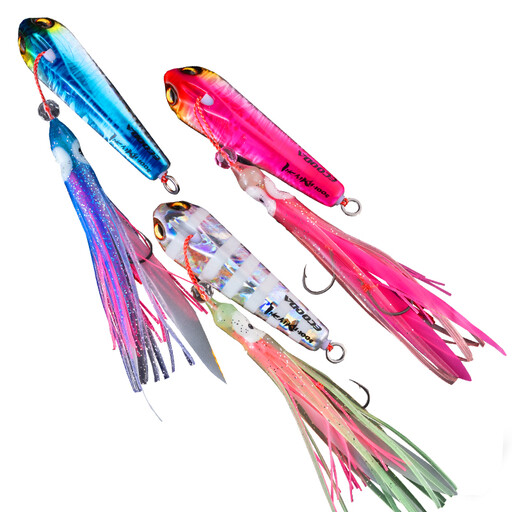
Why This Fits Their Persona: The 60 g format gives newcomers a clearly defined entry point for lighter saltwater tackle, with six colour options to compare without buying several lure types.
Its stated weight makes tackle matching more straightforward than choosing by appearance alone, while the sinking-pencil format identifies the intended action.
60 g weight; six listed colour options; sinking pencil design.
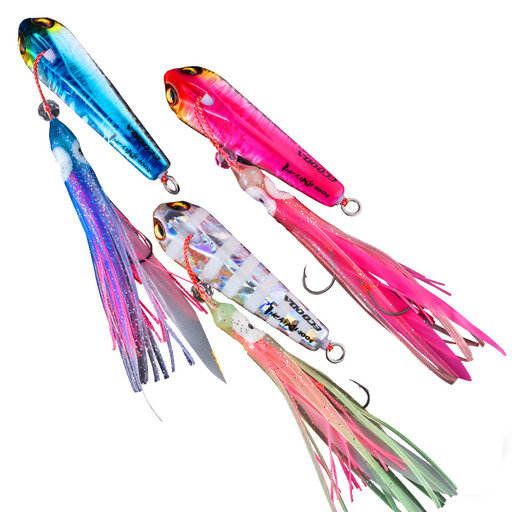
Why This Fits Their Persona: Anglers who prioritise a defined baitfish-style profile can compare an 80 g realistic lure with their normal shore or boat setup.
The product title separates the realistic profile and exact weight from vague appearance-based wording, making the choice easier to assess against local conditions.
80 g stated weight; realistic lure format; six listed colour options.
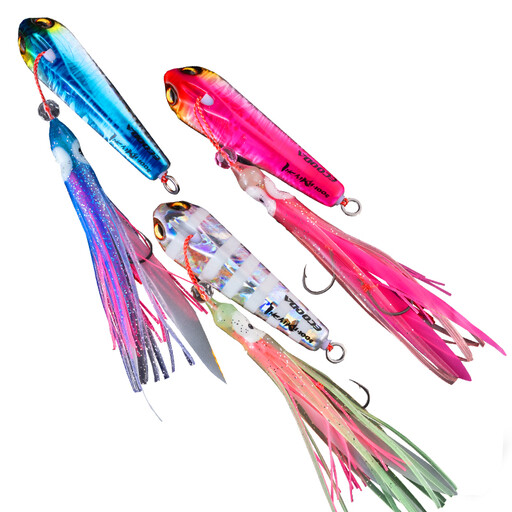
Why This Fits Their Persona: A 150 g inchiku jig lure is aimed at anglers using heavier boat tackle or fishing where maintaining a deeper presentation is important.
The specific inchiku format and 150 g weight help prevent the common mistake of using a light casting lure for a deeper, vertical presentation.
150 g stated weight; silverfish inchiku jig format; six listed colour options.
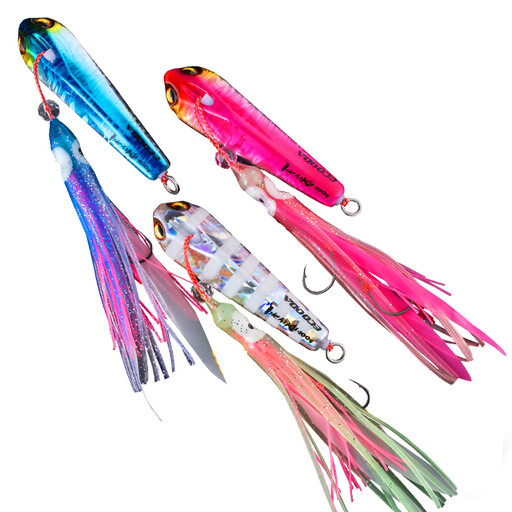
Why This Fits Their Persona: Shore anglers looking for a long-cast fishing lure can start with the clearly stated 80 g sinking-pencil format, subject to their rod rating.
It identifies both the long-cast intention and sinking action, rather than leaving anglers to guess whether the lure is intended for surface or subsurface work.
Long-cast designation; 80 g weight; sinking pencil construction; six listed colours.
Start with the water rather than personal preference. In clear conditions, a silverfish jig lure or realistic pattern may provide a more natural visual profile. In coloured water, overcast weather or deeper areas, a contrasting finish may be easier to track.
For a sinking design, count the drop time and repeat the same retrieve so you can identify the working depth. With a vibrating swim lure, vary the speed and add pauses. An inchiku jig lure can be lifted and allowed to fall while maintaining line contact. Always adjust to tide, wind and the target species rather than treating the lure description as a guaranteed fishing method.
Other options in the ECOODA AVANZATO range include a 100 g silverfish inchiku jig lure, a 200 g version, a 200 g hard lure, 150 g soft and popper-style lures, and 60 g vibration designs. Compare each product’s weight and format before buying.
We have compiled a complete, real-time list of products that fully satisfy these strict selection criteria and UK safety regulations.
Match the lure to your rod’s casting range first. Choose 60 g for compatible lighter tackle, 80–100 g for a middle-weight option and 150–200 g for deeper boat fishing or stronger tidal conditions. Do not exceed the rod or line manufacturer’s stated limits.
The range includes formats labelled as sinking pencils, vibrating lures, hard lures, soft lures and inchiku jigs, all of which may suit different saltwater techniques. Check the individual listing, terminal tackle and your equipment before use. Rinse every sea fishing lure with fresh water after fishing to reduce salt residue and inspect hooks and rings regularly.
Lifespan depends on contact with rocks, fish, hooks, storage and rinsing. Saltwater exposure can corrode metal components if residue is left in place. Fresh-water rinsing, complete drying and prompt replacement of damaged hooks or split rings can help keep a lure usable for longer.