
24/7 Customer Support

Free returns

Same-day & Next-day Delivery

Quality Guaranteed

Unlock Your Welcome Offers: FREE Delivery | Up to 80% OFF | Free 30-day JoyPlus trial
Download the APP
Finding engaging activities for a three-year-old that are both fun and educational can be a challenge. In a world of screens, many parents and guardians are looking for classic, hands-on ways to support their child's development. Educational board games for 3 year olds offer a fantastic solution, providing a space for learning foundational skills while enjoying quality family time. This guide is designed to help you navigate the options and find a game that will delight your little one, focusing on what truly matters: age-appropriate fun, skill development and lasting play value.
As the Joybuy Product Recommendation Officer, my role is to help you make informed choices by highlighting practical features and benefits, cutting through the marketing clutter.
Before diving into specific recommendations, here are a few key factors to consider when selecting toddler board games.
A three-year-old's attention span is short, and complex rules can lead to frustration. The most suitable first board games have straightforward objectives, such as matching pairs, collecting items or moving a piece from start to finish. Look for games that require minimal setup and can be played in 10-15 minutes.
Toddlers are not always gentle with their belongings. Choose games with thick, sturdy cardboard pieces that can withstand enthusiastic play. Components should be large enough to be handled easily by small hands and, crucially, not pose a choking hazard. All games sold in the UK must conform to safety standards, but it's always wise to check for robust construction.
The best learning games for preschoolers seamlessly integrate educational elements. Whether it's a counting game for kids that reinforces numbers or a memory game that hones observational skills, the learning aspect should feel like a natural part of the fun. Games that encourage turn-taking, sharing and following simple instructions are also excellent for developing social skills, making them ideal for family games for young children.
Based on their design, educational value and suitability for young children, here are some of our standout recommendations.
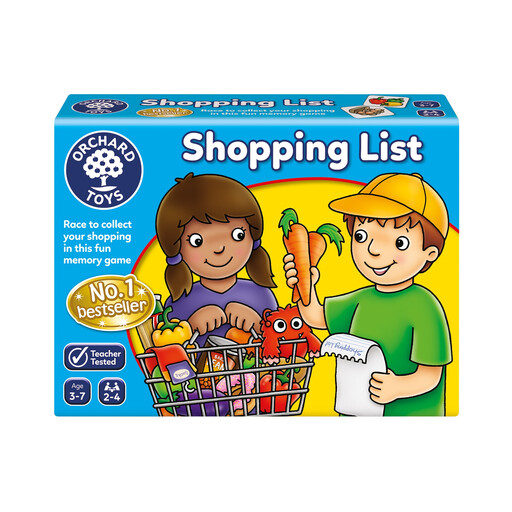
Why It Stands Out: The Orchard Toys Shopping List game is a modern classic for a reason. It uses a familiar, everyday theme—grocery shopping—to engage children in a simple matching and memory game. Players take turns turning over cards showing items like tomatoes or washing powder, aiming to be the first to fill their trolley with everything on their list. Its simplicity is its greatest strength, making it an accessible entry point into the world of board games.
Pros:
Who is it for? This game is perfect for children aged 3 and up who are ready for their very first board game. It's an excellent choice for parents looking to introduce concepts of matching and memory in a fun, low-pressure way.
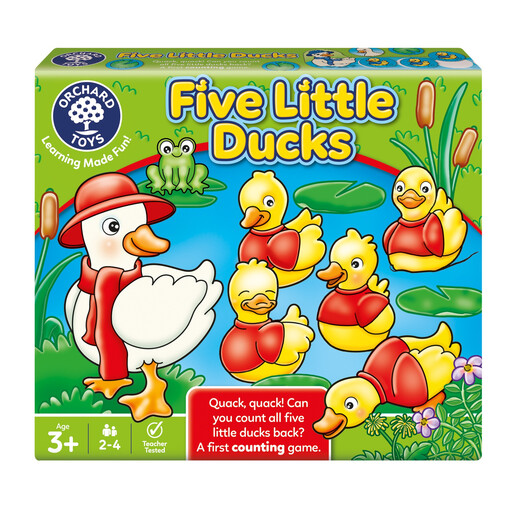
Why It Stands Out: Bringing the beloved nursery rhyme to life, this game is a charming counting game for kids. Players move around the board collecting ducklings, helping them develop number and colour recognition skills. The gameplay is interactive, encouraging children to count aloud and call their ducks home with a "quack, quack, quack," which adds a delightful element of imaginative play.
Pros:
Who is it for? An ideal choice for children aged 3+ who enjoy singing and nursery rhymes. It's particularly good for families wanting to focus on building early numeracy skills in a playful, engaging context.
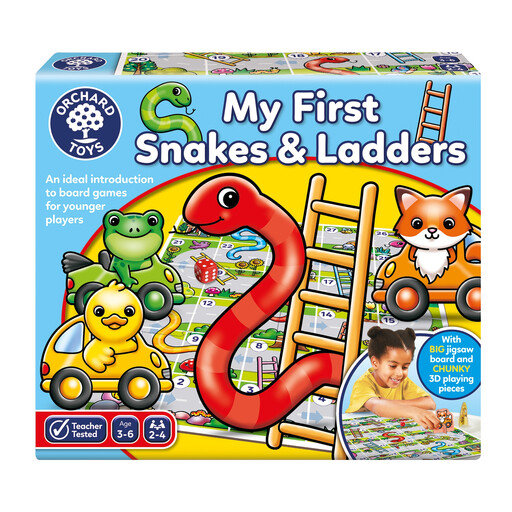
Why It Stands Out: This game simplifies the traditional Snakes and Ladders for a younger audience. It uses a simple counting system, making it easier for children who are just learning their numbers. The board is bright, colourful and features friendly characters. It’s a gentle introduction to the concept of moving a counter along a numbered track, a fundamental skill for many future family games for young children.
Pros:
Who is it for? This is a great option for children aged 3 and over who are ready to learn about counting and moving pieces on a board. It serves as an excellent bridge to more complex board games they will enjoy as they grow older.
The world of toddler board games is vast and full of exciting themes and learning opportunities. If the recommendations above aren't quite what you're looking for, or if you'd like to see a wider variety of Orchard Toys games and other brands, there are many more to discover.
Explore our full collection to find the perfect game for your family.
Browse Our Complete Range of Children's Board Games
Board games are powerful tools for early development. At this age, they can help a child develop a wide range of skills, including:
Orchard Toys games are specifically designed with preschoolers and early years education in mind. Their products are well-regarded for their focus on "learning made fun." Key features often include durable, thick card components, simple-to-understand rules and colourful illustrations that appeal to young children. Many of their games, like the ones highlighted above, are designed to support key developmental milestones.
Introducing a first board game should be a positive and fun experience. Start by choosing a game with a theme they love, whether it's animals, vehicles or shopping. Play for short periods and don't worry too much about sticking strictly to the rules at first. The main goal is to have fun together. Celebrate small victories, like matching a pair or taking a turn correctly, and end the game before they lose interest. This helps build a positive association with board games for years to come.