
24/7 Customer Support

Free returns

Same-day & Next-day Delivery

Quality Guaranteed

Unlock Your Welcome Offers: FREE Delivery | Up to 80% OFF | Free 30-day JoyPlus trial
Download the APP
As a Joybuy Product Recommendation Officer, my role is to help you navigate the crowded toy market. When it comes to educational building blocks, the promises are big, but the reality can often be disappointing. Many UK parents invest in these toys hoping to foster creativity and learning, only to find them gathering dust after a few weeks. This guide cuts through the marketing clutter to focus on what truly matters for safe, engaging and lasting play.
Before you buy, be aware of these common pitfalls:
To ensure you are getting a toy that is both safe and valuable, focus on these core parameters. They are the non-negotiable details that separate a good investment from a waste of money.
For any toy, safety is paramount. In the UK, look for products that state compliance with EN71 standards. This is your assurance that the toy has been assessed for safety, covering materials, flammability and physical properties like choking hazards.
Different blocks suit different ages and developmental needs. Matching the toy to your child's current stage is key to ensuring it gets used.
Instead of a generic list, we have matched a few noteworthy options to specific family needs and play styles.
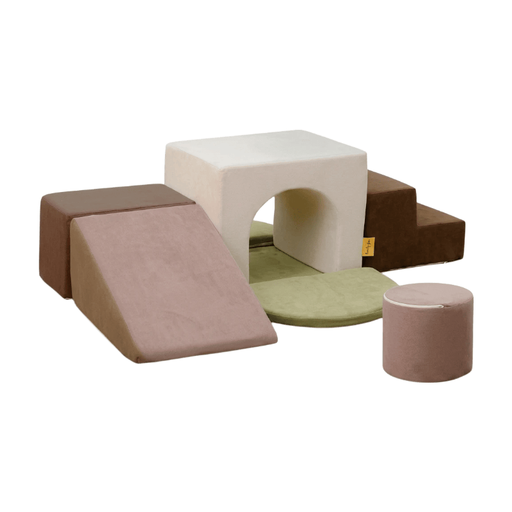
Why This Fits Their Persona: This set is designed for toddlers who need to burn off energy indoors. It transforms a living room into a safe play zone for climbing, crawling and building, directly supporting the development of gross motor skills and balance.
It directly counters the safety hazard pitfall. The product description confirms EN71 compliance, use of high-density foam and features like non-slip bases and hidden zippers.
The covers are removable and machine washable, a practical feature for maintaining hygiene. The modular design allows for endless configurations to keep play fresh.
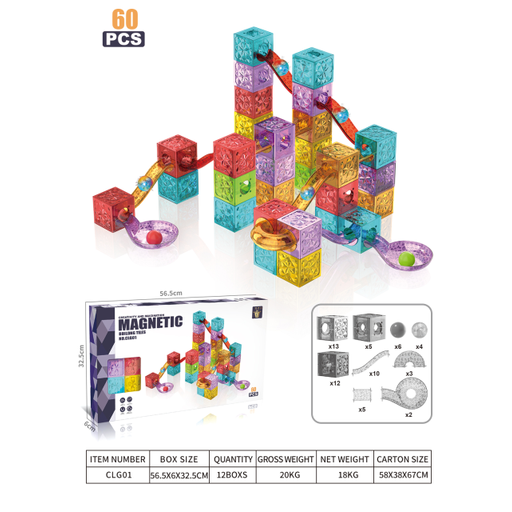
Why This Fits Their Persona: This is an excellent entry point into magnetic construction for a child aged 3-6. The 60-piece set is substantial enough for creative builds and the inclusion of pipe connectors and a magnetic ball adds a layer of physics-based play.
It tackles the weak magnet and safety issues head-on. The description specifies strong magnetic performance and that magnets are securely sealed with ultrasonic welding, backed by CPC and ASTM certifications.
The unique diamond-shaped tiles and pipe system offer more creative possibilities than standard square tiles, extending the toy's lifespan as the child's skills grow.
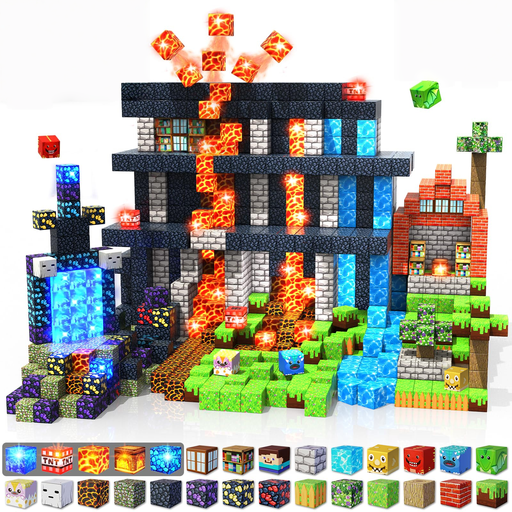
Why This Fits Their Persona: For children aged 4+ who are ready for more than just basic structures. The large piece count, themed characters and light-up blocks elevate play from simple construction to imaginative world-building and storytelling.
This set avoids the "empty educational label" pitfall by providing tangible tools for creativity. The included idea booklet, characters and light blocks give a genuine framework for STEM learning through storytelling and design.
The 24 light blocks are a significant differentiator, allowing children to illuminate their creations from within. The set is made from high-quality, non-toxic materials for safe and durable play.
We have compiled a complete, real-time list of products that fully satisfy these strict selection criteria and UK safety regulations.
For hard plastic magnetic tiles, simply wipe them with a soft, damp cloth. Avoid immersing them in water or using harsh chemical cleaners, as this can damage the plastic or internal magnets. For soft building blocks, check the manufacturer's instructions. Many, like the BanaSuper sets, feature removable, machine-washable covers, which is a highly practical feature for maintaining hygiene.
Safety is a valid concern. For children aged 3 and up, magnetic tiles are generally safe provided they are from a reputable source. Always look for sets that explicitly state the magnets are securely sealed within the plastic using methods like ultrasonic welding. Check for EN71 compliance or equivalent safety certifications. For any child, but especially those under 3, adult supervision is essential, as swallowing magnets can cause serious injury. Always follow the age recommendations and warnings on the packaging.
This depends on your goal. For a single child just starting out (around age 3), a set with 50-60 pieces is often sufficient to build a variety of 2D and simple 3D shapes without being overwhelming. If you have multiple children or want to enable more ambitious projects like large castles or complex marble runs, a set with 100 or more pieces will provide much more flexibility and long-term play value.