
24/7 Customer Support

Free returns

Same-day & Next-day Delivery

Quality Guaranteed

Unlock Your Welcome Offers: FREE Delivery | Up to 80% OFF | Free 30-day JoyPlus trial
Download the APP
Buying educational building toys for children can look simple until you compare piece counts, age labels, materials and play features. A large box does not always mean more useful play, while a low price may hide weak connectors, missing accessories or unsuitable small parts.
For UK families, the right choice should match the child’s age, interests, available space and ability to follow instructions. Whether you are comparing magnetic building blocks, STEM toys for kids, DIY craft kits or display-worthy construction sets, these checks can help prevent wasted money.
A set with hundreds of parts may contain many tiny or repetitive pieces that are difficult for younger children to handle. Conversely, a smaller set with varied shapes, connectors or accessories may offer more types of play.
Check what the pieces actually enable. Can children build several models, create their own designs or only follow one fixed example? A set with expansion potential may remain useful for longer than a larger but restrictive box.
Age labels are not decorative. Small building pieces, beads and craft embellishments can present a choking risk for younger children. Some science kits also contain ingredients or chemicals requiring adult supervision.
Always read the manufacturer’s warning, recommended age and supervision guidance. For children under three, avoid products containing small detachable parts, even if the child appears confident with construction toys.
Many screen-free learning toys introduce useful ideas such as geometry, balance, colour or sequencing. However, a young child may still need help sorting pieces, reading instructions or completing a science activity safely.
Consider whether the set suits the child’s current attention span. A complicated model can be frustrating, while a simple construction toy may encourage repeated experimentation.
ABS plastic is commonly used for magnetic tiles and construction pieces because it is lightweight and easy to wipe clean. Look for smooth, rounded edges and clear information about how magnets are enclosed. Welded or sealed construction can reduce the risk of a magnet becoming accessible if a piece breaks, but damaged toys should still be removed from play.
For wooden kits, check whether parts are pre-cut and whether paints, adhesives and other materials are supplied. Avoid relying on vague phrases such as “premium quality” without a clear material description.
For toys sold in the UK, look for relevant CE or UKCA marking, safety warnings and age guidance. The EN71 toy safety standard is a useful reference when listed, but a marking should not replace reading the product instructions.
Science and craft kits require extra care. Check whether goggles, gloves, protective coverings or adult supervision are recommended. Keep ingredients, beads, magnets and small parts away from younger children and pets.
Piece count should be assessed alongside the size and type of components. A compact 58-piece set may be easier to take on a journey, whereas an 899-piece model is more suited to a dedicated building area.
Storage matters too. A pouch, box or organiser helps prevent missing pieces and makes it easier to continue a project later. For display models, check the assembled dimensions before buying, particularly if the finished item will sit on a shelf or desk.
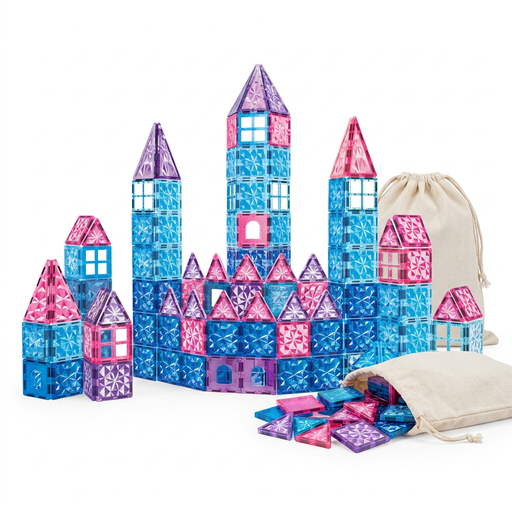
Why This Fits Their Persona: A 58-piece starter collection offers a manageable introduction to magnetic construction for younger builders and can be packed in its storage pouch for visits or holidays.
The specified magnetic tiles use sealed construction and smooth edges; inspect pieces regularly and follow the stated age guidance.
58 pieces, diamond-surface tiles, ABS material and a storage pouch.
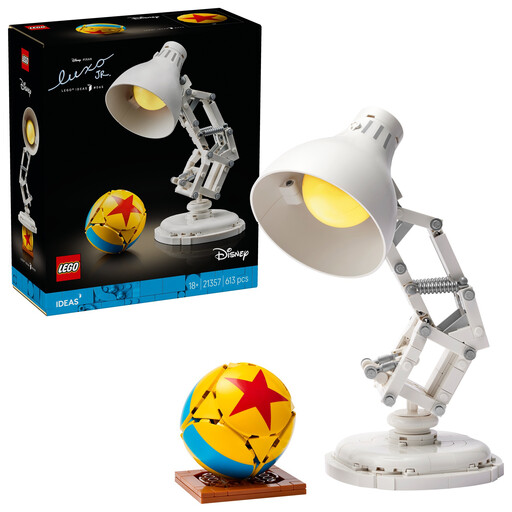
Why This Fits Their Persona: Adult LEGO enthusiasts and hobby builders may prefer a structured project that becomes a display piece after assembly.
Its intended 18+ audience makes the small-part restriction clear rather than presenting it as a general children’s toy.
The 774-piece set includes movable arms, a movable head and a buildable Pixar ball.
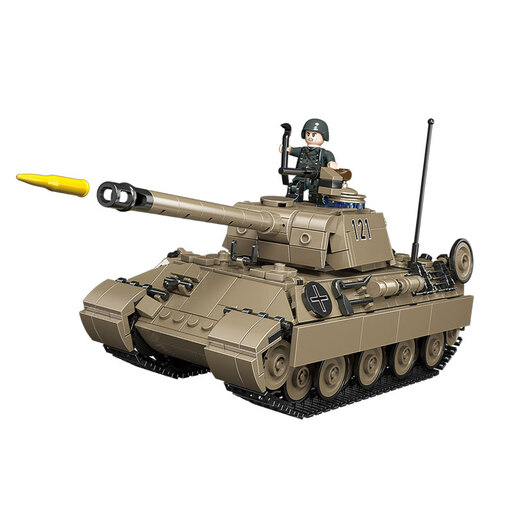
Why This Fits Their Persona: Older children and hobby builders seeking a longer construction project may appreciate the realistic tank format and substantial piece count.
The 899-piece format signals a detailed project, while the listing warns that small parts are unsuitable for under-threes.
ABS construction, rounded-edge granules and an assembled size listed as 45 × 7 × 30.5 cm.
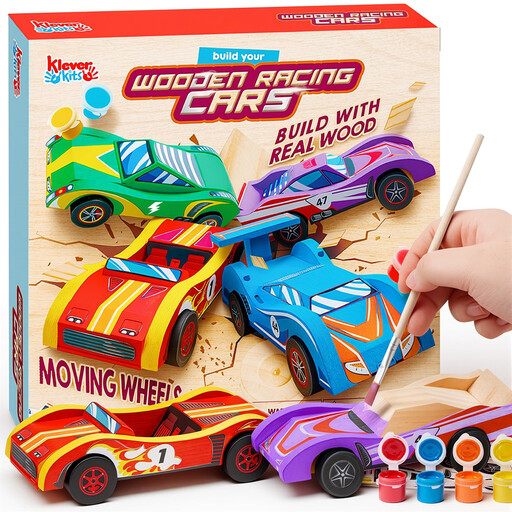
Why This Fits Their Persona: Families looking for arts and crafts kits for kids can use this four-car project for birthdays, rainy afternoons or shared weekend activities.
The contents are itemised: 44 wooden pieces, 12 paint tubs, three brushes, stickers, glue and instructions.
Designed for ages 6–12, with no extra tools required and four cars to build, paint and customise.
For younger children, magnetic construction sets with larger geometric tiles can introduce colour, balance and simple structures. A 100-piece unicorn set, illuminated Ferris wheel set or 150-piece nature-themed magnetic building set may suit children who enjoy imaginative scenes.
A take-apart dinosaur kit can add pretend play to construction, while educational science kits such as slime or explosive experiment sets are more suitable for older children with adult supervision. For quieter creative time, consider DIY craft kits for children, jewellery kits, diamond painting or cardmaking projects.
When buying birthday gifts for children, match the project’s complexity to the recipient rather than choosing solely by theme. A child who enjoys making and decorating may prefer a craft kit; a child who repeatedly rebuilds towers may get more use from magnetic tiles or other creative construction toys.
We have compiled a complete, real-time list of products that fully satisfy these strict selection criteria and UK safety regulations.
Some are, but check the exact age label and warning first. Choose larger pieces, avoid accessible magnets and small detachable parts, and supervise play where recommended. Age suitability can vary between products that look similar.
Store pieces in a labelled box or pouch, keep them away from heat and moisture, and wipe plastic parts with a slightly damp cloth. Do not use magnetic pieces if the casing is cracked, split or loose. For craft and science kits, seal remaining materials and follow the storage instructions.
Not always. Many magnetic building blocks and standard construction sets need no batteries. Light-up dinosaur toys may include button batteries, while science and craft kits may require household items, protective coverings or adult assistance. Check the full contents list before purchase so the activity can begin as expected.