
24/7 Customer Support

Free returns

Same-day & Next-day Delivery

Quality Guaranteed

Unlock Your Welcome Offers: FREE Delivery | Up to 80% OFF | Free 30-day JoyPlus trial
Download the APP
Choosing educational building toys for children can be harder than it looks. Product pages often focus on bright colours, large piece counts and claims about creativity, while important details such as age suitability, storage and small-part warnings receive less attention.
For UK parents, carers and gift buyers, three common pitfalls are worth checking before adding a set to your basket:
Start with the manufacturer’s stated age range and product warnings. Many magnetic building blocks, construction toys for kids and LEGO building sets contain small components that present a choking hazard. A toy marked for children aged 3+ should not automatically be treated as suitable for every three-year-old; consider the child’s ability to follow instructions and whether an adult can supervise play.
For babies and younger toddlers, choose large toddler building blocks that are easy to grip and too large to be swallowed. For preschool building toys, check whether pieces are chunky enough for comfortable handling.
The way pieces connect affects both frustration levels and the type of learning involved.
Look for clear specifications covering the material, dimensions and included accessories. Descriptions such as “strong magnets” should be considered alongside the actual number of pieces, tile shapes and storage arrangements.
A set that is difficult to tidy may quickly become less appealing in a busy UK household. Buckets, pouches or boxes can make a meaningful difference, particularly for magnetic building blocks and larger creative building sets.
Also consider whether the set supports more than one activity. A toy with model instructions can help a beginner get started, while free-build options allow the child to continue creating after the first project. Sets that connect with expansions or compatible toys may offer additional play routes, but check that extras are sold separately before assuming they are included.
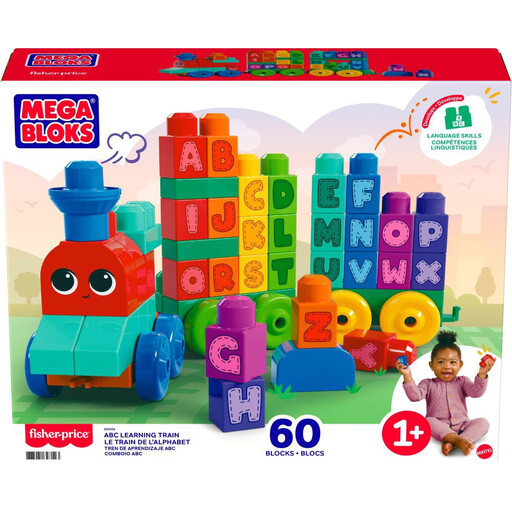
Why This Fits Their Persona: This 60-piece set is designed for children from 12 months to 5 years, making it a practical starting point for families introducing building play at home.
The large blocks are made for little hands, while the stated minimum age is 12 months rather than relying on a generic educational label.
Printed A–Z blocks support letter recognition, and the three wheelbases can be rebuilt as a train or train station.
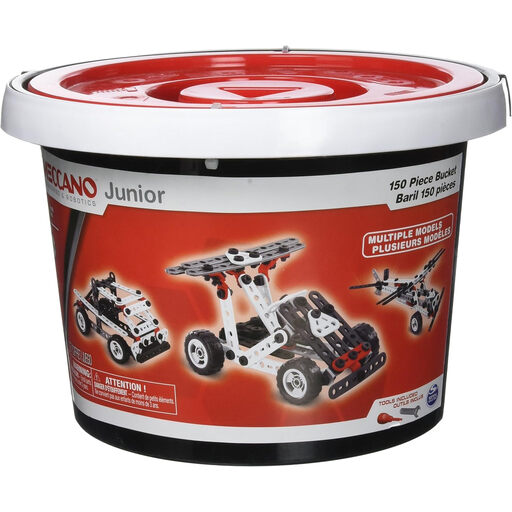
Why This Fits Their Persona: Suitable from age 5, this option suits children who are ready to move beyond simple stacking and enjoy practical building with tools.
The 150-piece count is paired with a reusable storage bucket, two child-sized tools and instructions for three models.
Easy-lock nuts and bolts hold parts together, while the set supports model building and open-ended inventions.
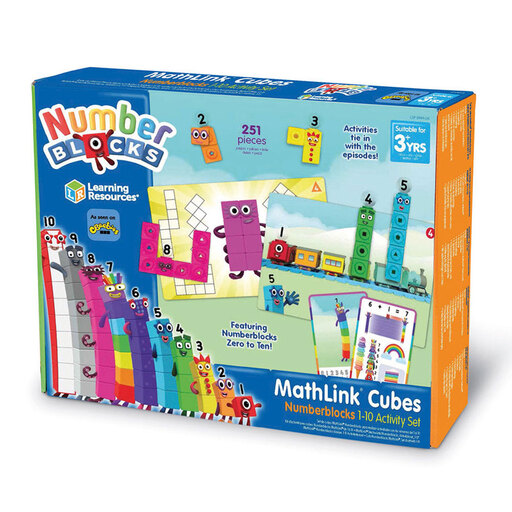
Why This Fits Their Persona: A focused choice for children aged 3+ who enjoy Numberblocks toys and need structured, screen-free maths learning activities.
Rather than offering only character decoration, it includes 100 cubes, character cards and 30 activities linked to counting and number work.
Children build Numberblocks One to Ten and practise number recognition, counting, addition and subtraction.
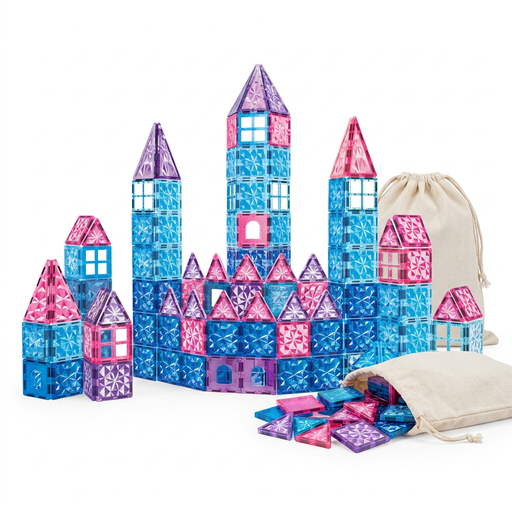
Why This Fits Their Persona: This 58-piece magnetic tile starter collection suits children who enjoy free-form shapes, colour combinations and portable activities.
The listing specifies the 58-piece contents, 7.5cm tile size and storage pouch, making the set easier to assess for home or travel use.
The diamond-surface ABS pieces use enclosed magnets and are supplied with a pouch for storage and transport.
We have compiled a complete, real-time list of products that fully satisfy these strict selection criteria and UK safety regulations.
Character-themed products can be useful children’s gift ideas when the child already enjoys a programme such as Bluey or Numberblocks. However, check whether the set offers construction, role-play, counting or display value that matches the child’s interests.
Some are, but not all. Select products specifically marked for the child’s age and avoid sets containing small parts for children under three. Large blocks with simple shapes are generally easier for toddlers to grasp, stack and separate. Adult supervision remains advisable, particularly when a toy includes detachable components.
Most magnetic tiles do not require batteries, so the main ongoing consideration is keeping the pieces together and replacing lost components if necessary. Sets with lights or electronic features may have different requirements, so check the product listing before purchase.
Store pieces in a dedicated box, bucket or pouch, keep them away from heat and moisture, and check components regularly for cracks, loose parts or damaged coverings. Encourage children to dismantle models carefully rather than forcing connections. Following the manufacturer’s cleaning and supervision guidance can also help maintain safe, usable play.