
24/7 Customer Support

Free returns

Same-day & Next-day Delivery

Quality Guaranteed

Unlock Your Welcome Offers: FREE Delivery | Up to 80% OFF | Free 30-day JoyPlus trial
Download the APP
Choosing educational building toys for toddlers can be harder than it appears. Product pages often highlight large piece counts, colourful themes and developmental benefits, while leaving out details that affect everyday use. A set may look impressive online but be too difficult for small hands, too bulky for a UK home or unsuitable for a child’s age.
Parents, grandparents, carers and early-years settings should look beyond marketing language and check three practical points: age suitability, construction safety and how the toy fits into the available space.
A box containing 100 pieces is not automatically more useful than one containing 30. Toddlers may engage more readily with larger pieces, familiar characters or simple building tasks. Smaller pieces can be harder to grasp and may introduce a choking risk for younger children.
Consider whether the set offers varied ways to play. A train that can be rebuilt as a station, or foam shapes that can become a low obstacle course, may provide more flexible play than a large collection of similar parts.
Terms such as STEM toys for kids, Montessori building toys and “early learning” describe a style or intended benefit, not a guarantee that every child will enjoy or manage the product. A magnetic set designed for children aged 3+ is not suitable for a younger toddler simply because the pieces appear durable.
Always check the manufacturer’s recommended age, warnings and the actual dimensions of the pieces. Direct adult supervision is particularly important where a product includes small parts, magnets or active climbing.
Large soft play foam blocks can be excellent for indoor movement, but they require floor space and a storage plan. Magnetic building tiles and toddler building blocks are easier to put away, although losing a few pieces can affect the play possibilities.
For nurseries and shared playrooms, washable or wipe-clean covers, storage bags and clearly defined play areas can make a greater difference than an additional themed accessory.
For babies and younger toddlers, look for large, easy-grip components and avoid products containing detachable small parts. The Mega Bloks ABC Learning Train is listed for 12 months to 5 years, with large blocks designed for little hands. However, its product warning states that it contains small parts and is not suitable below 12 months.
Magnetic toys need additional care. Several magnetic building tile sets in this range are listed for 3+ years and carry warnings about small parts and strong magnets. If a magnet is swallowed or inhaled, urgent medical help is required. Keep magnetic toys away from children below the stated age and inspect tiles regularly for damage.
Look for clearly stated standards and warnings rather than relying on general phrases such as “safe” or “non-toxic”. Some soft play products listed here state compliance with EN71-1, EN71-2 and EN71-3, which relate to areas including mechanical and physical properties, flammability and migration of certain elements.
This information should still be read alongside the product instructions. Check whether covers are removable, whether fasteners are enclosed and whether the product needs time to expand after delivery. The BanaSuper foam climbing sets, for example, are delivered vacuum-packed and are stated to need 24–48 hours to regain their shape.
Measure the play area before ordering indoor soft play equipment. One HOMCOM seven-piece set has a stated overall footprint of approximately 170 x 130 cm, while individual blocks in another set measure up to 48 x 48 cm.
For travel or visits to grandparents, compact magnetic tiles with a storage pouch may be more practical. For daily use at home or in a nursery, wipe-clean or machine-washable covers can help maintain a hygienic play surface.
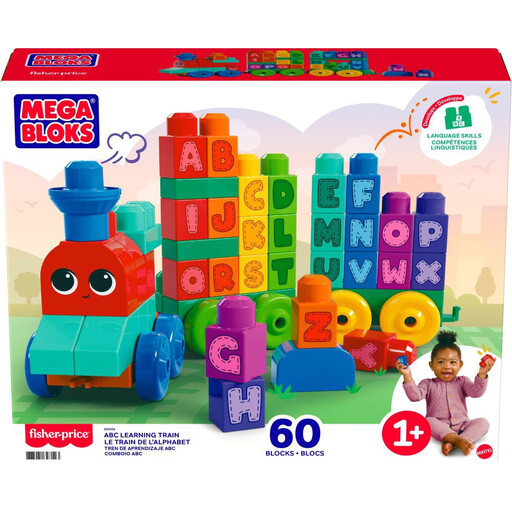
Why This Fits Their Persona: A straightforward first building set for families wanting alphabet-themed play without batteries or complicated assembly. The 60-piece format suits floor play and shared building with a parent or carer.
Its stated age range and block dimensions are clearly provided, helping buyers compare it with smaller-piece sets. Adult supervision is still required according to the product warning.
60 pieces; printed A–Z blocks; three rolling wheelbases; no batteries required; can be rebuilt as a train station.
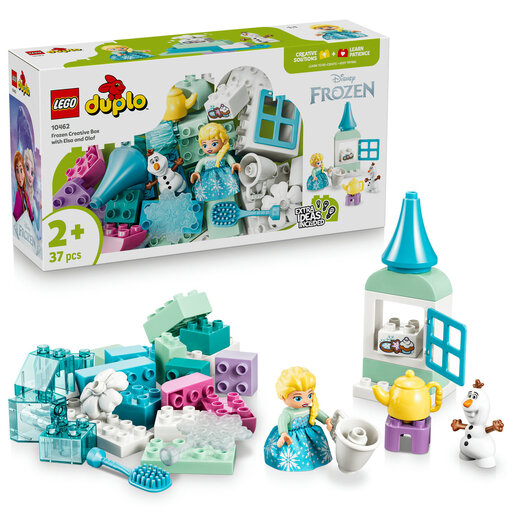
Why This Fits Their Persona: A themed option for children aged 2+ who enjoy character-led storytelling, role play and guided construction. It can suit a birthday gift or a growing collection of large-brick sets.
The 37-piece contents, recommended age and small-parts warning are stated, allowing carers to assess suitability rather than relying only on the film theme.
37 large bricks and pieces; Elsa and Olaf figures; letters and numbers; accessories for imaginative role play.
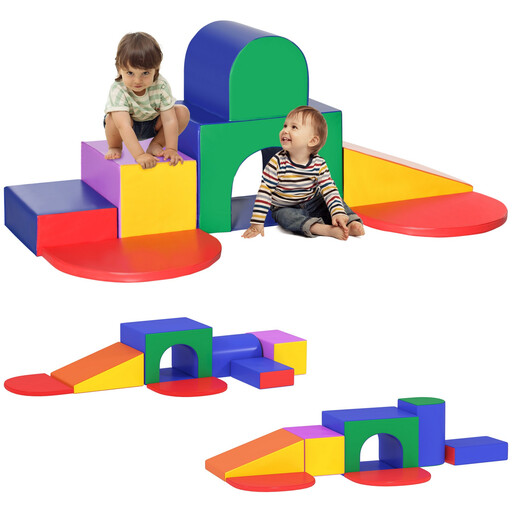
Why This Fits Their Persona: A practical choice for families, nurseries and playrooms with room for climbing, crawling and obstacle-building. The listed age range is 12–36 months.
The listing gives individual shapes, maximum load and an EN71-1-2-3 statement. Buyers can therefore check both floor space and intended use before ordering.
Seven foam pieces; touch-fastener connections; wipe-clean covers; no assembly; stated maximum load of 60 kg.
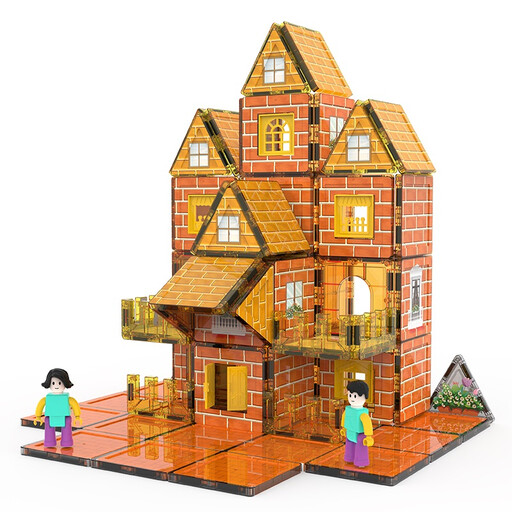
Why This Fits Their Persona: Suitable for children aged 3+ who enjoy construction challenges and for families wanting a portable set for visits, holidays or quiet indoor play.
The 7.5 cm tile size is larger than miniature magnetic formats, while the listing provides a specific age warning and storage guidance. Supervision remains necessary.
81 pieces; villa-themed construction; storage bag; reinforced magnetic connections; no batteries required.
We have compiled a complete, real-time list of products that fully satisfy these strict selection criteria and UK safety regulations.
Some are, but suitability depends on the stated age range, piece size and supervision requirements. Large toddler building blocks and selected soft play sets may suit this age group. Magnetic tiles and sets containing small detachable parts are generally intended for older children, so follow the product warning rather than judging by appearance.
Follow the individual care instructions. Hard plastic blocks and magnetic tiles can usually be wiped with a soft damp cloth and dried thoroughly. Foam play equipment may have wipe-clean PU covers, while some fabric-covered sets have removable machine-washable covers. Avoid immersing products unless the instructions specifically allow it.
Many construction toys, including magnetic tiles, foam blocks and conventional toddler building blocks, work without batteries. Character-led learning toys may also be battery-free; for example, the Numberblocks Rainbow Counting Bus and MathLink Cubes Activity Set are listed as requiring no batteries. Check the product details if electronic sounds or lights are important to your child.
A suitable set should match the child’s age, the available space and the way your household actually plays. Checking these details first makes it easier to choose educational toys for ages 1–5 that remain practical beyond the unboxing moment.