
24/7 Customer Support

Free returns

Same-day & Next-day Delivery

Quality Guaranteed

Unlock Your Welcome Offers: FREE Delivery | Up to 80% OFF | Free 30-day JoyPlus trial
Download the APP
Choosing educational building toys for children can be more complicated than it appears. A colourful box may promise creativity, STEM learning and hours of independent play, yet the contents may not suit a child’s age, available space or existing toy collection.
For UK parents, relatives and gift buyers, the main challenge is separating useful design features from marketing language. The right choice should offer a manageable building experience, safe materials and play value that matches the child’s interests.
A larger number of pieces does not automatically mean more play value. Toddlers may become frustrated by small components, while older children may quickly outgrow a set with limited building options. Check the recommended age, piece size and construction complexity rather than judging only by the number printed on the box.
Some magnetic building blocks and construction sets work as standalone toys, while others are designed to expand a specific collection. Train track expansion sets are a common example. A set may contain attractive curves or bridges but be unsuitable if it does not connect to the child’s existing train system.
Building toys can create opportunities for counting, storytelling, spatial planning and problem-solving, but learning depends on how the child plays. A maths set will be more useful when an adult occasionally joins in, asks questions and connects the activity to everyday situations.
Always follow the age guidance printed on the product listing and packaging. Products containing small parts may present a choking hazard for younger children. For example, several products in this guide are intended for children aged 2+, 3+, 4+, 6+ or 8+, rather than being suitable for every child in the 2-to-8 age range.
For children under three, consider toddler building toys with larger pieces that are easy to grasp. Adult supervision remains important, particularly when a product includes small accessories, minifigures or detachable components.
For magnetic building blocks, inspect the description for material details, secure magnet construction and cleaning instructions. Strong magnets should remain enclosed during normal play. If a tile becomes cracked, split or damaged, remove it from use immediately.
Look for clear manufacturer or importer information, age guidance and applicable UK product conformity information. A safety mark alone is not a substitute for checking the intended age or condition of the toy. For magnetic products, storage pouches can also help prevent pieces being lost around the home.
Measure the intended play area before buying larger construction sets. A train layout can become much bigger than its box suggests. Also check whether expansion pieces are compatible with the child’s existing collection.
For example, the LEGO DUPLO Town Train Bridge and Tracks Expansion Set has an assembled size of approximately 80 × 40 × 15 cm, while the LEGO City 60205 Tracks set contains straight, curved and flexible track pieces for extending compatible LEGO City train layouts.

Why This Fits Their Persona: An 85-piece set with a gift box can suit families seeking a varied introduction to magnetic construction without committing to a large collection.
The piece count and ABS construction are stated clearly, making it easier to compare with other magnetic block sets. Check the current age guidance before purchase.
85 pieces; ABS plastic construction; supplied with a gift box for storage or gifting.
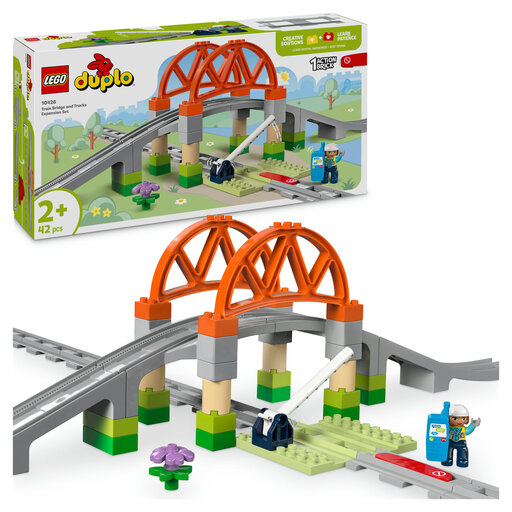
Why This Fits Their Persona: Designed for children from age 2, this is a practical choice for households that already use compatible DUPLO train toys and want to extend play.
Compatibility is specified for LEGO DUPLO train sets, reducing the risk of buying tracks that cannot connect to the child’s existing railway.
Includes curved and straight tracks, bridge and ramp parts, plus signs and signal accessories.
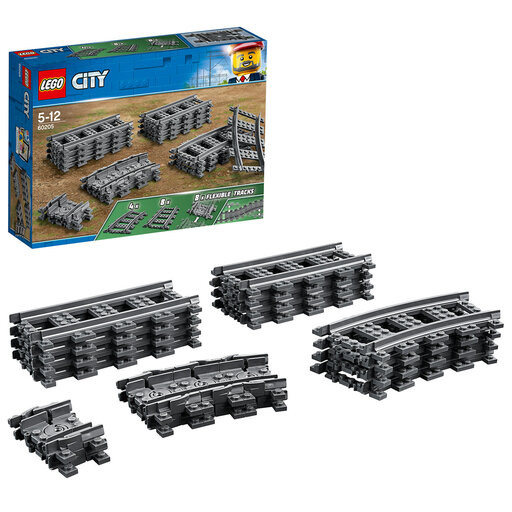
Why This Fits Their Persona: Suitable for fans aged 5–12, this expansion set is suited to children who repeatedly rebuild train routes and have space for a larger layout.
The set specifies its track mix and compatibility with LEGO City train sets, so buyers can plan the layout before ordering.
20 pieces in total; includes straight, curved and flexible tracks; no batteries required.
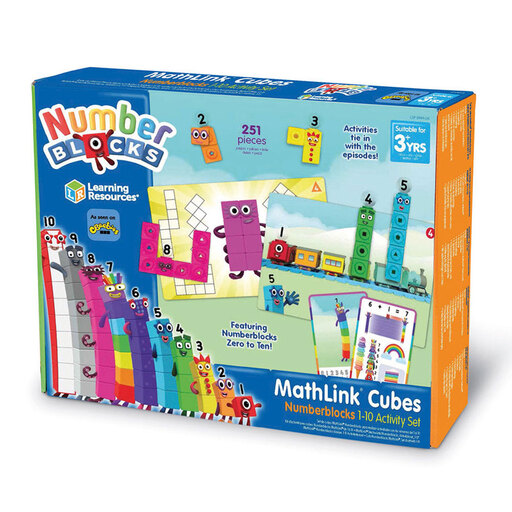
Why This Fits Their Persona: A screen-free option for children from age 3 who enjoy character-led activities and are beginning to practise counting and simple number operations.
The learning content is concrete: 100 cubes, character cards and 30 listed activities covering recognition, counting, addition and subtraction.
Includes 100 cubes, 15 double-sided activity cards and 11 character cards; no batteries required.
Different interests call for different formats. For toddlers, the Mega Bloks ABC Learning Train includes large blocks marked from A to Z and is listed for ages 12 months to 5 years. Children aged 4+ may prefer the LEGO Disney Princess Cinderella Animal Friends Castle for construction combined with storytelling.
For character-led pretend play, options include LEGO NINJAGO sets for ages 6+ or 7+, LEGO Star Wars 75412 for ages 6+ and LEGO Minecraft 21274 The Warden Encounter for ages 8+. Older children interested in design and display pieces may enjoy LEGO Creator 31384 Wild Animals: Colorful Hummingbird, listed for age 8+.
Magnetic tile sets can support open-ended shapes and colour exploration, but inspect each listing carefully for age guidance, magnet enclosure information and storage arrangements. Never allow children to use damaged magnetic pieces.
We have compiled a complete, real-time list of products that fully satisfy these strict selection criteria and UK safety regulations.
Yes, provided the product is specifically labelled for the child’s age and has appropriately sized pieces. Look for large-block toddler building toys, supervise play and remove any damaged or loose components.
Most magnetic tiles and magnetic building blocks do not require batteries. Check the product listing, as illuminated features or electronic accessories may have separate power requirements.