
24/7 Customer Support

Free returns

Same-day & Next-day Delivery

Quality Guaranteed

Unlock Your Welcome Offers: FREE Delivery | Up to 80% OFF | Free 30-day JoyPlus trial
Download the APP
As a Joybuy Product Recommendation Officer, my role is to help you navigate the vast market of children's toys. Many parents and gift-givers are looking for engaging, fun alternatives to screen time—options that entertain while also supporting a child's development. Finding the right balance can be a challenge.
This guide is designed to offer practical advice on selecting high-quality educational games for kids. We will explore what to look for in a learning toy and highlight a few standout options that encourage critical thinking, problem-solving and practical skills, making them excellent choices for birthdays or everyday play.
Before diving into specific products, it's helpful to know what makes an educational toy worthwhile. Here are a few key considerations to guide your decision.
A game that is too simple can lead to boredom, while one that is too complex may cause frustration. Look for clear age recommendations on the packaging, but also consider the individual child's interests and abilities. For younger children (ages 4-6), games that focus on foundational skills like matching, counting or learning to tell the time are ideal. For older children (ages 7-10), more complex logic puzzles and STEM toys that require strategic thinking can provide a rewarding challenge.
A good educational game should withstand repeated use and offer lasting appeal. Consider the materials—are they sturdy and safe for children? Games with multiple levels, varied challenges or different ways to play offer better long-term value. Portable, self-contained travel games for kids are particularly useful, as they can be used for road trip games or quiet time at home, providing versatile screen-free activities.
While some games are designed for solo play, others encourage social interaction. Both are valuable. Brain teaser toys that a child can solve on their own can build confidence and focus. Meanwhile, games that allow for friendly competition or teamwork can help develop communication and social skills. Look for options that can adapt to different play scenarios.
Here are a few educational games that align with the principles above, chosen for their clever design and focus on skill development.
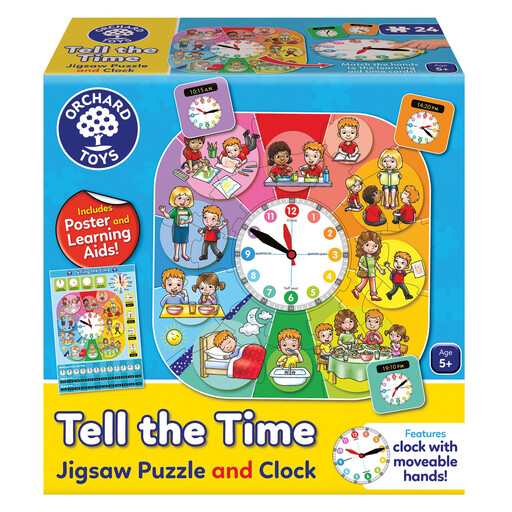
Why It Stands Out: This isn't just a simple jigsaw. The Orchard Toys telling the time game is a multi-faceted learning tool. It combines a 24-piece puzzle with a central clock face featuring movable hands. This hands-on approach allows children to physically set the time, reinforcing the connection between the numbers on a clock and their meaning. The set also includes 12 learning cards and a poster to practise both analogue and digital time-telling.
Pros:
Who is it for? This puzzle is ideal for children aged 4 and up who are just beginning to learn how to tell the time. It’s a great resource for parents and educators looking for a playful, low-pressure way to introduce this essential life skill.

Why It Stands Out: The GiiKER Super Slide is a modern take on the classic sliding block puzzle. The goal is to move the large red block to the exit zone. What makes it unique is its self-contained, electronic-free design with over 500 built-in challenges that increase in difficulty. The console automatically detects when you've solved a puzzle and sets up the next one. It’s a brilliant brain teaser toy that requires no batteries or screens.
Pros:
Who is it for? Recommended for ages 6 and up, this puzzle appeals to a wide audience, from children who enjoy logic puzzles to adults looking for a satisfying mental workout. It's a fantastic choice for families seeking durable road trip games.

Why It Stands Out: This device transforms the classic paper-and-pencil Sudoku into an interactive experience. The GiiKER Smart Sudoku console features a light-up board that guides players on how to set up each puzzle. With 2500 built-in challenges across 4x4 and 6x6 grids, it caters to all skill levels. The game provides instant feedback on moves, offers hints when needed and even includes a 1v1 battle mode for competitive play.
Pros:
Who is it for? This is a superb option for children aged 4 and up who are ready for a number-based logic puzzle. It’s one of the most engaging ways to introduce Sudoku for kids and makes a thoughtful birthday gift for children who enjoy a good challenge.
The games highlighted here are just a starting point. Every child is different, and the right toy depends on their unique interests and learning style. If you're searching for a wider variety of puzzles and skill-building games, you can explore our broader collection.
? Discover more in our Educational Puzzles for Kids category
An educational game is one that is intentionally designed to teach a specific skill or concept through play. This can range from developing fine motor skills and hand-eye coordination to fostering complex abilities like strategic thinking, logic and problem-solving. The key is that the learning process is integrated directly into the fun of the game.
The best approach is to choose games that align with their natural interests. If they love building, look for STEM toys with construction elements. If they enjoy competition, find a game with a multi-player mode. Playing the game with them, showing genuine enthusiasm and focusing on the fun rather than the "learning" aspect can also make a significant difference.
While digital tools have their place, screen-free activities are vital for holistic development. Hands-on play helps develop fine motor skills, spatial awareness and sensory processing in a way that screens cannot. It also encourages longer attention spans, creativity and real-world problem-solving without the constant stimulation and distraction of digital notifications and content.