
24/7 Customer Support

Free returns

Same-day & Next-day Delivery

Quality Guaranteed

Unlock Your Welcome Offers: FREE Delivery | Up to 80% OFF | Free 30-day JoyPlus trial
Download the APP
Choosing educational games and puzzles for children can be harder than it appears. Product packaging often highlights learning benefits, bright graphics and character partnerships, but these details do not always tell you whether a toy will suit a child’s age, attention span or play environment.
For parents, grandparents and gift buyers, the main challenge is finding something that combines enjoyable play with useful practice in areas such as problem-solving, numeracy, coordination and social interaction. The following guide explains the common buying traps, the specifications worth checking and a selection of suitable options for different needs.
Dinosaurs, unicorns and familiar television characters can make a gift appealing, but a theme alone does not indicate how children will interact with the product. Check what the child actually does during play: matching, counting, building, remembering, deducing or following a sequence of rules.
A visually attractive game with limited replay value may be put aside quickly. For regular use, look for multiple activities, reusable components or gameplay that changes with each turn.
Many children’s board games and children’s jigsaw puzzles include small cards, tokens or puzzle pieces. A product labelled for older children may be unsuitable for a younger sibling, even when they can understand the basic instructions.
Always check the stated age range and the safety warning. Products containing small parts should be kept away from children below the specified age and used with adult supervision where advised. This is particularly important for family games played around toddlers.
Some educational toys are designed for guided play. A maths learning toy may work more effectively when an adult asks questions, while a strategy game may need an initial explanation before children can play confidently.
Consider whether the buyer wants a quiet independent activity, a screen-free toy for travel or a family game for shared time. Also check whether batteries are needed, whether they are included and how easy the pieces are to store.
The recommended age is a practical starting point, not simply a marketing detail. Pre-school learning games usually focus on colour recognition, matching, counting and basic turn-taking. Games for ages 3 to 8 may gradually introduce memory, simple rules and early arithmetic.
For older children, look for increasing challenge, such as deduction, spatial reasoning or multi-step problem-solving. A puzzle that is too easy may lose interest, while one that is too difficult can create frustration.
For jigsaw puzzles, piece count should match the child’s experience and patience. A 20-piece giant puzzle is easier for small hands to handle than a 104-piece or 150-piece design. Larger pieces can also be easier to identify and less likely to disappear under furniture.
Check the finished size if the puzzle will be used on a small dining table or stored in a limited space. For board games, sturdy cards, wipe-clean surfaces and easily handled counters can make a noticeable difference to repeat use.
Battery-free products are ready to use and avoid ongoing battery replacement. Electronic toys can offer sounds, lights or interactive prompts, but buyers should check the battery type, whether batteries are supplied and the location of the battery compartment.
For products sold in the UK, review the packaging and listing for applicable CE or UKCA marking, manufacturer details and safety warnings. Keep button batteries and loose batteries away from children, and follow the supplied disposal instructions. Adult supervision remains important whenever a product carries a small-parts or battery warning.
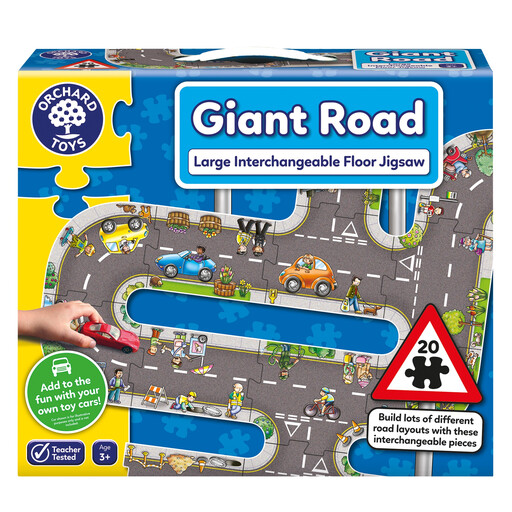
Why This Fits Their Persona: A straightforward introduction to puzzle play for children aged 3 and above, with large pieces that suit small hands and short play sessions at home or during a visit to family.
The 20-piece format avoids an unnecessarily difficult starting point, while the road illustration provides clear visual clues for matching.
20 large pieces; battery-free play; supports shape recognition and hand-eye coordination.
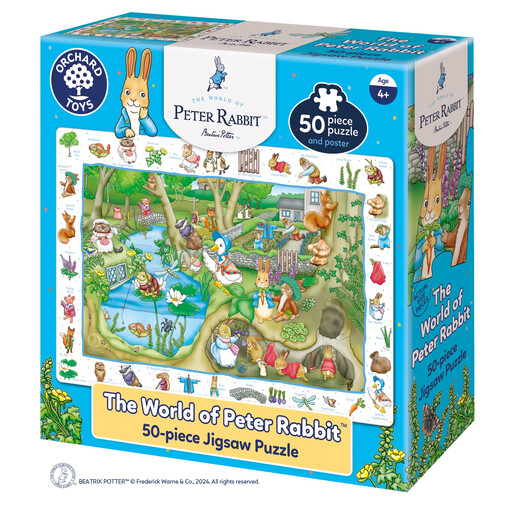
Why This Fits Their Persona: Suitable for children aged 4 and above, this option adds a larger scene, a poster and a learning guide for shared play, conversation and repeated discovery.
The 50-piece count offers a clear progression from beginner puzzles without jumping directly to a highly demanding format.
Includes 50 pieces, a giant poster and learning guide; wipe-clean pieces are practical for regular use.
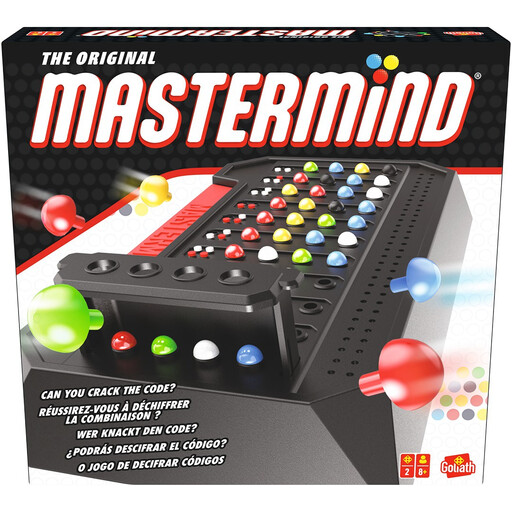
Why This Fits Their Persona: Designed for two players aged 8 and above, it suits families wanting a repeatable, compact strategy game for rainy afternoons and regular game nights.
The code-breaking format creates a different challenge each time, rather than relying on a fixed picture or single solution path.
Two-player deduction gameplay; stated playtime of 20–40 minutes; no batteries required.
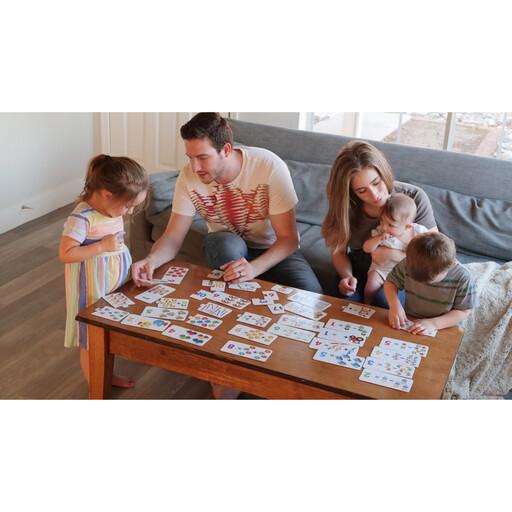
Why This Fits Their Persona: A focused choice for children aged 3 and above who are beginning to practise counting, addition and subtraction through short, structured activities.
The set specifies 30 puzzle pairs across counting, addition and subtraction, making the learning focus clearer than a general “educational” label.
Self-correcting puzzle shapes; 30 pairs covering basic numeracy; battery-free format.
For birthday and Christmas children’s gift ideas, consider the recipient’s existing interests and storage space. Compact lotto and matching games work well for younger children and playdates. A 50-piece or 104-piece puzzle may suit a child who enjoys quiet, focused activities. Older children may prefer logic puzzles for kids, strategy games for children or a more challenging world-map puzzle.
For shared play, check the player count and estimated duration. A two-player deduction game creates a different experience from a cooperative puzzle or larger family game. If portability matters, choose a compact box with components that are easy to gather after play.
We have compiled a complete, real-time list of products that fully satisfy these strict selection criteria and UK safety regulations.
Yes. Battery-free jigsaws, matching games, board games and logic puzzles provide screen-free activities that can practise observation, memory, counting, coordination and turn-taking. Adult interaction can add value by asking children to explain their choices or describe what they notice.
There is no fixed time. Younger children may prefer several short sessions, while older children may stay with a puzzle for 30 minutes or more. Select the piece count and difficulty according to the child’s experience, rather than choosing a larger number simply because it appears to offer more play.
Not always. Many children’s jigsaw puzzles and traditional board games need no power. Electronic maths learning toys may require batteries for lights, sounds or interactive functions, so check the battery type, included contents and safety instructions before buying.