
24/7 Customer Support

Free returns

Same-day & Next-day Delivery

Quality Guaranteed

Unlock Your Welcome Offers: FREE Delivery | Up to 80% OFF | Free 30-day JoyPlus trial
Download the APP
Choosing educational toys for children can feel more complicated than it should. Product pages often promise cognitive growth, creativity and developmental progress, yet the useful details may be hidden among colourful claims. For parents, grandparents, carers and nursery practitioners, the real question is simpler: will the toy suit the child’s age, interests, available space and stage of learning?
This guide focuses on practical features rather than marketing language, with options covering educational toys for babies, learning toys for toddlers, pre-school learning toys and screen-free activities for children up to eight.
A wide age range can be convenient, but it does not necessarily mean the toy will remain engaging throughout that period. A baby may need large, easy-to-grip parts, while a four-year-old may need clearer rules or more challenging tasks. Always check the stated minimum age, included activities and whether the child can use the toy independently.
Interactive learning toys can attract attention, but flashing lights and music are not automatically educational. Look for a clear action-and-response link: pressing a button to hear a sound, matching a letter to a picture, or placing numbers in order. Toys that invite conversation, repetition and problem-solving generally offer more ways to play than products with only one automated sequence.
Many phonics toys, counting toys and educational board games contain cards, tiles or small figures. These may be unsuitable for younger children and can quickly become lost without a storage solution. Battery-operated toys also need practical checks, including battery type, whether batteries are included, volume control and safe battery-compartment access.
Use the manufacturer’s minimum age as a safety starting point, not merely a suggestion. Products in this guide include specific warnings about small parts and choking hazards. For babies and toddlers, choose larger components that are easy to hold and inspect the toy regularly for damage or loosened pieces.
For example, the Mega Bloks ABC Learning Train is listed for children from 12 months to five years and includes large blocks designed for little hands. By contrast, the Colour Stack Game is listed for children aged eight and over because of its small parts.
Decide whether the main need is early language, numeracy, sensory exploration, fine motor practice or social play.
A toy does not need to cover every subject. A focused product may be more useful if it matches the child’s current interest or nursery learning goals.
Check whether the toy is battery-free or electronic, how easy it is to clean, and whether it suits your home environment. Hard plastic pages may be easier to wipe clean, while plush products can require surface washing only. For sound-based toys, an adjustable volume setting is useful in flats, shared rooms or during quieter parts of the day.
For UK purchases, read the product warnings and packaging information carefully. Check for appropriate safety markings and follow the manufacturer’s instructions. Battery toys should be kept away from children when opened batteries are accessible, as button and other batteries can be hazardous if swallowed.
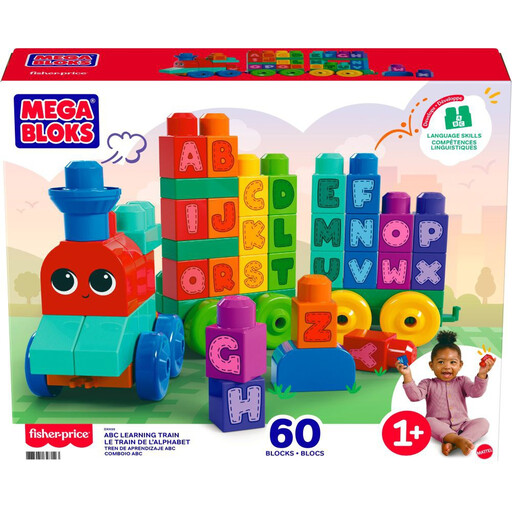
Why This Fits Their Persona: A battery-free building set for toddlers that combines alphabet exposure with open-ended construction and pretend play.
It does not rely on batteries, and its 60-piece format provides more than one play mode, including a train and train station build.
Large letter-printed blocks; suitable for 12 months to five years; supports stacking and creative construction.
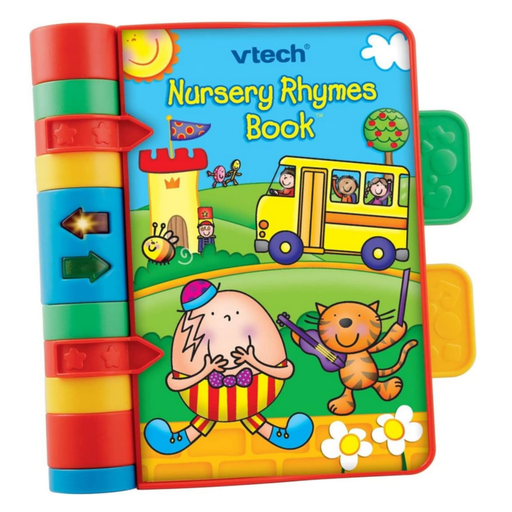
Why This Fits Their Persona: A compact early-language option for families wanting a reusable, wipe-clean format for shared reading and singing.
The learning content is clearly defined: six nursery rhymes, sound effects, phrases and light-up buttons rather than unspecified developmental promises.
Designed for three to 24 months; hard plastic pages; batteries included.
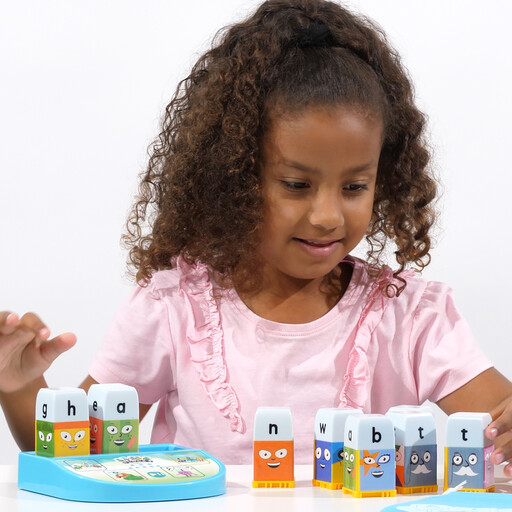
Why This Fits Their Persona: Suitable for pre-schoolers aged three and over who are beginning letter recognition and early phonics activities at home or in nursery.
Its stated focus is specific: recognising letters, matching simple combinations and practising basic phonics through interactive play.
No batteries required; lightweight format; suitable for parent-child or pre-school activities.
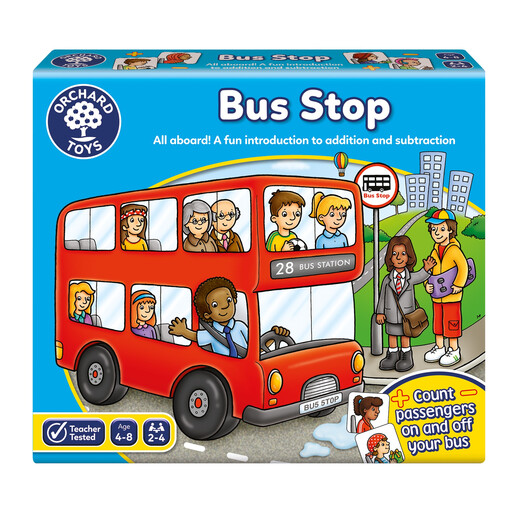
Why This Fits Their Persona: A screen-free tabletop choice for families, playdates or early-years settings where children can practise skills together.
The rules are described as simple and centred on matching passengers, counting and taking turns, giving adults a clear way to support play.
Battery-free; designed for children aged four and over; compact for home or travel use.
We have compiled a complete, real-time list of products that fully satisfy these strict selection criteria and UK safety regulations.
For babies, consider tactile products such as the LeapFrog 6-in-1 Snap & Learn Busy Cube, which includes sliding beads, rotating gears and a light-up button. For early numeracy, the Numberblocks Rainbow Counting Bus presents numbers one to ten through loading, ordering and rolling play.
Pre-school children may enjoy the Orchard Toys Match and Spell Game, Alphablocks Character Playset or Numberblocks Number Fun. Children aged four and over can practise time with the Orchard Toys Tell the Time 24 Piece Puzzle, while older children may find the Colour Stack Game more appropriate for pattern-building, balance and problem-solving.
Yes, provided the toy is designed for the baby’s age and has no unsuitable small parts. Look for large, washable or wipe-clean components, simple sensory feedback and adult supervision. Toys such as baby activity books, soft sensory toys and larger activity centres can encourage reaching, pressing and listening without requiring advanced rules.
Lifespan depends on construction, frequency of use and storage. Battery-free building sets and board games can remain useful as children create more difficult challenges or learn new rules. Electronic toys may need battery replacement and should be checked regularly for damaged casing, loose parts or battery-compartment issues.
No. Screen-free toys offer an alternative, while interactive electronic products can provide another type of guided activity. The most suitable choice depends on the child, the learning objective and how much adult interaction is available. A balanced selection might include sensory toys, construction sets, phonics activities and educational board games.