
24/7 Customer Support

Free returns

Same-day & Next-day Delivery

Quality Guaranteed

Unlock Your Welcome Offers: FREE Delivery | Up to 80% OFF | Free 30-day JoyPlus trial
Download the APP
Choosing educational toys for children can be harder than it looks. Product pages often highlight lights, sounds and impressive feature counts, but these details do not always mean a toy will remain useful after the first few weeks. Parents, grandparents and other gift buyers also need to consider age suitability, battery requirements, noise levels, durability and whether the toy supports the child’s actual interests.
This guide explains the main buying pitfalls and matches several options to different play styles, from toddler musical toys to STEM toys for children aged 3 and above.
A toy with numerous buttons, melodies and modes may appear engaging, but too many functions can make it difficult for a young child to use independently. Look for a clear connection between the feature and the intended activity: counting games, rhythm creation, photography, programming or imaginative role-play.
A simple interactive toy for children may provide more sustained play than a complicated product that requires constant adult help.
Electronic toys can require disposable batteries, proprietary charging cables or frequent recharging. Check whether batteries are included, how many are needed and whether the controller uses separate batteries from the main toy.
For example, some children’s walkie-talkies require six AAA batteries for a pair, while a rechargeable robot may still need two AA batteries for its remote control. These details affect the long-term cost and convenience of the gift.
Age labels are not simply suggestions. A product with small components, detachable accessories or button-style batteries may not be suitable for younger children. Always read the product warnings, remove packaging before use and supervise play where stated.
For UK shoppers, check that the product information includes appropriate safety and compliance details, such as the CE marking where applicable and references to relevant toy safety requirements, including EN71. A safety marking does not replace checking the individual toy’s warnings and intended age range.
Match the toy to the child’s current abilities rather than buying solely for future use. Toddlers may benefit from large controls, rounded edges, simple cause-and-effect activities and manageable sound levels. Older children may enjoy password systems, digital photography, action programming or games that require memory and problem-solving.
For children aged 3 and above, check whether the toy includes small parts. A product labelled for ages 6 to 11 may be unsuitable for a younger sibling, even if both children enjoy the same theme.
For toddler products, inspect the description for smooth or rounded edges, secure components and a stable base. Musical toys that stand upright should not tip easily during active play. Soft protective cases can help reduce damage from everyday knocks, but they do not make an electronic device waterproof or impact-proof.
For portable products, consider clips, lanyards and handles. These features are useful during trips, but lanyards should be used carefully to avoid entanglement.
Toddler musical toys should ideally offer a volume control, particularly for indoor use in flats or shared homes. A volume dial allows adults to set a more comfortable level, but it should not be treated as a guarantee of hearing protection.
For digital toys, check screen size, charging method and battery duration. The listed children’s digital cameras below include USB-C charging, photo and video functions and built-in games. A display can encourage creativity, but adults should still set sensible screen-time expectations.
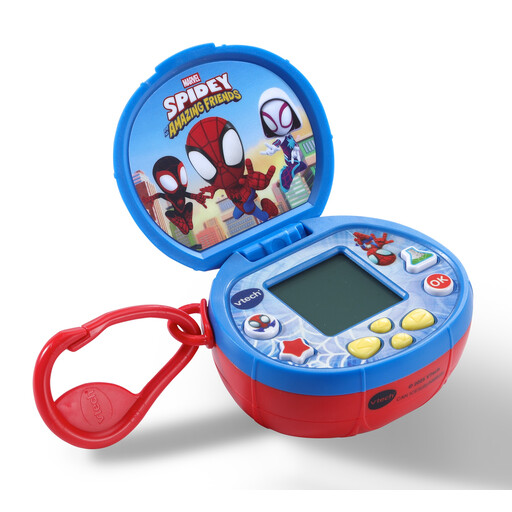
Why This Fits Their Persona: A compact option for families wanting portable learning activities for journeys, visits and everyday play at home. It is listed for children from age 3.
Its five built-in games have defined themes, including opposites, numbers and problem-solving, rather than relying only on lights and sounds.
Backlit LCD, five activities, ten clock-face designs, Web Lab counting activity and a clip for attaching it to a rucksack or pocket.
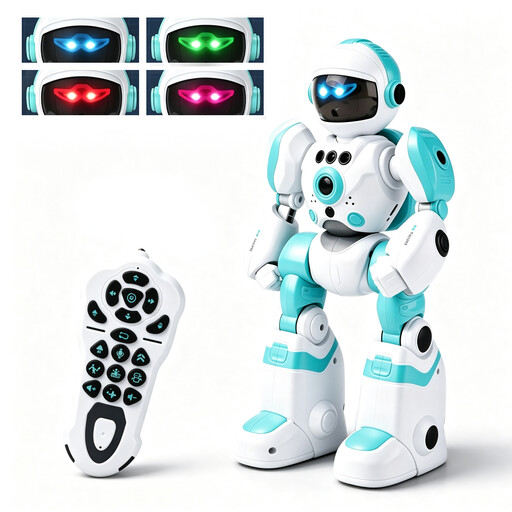
Why This Fits Their Persona: Suitable for children aged 3 and above who enjoy technology-led play, movement and experimenting with different controls.
It offers defined interaction methods, including remote control, gesture sensing and action programming, instead of a single repetitive performance mode.
Includes four-colour LED eyes, recording and playback, music and dance functions, a rechargeable 3.7V 200mAh battery and USB charging cable.
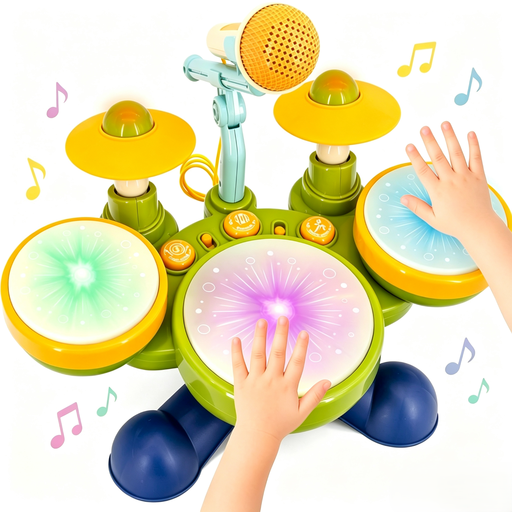
Why This Fits Their Persona: A practical choice for toddlers aged 1 to 3 who enjoy active, hands-on music play and need a toy that can be adapted for floor use.
The built-in volume dial addresses the common problem of loud indoor play, while the removable stand gives the toy a lower floor-play format.
Three light-up drum pads, two liftable cymbals, a working microphone, built-in melodies and animal sounds, plus a removable stand.
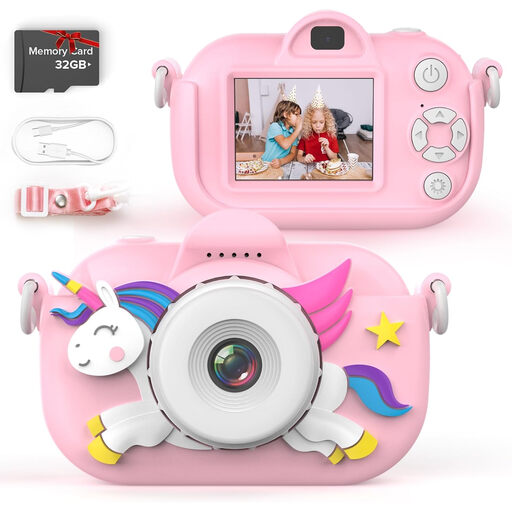
Why This Fits Their Persona: Designed for children who prefer creative projects, taking pictures and recording short videos during family days out.
The product description gives practical battery guidance, a protective case and storage instructions rather than presenting the camera as indestructible.
Offers photo capture, video recording, time-lapse, a 2-inch display, USB-C charging and built-in games such as Tetris and Snake.
We have compiled a complete, real-time list of products that fully satisfy these strict selection criteria and UK safety regulations.
Some are, provided they are specifically labelled for the child’s age and have suitably sized controls. Look for simple activities, secure construction, rounded edges and adjustable sound. Avoid products with small parts or unsuitable battery compartments, and follow the supervision instructions.
Lifespan depends on handling, battery care and storage. Keep devices dry, avoid extreme temperatures, use the recommended charger and remove disposable batteries if the toy will be stored for an extended period. Protective cases can reduce surface damage, but they cannot prevent all breakage from drops or rough play.
Walkie-talkies, musical instruments and interactive robot toys naturally encourage participation between children and adults. A drum set with a microphone can support shared singing and rhythm games, while children’s walkie-talkies can be used for supervised indoor or garden role-play. For older children, a camera or programmable robot can provide a project to explore together.