
24/7 Customer Support

Free returns

Same-day & Next-day Delivery

Quality Guaranteed

Unlock Your Welcome Offers: FREE Delivery | Up to 80% OFF | Free 30-day JoyPlus trial
Download the APP
Finding the right educational toys for children can feel like navigating a maze. The shelves are packed with toys promising to boost your child's development, but many fail to deliver on their claims, leaving you with a cluttered playroom and a disappointed little one. As a Joybuy Product Recommendation Officer, my role is to help you see past the marketing clutter and identify toys that offer genuine play value.
Before you make your next purchase, let's look at a few common pitfalls that lead to wasted money and toys that are quickly forgotten.
To avoid these traps, focus on a few core features that separate a worthwhile investment from a short-lived distraction. Analysing these parameters will help you select high-quality learning toys for toddlers and babies that support their growth.
A toy's value is directly linked to how well it matches a child's current developmental stage.
Consider how a child will interact with the toy. Does it encourage imagination and open-ended play, or does it have only one way to be used? Toys that can be used in multiple ways, like building blocks or activity tables, offer far greater long-term value.
Equally important is the construction. Children's electronic toys must have securely screwed-in battery compartments. All toys should be made from durable, non-toxic materials that can withstand enthusiastic play. Always check for the UKCA mark, which indicates that the product meets UK safety, health and environmental protection requirements.
Here are a few recommendations from our catalogue, matched to different needs and age groups, that align with the principles of lasting play value and genuine developmental support.
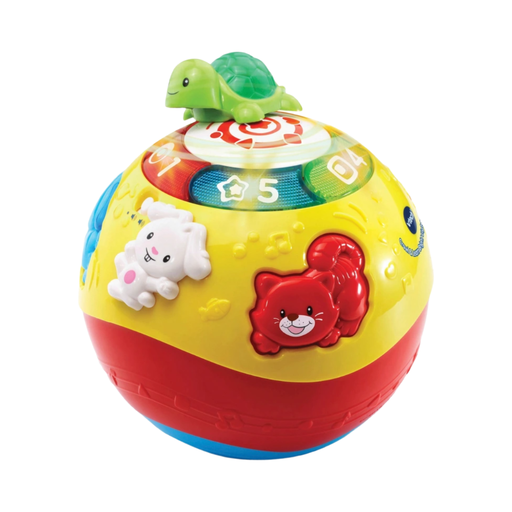
Why This Fits Their Persona: This is for parents wanting to support a key physical milestone. It's designed specifically to motivate babies to crawl by moving on its own, turning a developmental challenge into a fun game.
Instead of just flashing lights, its built-in motor provides a clear purpose: encouraging movement. The interactive buttons that teach numbers and animals add a layer of learning that goes beyond simple sensory input.
Features a motion-activated motor to promote crawling. Introduces numbers 1-5 and animal sounds, combining physical and cognitive development.
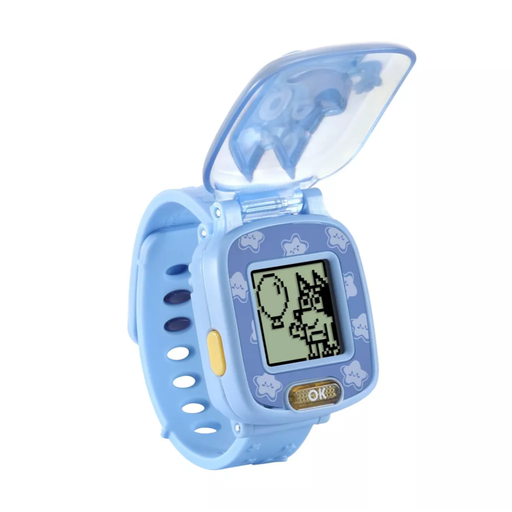
Why This Fits Their Persona: Perfect for preschoolers who adore Bluey. It leverages their love for the characters to introduce practical skills like telling time and playing logic-based games, making it a great choice for a birthday or Christmas gift.
This is more than just a branded accessory. It includes four different games guided by Bluey and Bingo, plus a stopwatch, timer and alarm. This functionality gives it lasting play value long after the initial excitement of the character wears off.
Features four educational games and eight digital clock faces. Helps children learn to tell time in an engaging way with their favourite characters.
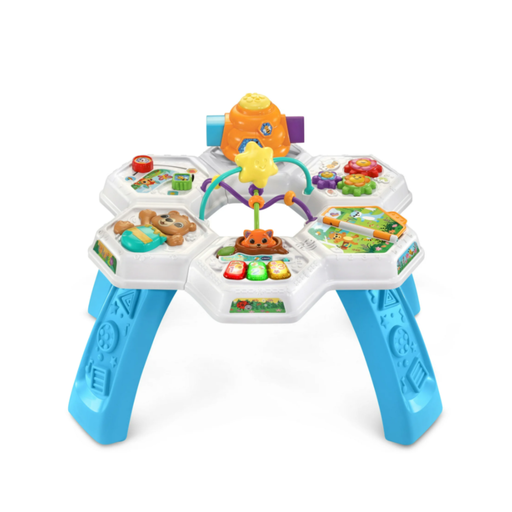
Why This Fits Their Persona: Ideal for parents seeking a single toy that will remain engaging for years. Its adaptable design works for babies who are sitting up and toddlers who are standing, covering a wide developmental window.
This table directly counters the "short-term novelty" flaw. With six distinct play zones—including piano keys, a storybook and gears—it offers a variety of activities that cater to different skills, preventing boredom and adapting as the child's interests evolve.
A 2-in-1 design with removable legs for floor or standing play. Features six play zones to introduce colours, numbers and animals, enhancing motor and sensory skills.
We have compiled a complete, real-time list of products that fully satisfy these strict selection criteria and UK safety regulations.
Always look for the UKCA mark on the packaging. This confirms it meets UK safety standards. For children's electronic toys, ensure the battery compartment is secured with a screw to prevent a child from accessing the batteries. Also, check the recommended age to ensure there are no small parts that could be a choking hazard for younger children.
They can be, but it requires careful selection. Many character toys are simply merchandise. However, the ones that integrate learning—like the VTech watches featuring Spidey or Peppa Pig—use the character's appeal to make educational activities like counting, matching and time-telling more engaging for a child. Look for toys that feature the character within structured games or learning modes.
You can start from as early as 3 months. At this stage, sensory toys for babies, such as soft rattles, crinkly books or a play gym, are perfect for stimulating their developing senses. As they grow, you can introduce more complex toys that target specific skills, like the learning toys for toddlers and preschool learning games mentioned above. The key is to match the toy to their current abilities and interests.