
24/7 Customer Support

Free returns

Same-day & Next-day Delivery

Quality Guaranteed

Unlock Your Welcome Offers: FREE Delivery | Up to 80% OFF | Free 30-day JoyPlus trial
Download the APP
As a Joybuy Product Recommendation Officer, I often speak with parents and gift-givers who feel overwhelmed by the sheer volume of educational toys on the market. It's easy to be drawn in by bright packaging and bold claims, only to find the toy is ignored after a week. The goal is to find engaging, durable and genuinely beneficial toys that support a child's growth without being a waste of money.
This guide cuts through the marketing clutter. We will look at the common pitfalls to avoid when shopping and highlight the key features that truly matter. By understanding what to look for, you can confidently select developmental toys that your toddler will love and learn from.
Before we explore what makes a great toy, let's identify the frequent issues that lead to buyer's remorse. Being aware of these can save you both money and frustration.
To avoid the pitfalls, focus on a few non-negotiable parameters. These will help you assess a toy's true value beyond the packaging.
A toy's educational value is directly linked to its suitability for a child's current developmental stage.
In the UK, all toys must carry a UKCA mark (or a CE mark for items placed on the market before 2023) to show they meet safety standards. Beyond this, check for:
Based on these practical criteria, here are a few recommendations matched to different needs and age groups.
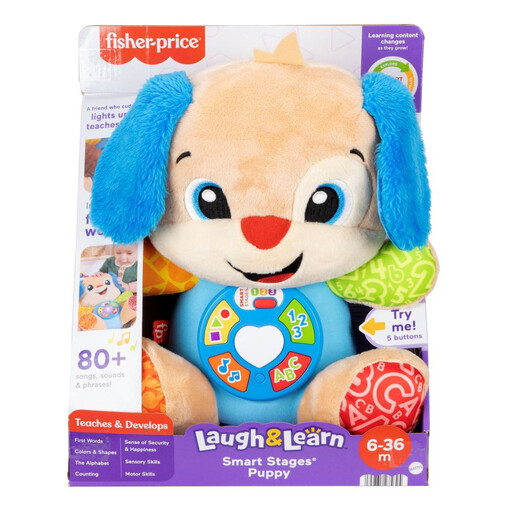
Why This Fits Their Persona: This plush toy is ideal for a baby's first educational toy. It is soft, cuddly and safe for little ones, combining sensory play with early learning concepts in a gentle, approachable way.
It directly counters the "one-size-fits-all" trap with its 3 Smart Stages learning levels. The content evolves from simple words (Level 1) to encouraging phrases (Level 2) and imaginative songs (Level 3), keeping it relevant as your child grows.
Introduces over 100 first words, parts of the body, colours and more. The combination of a soft toy with interactive, light-up features provides both comfort and stimulation.
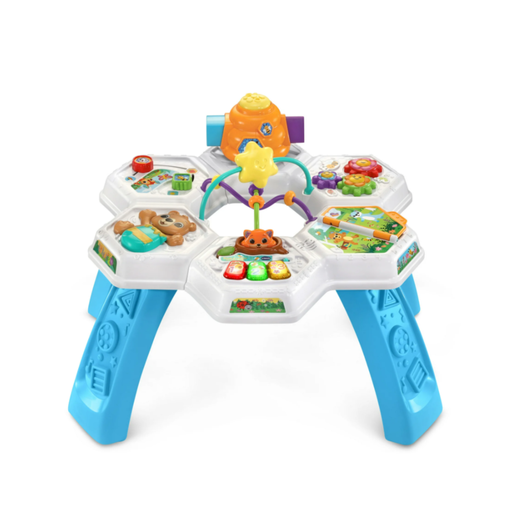
Why This Fits Their Persona: This makes an impressive and practical toddler birthday gift. It's a substantial centrepiece for a playroom, offering a wide range of activities that cater to a toddler's short attention span and desire to explore.
It avoids being a one-trick electronic toy by offering six distinct play zones, including tactile gears, a shape sorter and a mini book. The removable legs allow it to be used for floor play by younger babies and as a standing table for older toddlers, giving it genuine longevity.
Promotes both fine and gross motor skills (sitting, standing, manipulating objects). The variety of activities helps introduce colours, numbers and animals in different contexts.
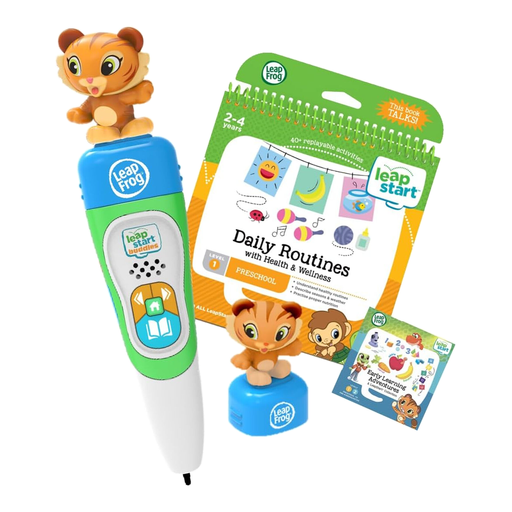
Why This Fits Their Persona: For parents looking for structured, screen-free learning, this set is an excellent starting point. It bridges the gap between traditional books and digital learning, making it one of the more focused LeapFrog toys for literacy.
This is not a passive electronic toy. It requires active participation, as the child must use the stylus to interact with the book. The learning is purposeful—focused on reading and daily routines—rather than just random sounds and lights.
Provides a tangible, hands-on introduction to reading without screen time. The system is expandable with other books and Reading Buddies, allowing the learning journey to continue.
We have compiled a complete, real-time list of products that fully satisfy these strict selection criteria and UK safety regulations.
Here are answers to a few common questions we receive from shoppers in the UK.
Always look for the UKCA mark on the packaging, which certifies that the toy meets UK safety standards. For children under three, pay close attention to any "small parts" warnings. A well-designed toy will have battery compartments secured with screws to prevent access to batteries, which are hazardous if swallowed.
Not inherently, but balance is key. The most effective interactive kids toys are those with a clear educational purpose, like teaching phonics or cause-and-effect. Well-regarded brands like VTech toys and Fisher-Price toys often design their electronic products around specific learning goals. It is good practice to balance these with open-ended, non-electronic toys like building blocks and art supplies to foster creativity and independent thought.
Choose toys that can adapt as your child grows. Products with multiple modes, difficulty levels or expandable content offer better long-term value. Also, consider toys that encourage group play. A toy that can be enjoyed with siblings, friends or parents not only has a longer lifespan but also helps develop crucial social skills like sharing and teamwork.