
24/7 Customer Support

Free returns

Same-day & Next-day Delivery

Quality Guaranteed

Unlock Your Welcome Offers: FREE Delivery | Up to 80% OFF | Free 30-day JoyPlus trial
Download the APP
Choosing educational toys for toddlers and children can be harder than it appears. Product pages often promise creativity, sensory development and early learning, but attractive packaging does not always translate into useful, age-appropriate play. Parents, grandparents and gift-givers also need to consider small parts, battery costs, noise levels, storage and whether a child will still use the toy after the novelty fades.
This guide explains the key buying checks and matches different types of children with suitable options, from sensory toys for babies and Montessori toys to musical instruments and STEM construction kits for children.
A toy marked for a broad range may not suit every child within that bracket. A building set designed for an eight-year-old may contain small components that are unsuitable for younger siblings, while a simple toddler toy may not hold the attention of an older child.
Always check the manufacturer’s stated age, choking warnings and the child’s actual abilities. Age guidance is particularly important for toys for 1 to 3 year olds and construction sets intended for toys for ages 3 to 8.
Lights, sounds and buttons can attract attention, but a toy with too many functions may offer limited opportunities for open-ended play. Look for a balance between interactive features and activities that allow children to build, sort, pretend, experiment or create their own games.
For example, an interactive baby toy may be more useful when it encourages reaching, turning and cause-and-effect discovery rather than simply playing repeated sounds.
Battery-operated toys may require regular replacement batteries, particularly if they include lights, speakers or motorised movement. Check whether batteries are included, the type required and whether the volume can be reduced. A loud toy may also be difficult to use in a flat, during quiet hours or around sleeping children.
The age label should be treated as a safety requirement, not just a suggestion. The Mega Bloks ABC Learning Train is listed for children aged 12 months to 5 years, with a warning about small parts and direct adult supervision. The Clementoni mechanical sets are intended for children aged 8 years and over, reflecting the presence of smaller components and more involved assembly.
For babies and young toddlers, inspect the toy for detachable pieces, loose accessories and accessible battery compartments. Keep button batteries and loose marbles away from young children, and follow the supplied instructions for storage and supervision.
Look for clear information about the manufacturer, importer or UK responsible person, instructions and warnings. Toy listings may refer to CE and EN71 compliance; these are useful details to check, but buyers should still read the product documentation and examine the toy when it arrives. For products sold in Great Britain, also check whether the relevant conformity marking and information are provided for the market.
Rounded edges, stable bases and durable construction are practical considerations. “BPA-free” wording alone should not replace checking the complete safety information, age range and condition of the toy.
Measure the available play area before ordering. A musical activity table needs a reasonably stable floor, while a marble run or race track requires a flat surface and room around it. Consider whether the toy can be stored easily after use.
Volume control is a valuable feature on musical toys for toddlers, but it is still sensible to keep sound at a moderate level and avoid placing speakers close to a child’s ears.
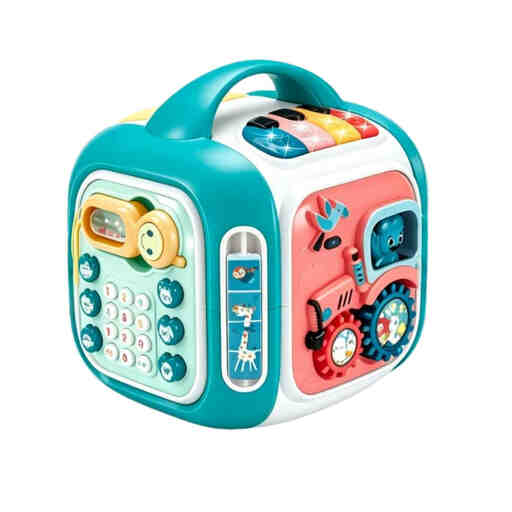
Why This Fits Their Persona: A compact option for families wanting several activities without filling a playroom. It is listed for ages 1 to 3 and includes a carry handle for moving between rooms or taking on trips.
Its activities include gears, a pretend phone, piano and guitar features, giving children hands-on actions rather than relying on lights alone.
Compact 23 x 23 x 24 cm format; eight listed play modes; no batteries required according to the product details.
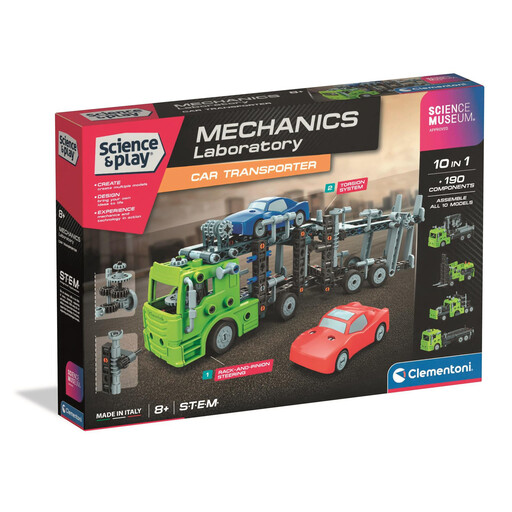
Why This Fits Their Persona: Suitable for an older child who prefers a structured building challenge to electronic entertainment. It is designed for ages 8 to 12 and suits shared weekend projects with an adult.
The set is not limited to decorative assembly: its steering system, ramps and interchangeable components provide tangible mechanical functions to explore.
Includes over 200 components; features a steering system and fold-down ramps; batteries are not required.
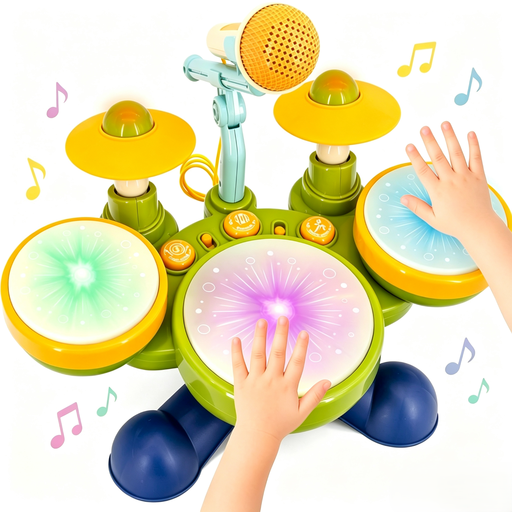
Why This Fits Their Persona: A practical match for children who repeatedly choose music, singing and active play. The removable stand allows floor-based use, which can help the setup adapt as a toddler’s play changes.
Unlike many fixed-volume musical toys, this model lists an adjustable volume dial. Adults can set a more suitable level for indoor play.
Listed for ages 1 to 3; includes a working microphone, light-up drum pads and liftable cymbals; batteries are not included.
Age guidance is a starting point rather than a guarantee of developmental fit. Consider the child’s coordination, attention span and ability to follow instructions. Always follow small-part warnings and supervise play where stated.
Some require AA or AAA batteries, while others do not. Check the product listing before buying and compare battery requirements, included accessories and whether volume control or mute functions are available.
Choose toys with more than one play mode, such as building, sorting, role play or mechanical movement. Store small components in a labelled container, remove batteries during long periods of non-use and inspect toys regularly for cracks, loose parts or damage.
We have compiled a complete, real-time list of products that fully satisfy these strict selection criteria and UK safety regulations.