
24/7 Customer Support

Free returns

Same-day & Next-day Delivery

Quality Guaranteed

Unlock Your Welcome Offers: FREE Delivery | Up to 80% OFF | Free 30-day JoyPlus trial
Download the APP
Buying educational toys for kids can be surprisingly difficult. Product descriptions often use phrases such as “STEM”, “hands-on learning” and “develops essential skills”, but these labels do not always explain how a toy works in everyday family life.
Parents, grandparents and gift buyers should look beyond colourful packaging and focus on age suitability, play value, safety information and whether the activity matches the child’s interests. The right choice should be engaging enough to encourage repeat play without creating unnecessary setup, storage or supervision problems.
A box containing hundreds of pieces may appear impressive, but a child could lose interest if the instructions are unclear or the finished model has little to do afterwards. Check what children actually do with the product: build, sort, experiment, role-play, race or solve problems.
For younger children, simple actions such as matching pictures, moving vehicles or operating a crane may provide more repeatable play than a complicated construction set.
“Suitable for children” is not a complete safety assessment. Many science kits and construction toys contain small parts, modelling materials, balloons or electronic components. Always check the stated age range and warning label before buying.
For children under three, avoid toys with small detachable components. For older children, check whether an adult must supervise experiments, assembly or charging. A kit intended for ages 8 to 14 may be unsuitable for a younger sibling, even if they are interested in the subject.
Large playsets can require more floor space than expected, while science activities may need a washable work surface and storage for unfinished projects. For UK homes where space can be limited, consider folded dimensions, battery requirements and whether components can be stored inside the product.
A screen-free toy may also involve audio, lights or rechargeable power. Check how it is charged and whether replacement consumables are needed.
Match the toy to the child’s current ability rather than buying solely for future development. Educational toys for toddlers generally benefit from larger components, straightforward controls and short activities. Preschool children may enjoy vehicle toys, matching games and simple building tasks. Children aged 8 and above may be ready for science kits for kids, engineering toys and multi-stage construction.
For products advertised as learning toys ages 3 to 14, read the exact recommended age for that model. A broad marketing category does not mean one product is suitable for every age.
Look for clear information about materials, care and safety. Plastic construction toys should have smooth, well-finished edges and robust connections. For products sold in the UK, check the packaging or listing for appropriate conformity markings, such as UKCA or CE where applicable, and read the supplied safety instructions.
A marking alone does not replace supervision. Follow the manufacturer’s guidance for batteries, charging, experiments and cleaning. Do not immerse electronic products in water, and keep loose components away from children who may put objects in their mouths.
Battery-powered products may need regular replacement batteries, while rechargeable toys need an appropriate charger and adult assistance. Science kits may include ingredients or materials that run out after several activities.
For better long-term value, check whether the core toy remains usable without consumables. A manual construction vehicle, for example, can provide screen-free play without batteries. A chemistry kit may offer more structured learning but requires a suitable table, cleaning routine and adult involvement.
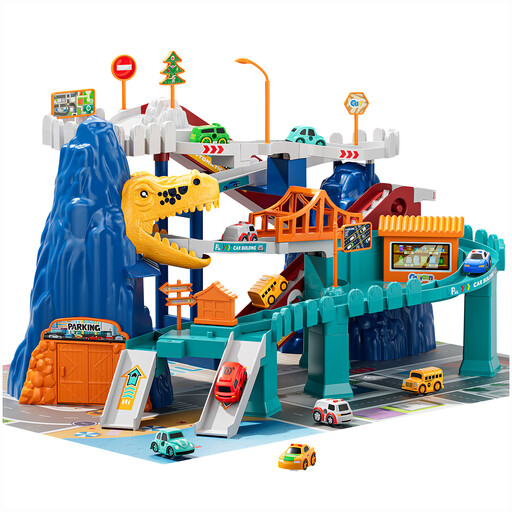
Why This Fits Their Persona: A practical choice for younger children who enjoy vehicles, pretend play and repeatable track action without the cost or complexity of an advanced STEM kit.
The play value is visible in the ramps, parking areas and included vehicles rather than relying only on educational wording. Adult help is needed for assembly, and the product requires 3 AA batteries, which should be planned for.
Includes 10 mini cars, ramps, signs, a map and stickers; supports vehicle role-play and parent-child interaction.

Why This Fits Their Persona: Suits an older child who wants a more involved building project with a displayable finished model and working mechanical features.
The appeal is not limited to appearance: the completed model has a motor-powered system and steerable wheels. It is marked for children from age 8 and contains small parts, so adult supervision is recommended.
Includes 3D app guidance; introduces assembly, steering and basic mechanical movement.
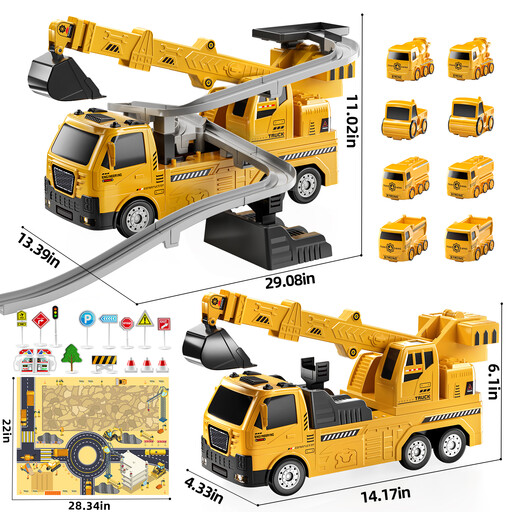
Why This Fits Their Persona: Designed for children who repeatedly choose vehicles, building scenarios and active role-play, including indoor or outdoor play where storage matters.
It combines several play modes in one foldable vehicle, reducing the risk of a large loose set becoming difficult to store. Small cars and signs still require age-appropriate supervision.
Features a 360-degree rotating excavator arm, spiral track, eight alloy cars and a play mat; components store inside the truck.
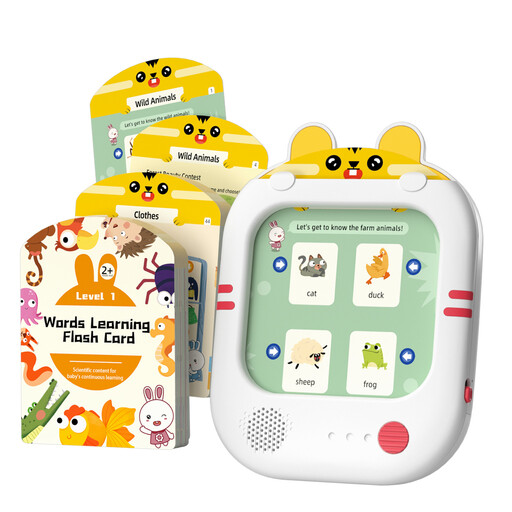
Why This Fits Their Persona: A portable option for ages 3 to 5, particularly useful for families wanting audio-supported learning without a conventional video screen.
The set provides physical cards and books rather than depending on an app subscription. It is rechargeable, but charging must be completed by an adult and small parts require supervision.
Includes 47 double-sided cards, three song books, audio content and approximately six hours of listed playtime per charge.
We have compiled a complete, real-time list of products that fully satisfy these strict selection criteria and UK safety regulations.
The most suitable category depends on the type of play the child naturally prefers:
For birthday gifts for children, packaging and storage are also worth considering. A self-contained set is easier to wrap and manage, while a larger construction project may be more appropriate when an adult can help at home.
They can offer more than one type of play when the activity is matched to the child’s age and interests. Building sets, vehicle playsets and experiment kits can encourage following instructions, hand control, sorting, planning and imaginative play. These are practical play opportunities rather than guaranteed educational outcomes.
Lifespan depends on material quality, storage and how many play modes the product offers. Sets with reusable components, multiple activities or fold-away storage may remain useful for longer. Check for replacement parts or consumables before purchase, particularly with science kits and experiment-based products.
Some do. Audio learning pens and powered vehicle tracks require batteries or charging, while many construction toys and mechanical kits do not. Science kits may include most materials for initial activities but could require household ingredients or replacement supplies later. Check the product details and prepare a suitable workspace before starting.