
24/7 Customer Support

Free returns

Same-day & Next-day Delivery

Quality Guaranteed

Unlock Your Welcome Offers: FREE Delivery | Up to 80% OFF | Free 30-day JoyPlus trial
Download the APP
Choosing educational toys for preschool children is not simply a matter of picking the toy with the brightest packaging or the longest feature list. Parents, grandparents, carers and nursery practitioners need products that suit a child’s age, hold attention and support useful early skills without creating unnecessary cost or clutter.
The following guide focuses on practical buying checks for children aged 2 to 5, including maths learning toys, counting toys, phonics toys, educational puzzles for children and interactive learning toys.
A toy may claim to cover numbers, letters, songs, logic and languages, but children often benefit more from one clear activity they can repeat independently. Check whether the toy provides a straightforward way to practise a skill, such as matching quantities, arranging numbers or identifying sounds.
Many early learning toys contain small puzzle pieces, blocks or accessories. A product marked for children aged 3 and above may not be suitable for a younger sibling, even when both children play in the same room. Always read the age recommendation, choking warning and supervision guidance before buying.
Interactive toys can be engaging, but sound-based products may need batteries, charging or compatible hardware. Check whether batteries are included, how the product is powered and whether a learning system or additional content is required. A screen-free puzzle or tactile toy may be easier to use regularly at home or in a nursery setting.
For children aged 2 to 3, look for large pieces, simple cause-and-effect play, tactile surfaces and basic number recognition. The Fat Brain Dimpl Digits toy, for example, is designed from age 2 and uses push-and-pop silicone buttons labelled from 1 to 10.
For children aged 3 to 5, consider toys that add sequencing, early addition, subtraction, phonics or problem-solving. A product should offer a manageable challenge rather than require a child to complete an advanced activity immediately.
Large puzzle pieces are easier for small hands to grasp, while compact toys are practical for car journeys, grandparents’ houses and nursery storage. Look for durable plastic, sturdy card or washable surfaces where appropriate. Storage is also important: loose pieces can quickly make a maths or puzzle activity difficult to reuse.
The product listing should provide packaging dimensions and material information. For electronic toys, also check cleaning instructions carefully. Devices containing electronic components or rechargeable batteries should not be immersed in water.
Different children respond to different formats:
For toys sold in Great Britain, check that the packaging includes appropriate product safety information, the manufacturer or importer details and a relevant conformity marking where applicable. A safety mark does not replace the need to follow age and supervision warnings.
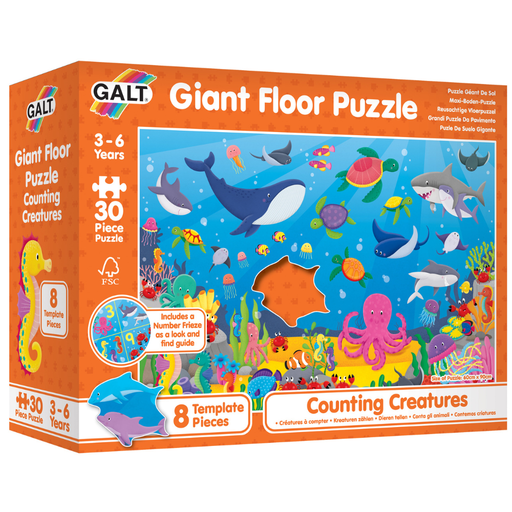
Why This Fits Their Persona: A screen-free starting point for families wanting one shared activity for floor play, rainy afternoons or visits from grandparents. It is suitable from age 3.
Its large pieces and clear counting theme avoid an overcomplicated setup. Adults can introduce counting gradually while children assemble the picture.
Large, easy-to-grasp pieces; supports counting, spatial awareness and fine motor practice; no batteries required.
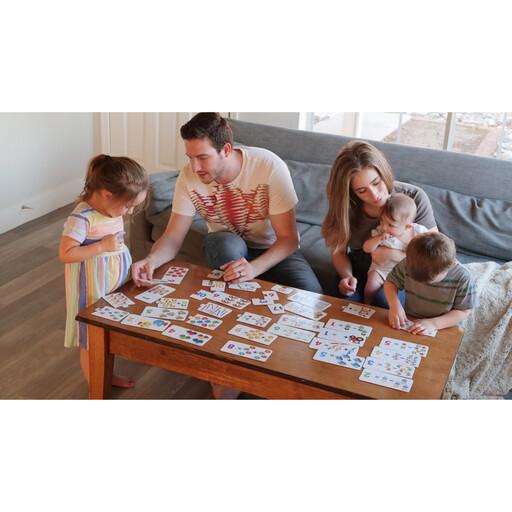
Why This Fits Their Persona: Suitable for adults seeking a structured maths activity for a home learning shelf, quiet time or early-years setting. It is suitable from age 3.
The self-correcting shapes provide a practical way for children to check whether a pair fits, rather than relying only on adult correction.
Includes 30 puzzle pairs covering counting, addition and subtraction; no batteries or extra electronic system required.
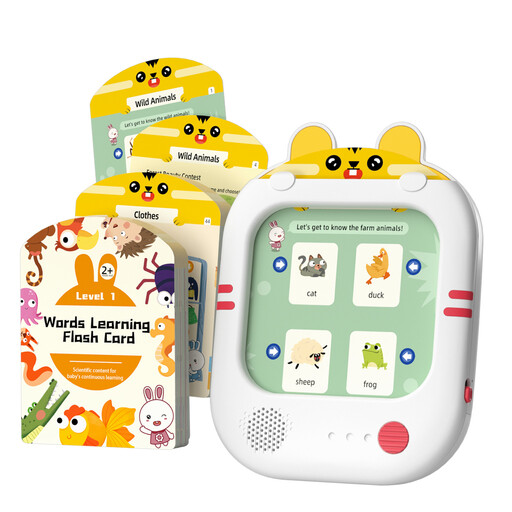
Why This Fits Their Persona: A practical choice for families wanting portable literacy, vocabulary and logic activities for children aged 3 to 5, including journeys and quiet time.
The set lists its included content and power requirements clearly, helping buyers distinguish a complete kit from a toy that needs separate purchases.
Includes 47 double-sided cards, books, audio content and rechargeable USB-C power; stated battery playtime is approximately six hours.
We have compiled a complete, real-time list of products that fully satisfy these strict selection criteria and UK safety regulations.
An educational toy does not need to be used like a lesson. Try short, repeatable activities:
Rotate toys rather than presenting every option at once. This can make existing early learning toys feel fresh and makes it easier to notice which activities hold a child’s attention.
Choose products specifically marked from age 2, with large, securely fixed or integrated parts and simple tactile play. Avoid toys carrying a small-parts warning for under-threes. Adult supervision remains important, particularly where a product includes detachable pieces.
No. Floor puzzles, matching cards, building pieces and many counting toys work without batteries. Electronic products can add audio or interactive prompts, but check battery type, whether batteries are supplied and how charging should be managed before buying.
There is no required session length. Short periods of focused play are often practical, especially for younger children. Follow the child’s interest, revisit activities on different days and use adult conversation to extend counting, language and problem-solving beyond the toy itself.