
24/7 Customer Support

Free returns

Same-day & Next-day Delivery

Quality Guaranteed

Unlock Your Welcome Offers: FREE Delivery | Up to 80% OFF | Free 30-day JoyPlus trial
Download the APP
Choosing educational toys for children can be surprisingly difficult. Product descriptions often promise creativity, development and hours of entertainment, but attractive packaging does not guarantee that a toy will suit your child, your home or your budget.
For UK parents, grandparents, carers and gift buyers, the most useful approach is to compare age suitability, play value, construction and supervision requirements before buying. The right toy should be enjoyable first, with learning opportunities built naturally into play.
Lights, songs and sound effects can attract attention, but children may lose interest if there is only one way to use the toy. Look for products offering several play actions, such as pressing, sorting, building, matching, moving or storytelling.
A wooden activity cube, for example, may provide bead mazes, number activities and pattern matching in one compact design. Similarly, baby sensory toys can offer visual, auditory and movement-based play, although younger children still need short, supervised sessions.
A toy marked “3+” is not automatically suitable for every three-year-old. Consider the child’s coordination, patience, strength and ability to follow instructions. Small parts and small magnets require particular care.
The 36-piece magnetic tiles listed below are marked for children aged 3 and over and include warnings about small magnets and choking hazards. Magnets can cause serious internal injury if swallowed, so inspect magnetic building tiles regularly and stop using them if pieces crack or expose their magnets.
Battery-operated and electronic toys may require replacement batteries, charging time or careful cleaning. Check whether batteries are included, how the toy is cleaned and whether it can be stored easily.
For ride-on toys for toddlers, also consider floor space, outdoor access, charging duration, maximum load and adult supervision. A toy that cannot be used safely in your home may provide poor value, even if its feature list looks impressive.
Start with the manufacturer’s recommended age, then read the complete warning section. Toys intended for babies should not have loose detachable parts. Toys for older children may include pieces that are unsuitable for younger siblings.
For electronic educational toys, check for battery compartments that require a tool to open and keep button or coin batteries away from children. Dispose of used batteries promptly and follow the product instructions.
Look for clearly stated materials, smooth or rounded edges and complete manufacturer information. Where a listing refers to EN71, this relates to European toy safety testing categories, including mechanical and physical properties, flammability and certain chemical elements. UK shoppers should still check the packaging and listing for the applicable conformity marking, age guidance and warnings.
Terms such as “non-toxic” or “BPA-free” should not replace basic checks. Inspect seams, wheels, fasteners, magnetic panels and battery covers when the toy arrives.
Dimensions matter for both play and storage. A large playset may need a dedicated floor area, while a compact pre-school game can suit a smaller flat or travel bag.
For toddlers, a stable base and easy-to-grip controls are useful. For construction toys, a storage box or pouch can reduce lost pieces. With musical toys for toddlers, an adjustable volume control can make indoor play more manageable, but it remains sensible to keep sound at a comfortable level.
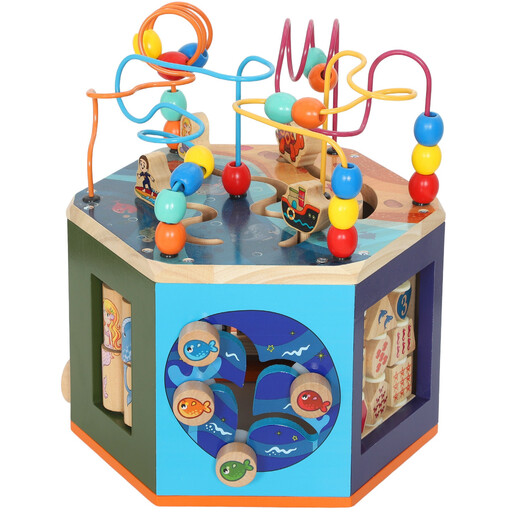
Why This Fits Their Persona: A compact, screen-free option for toddlers aged 18 months and over, particularly useful in flats, playrooms or as a birthday gift.
It offers several hands-on activities rather than relying on lights or batteries. The listed age guidance and EN71-1-2-3 safety standard are easy to check before purchase.
Wood and MDF construction; bead maze, number learning and pattern matching; dimensions of 28W x 26.2D x 32H cm.

Why This Fits Their Persona: A 60-piece construction set for families seeking open-ended play that can be shared between children or adults and children.
The larger piece count gives children multiple construction possibilities instead of a single finished model. Always confirm the recommended age and magnet warnings before use.
60 magnetic building pieces; farm-themed construction; designed around creativity and co-operative play.
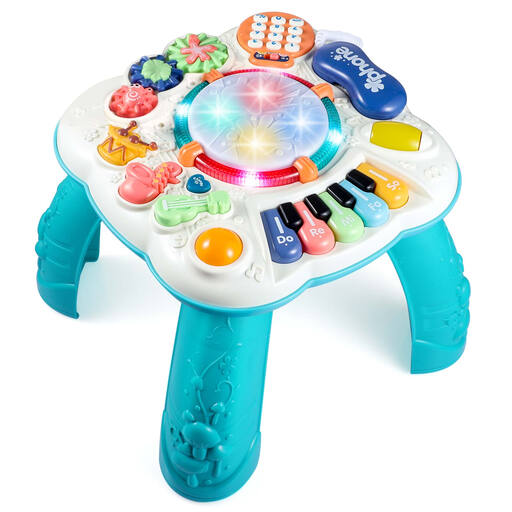
Why This Fits Their Persona: Suitable for households wanting one activity centre for floor play and standing play from approximately 6 to 36 months.
The removable legs allow a change from floor panel to standing table. A volume control is listed, helping families manage sound during indoor play.
Six play zones including piano keys, drum, telephone and gears; ABS construction with rounded edges; batteries not included.
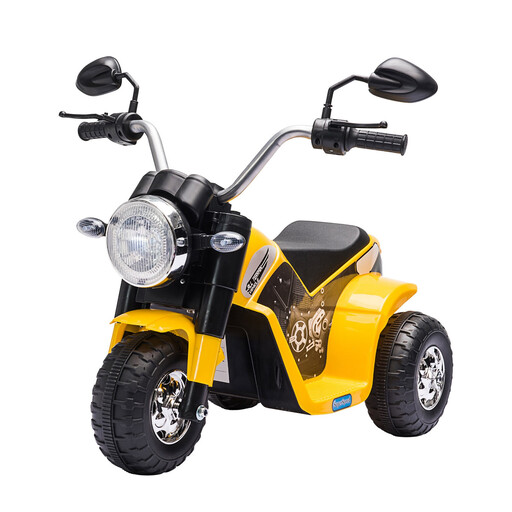
Why This Fits Their Persona: Designed for children aged 18–36 months, this ride-on toy suits families with suitable outdoor or open indoor space and time for supervised active play.
The stated maximum speed is 2 km/h, while three textured wheels and two handlebars are listed. It still requires direct adult supervision and assembly.
Forward and reverse controls, horn, headlights and mirrors; approximately 45 minutes’ play per full charge; maximum load 25 kg.
We have compiled a complete, real-time list of products that fully satisfy these strict selection criteria and UK safety regulations.
Choose large, washable toys without detachable small parts, such as textured rattles, soft sensory items, tummy-time toys and simple activity panels. Supervise play closely and follow the product’s specific age guidance. Avoid toys containing small magnets or components that could fit into a child’s mouth.
Lifespan depends on construction, frequency of use and storage. Wooden toys may remain useful as a child develops if they offer more than one activity. Electronic toys can continue to entertain while batteries and switches work, but inspect them regularly for loose parts, damaged casing or exposed wiring.
The ongoing cost varies. Some products include batteries, while others require AAA, AA or button batteries separately. Rechargeable ride-on toys involve charging time and electricity use, while manual construction toys and pre-school games have no battery cost. Check the listing before ordering and budget for replacements where needed.