
24/7 Customer Support

Free returns

Same-day & Next-day Delivery

Quality Guaranteed

Unlock Your Welcome Offers: FREE Delivery | Up to 80% OFF | Free 30-day JoyPlus trial
Download the APP
Parents and gift buyers often choose children’s educational toys and activity kits because they promise screen-free entertainment alongside creativity, problem-solving and practical learning. However, colourful packaging and long feature lists do not always indicate lasting play value.
The most common buying pitfalls include:
The right choice depends on the child’s age, interests, available space and whether an adult will be involved.
The stated age range is a safety and usability guide, not merely a marketing suggestion. Construction toys for ages 3 to 10 can vary considerably: a chunky magnetic set may suit younger builders, while a detailed model kit may be more appropriate for older children.
Look for:
For products sold in the UK, check the packaging and listing for relevant conformity information, such as CE or UKCA marking where applicable, and read the supplied safety instructions.
For magnetic building blocks, check whether the pieces are described as ABS plastic, whether edges are rounded and whether magnets are securely enclosed. Avoid buying sets with damaged parts, loose magnets or unclear safety information.
For creative craft kits for children, review the included materials and any skin-contact warnings. Paint, slime compounds, glue and powders should be used according to the instructions, with clothing and surfaces protected where necessary.
A higher piece count is useful only when the parts support varied designs. Consider whether the kit includes wheels, connectors, scenery, tools or activity prompts that encourage children to build beyond the example shown on the box.
Some STEM toys for children need batteries, water, household ingredients or a large table. A kit that is difficult to set up may be used less often, particularly during busy school weeks.
Before purchasing, check:
Open-ended magnetic sets, DIY building toys and reusable craft materials can be suitable for repeat play, while experiment kits may offer a structured activity session with a clear beginning and end.
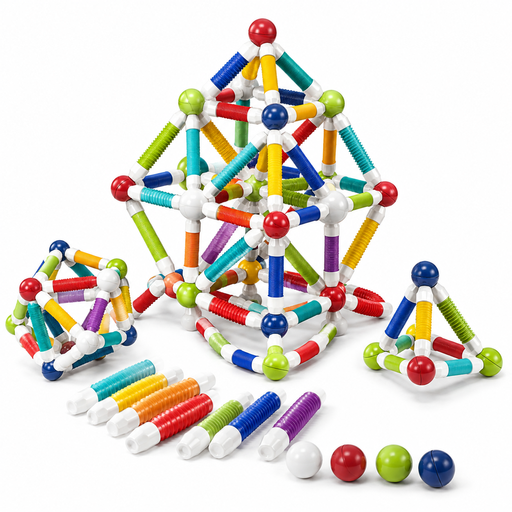
Why This Fits Their Persona: An 85-piece set provides an accessible starting point for children exploring magnetic construction at home, without committing to a very large collection.
The listing identifies the set size and ABS plastic construction, making it easier to compare value with larger magnetic building blocks.
85 pieces, magnetic construction format and a gift box presentation.
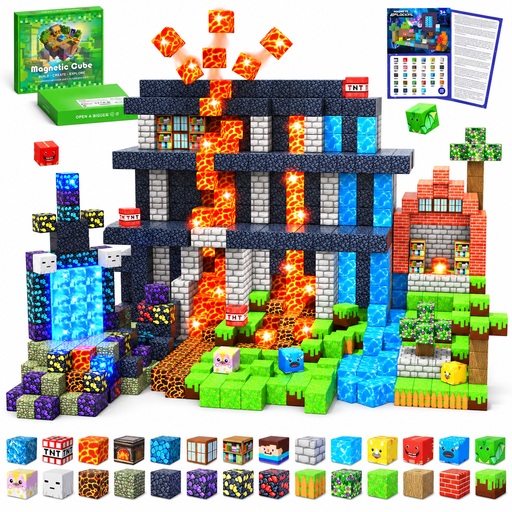
Why This Fits Their Persona: This larger set is suited to families wanting more parts for detailed structures, shared play and projects that can remain set up between sessions.
The listing specifies rounded edges and a 150-piece format, helping buyers assess both finish and quantity rather than relying on packaging imagery.
150 pieces, natural design and suitability from age 3 as stated in the listing.

Why This Fits Their Persona: Designed for children aged 10 and over, this is a structured option for aspiring scientists who enjoy guided experiments and adult-supported learning.
The listing states the minimum age, adult supervision requirement, small-part warning and need for two AA batteries, allowing families to prepare safely.
Includes goggles, flask, test tubes, beakers and materials for 10 guided experiments.
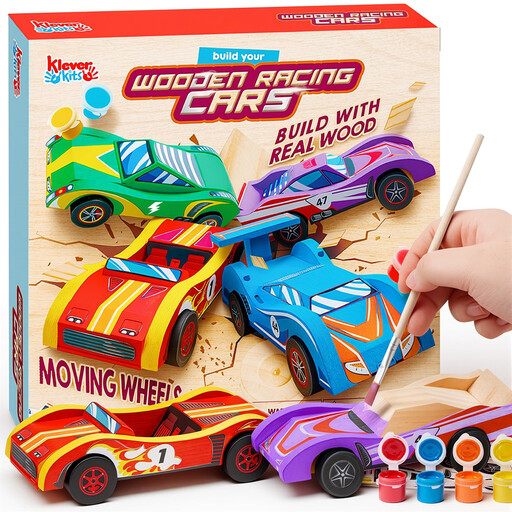
Why This Fits Their Persona: A practical choice for children aged 8 and over who enjoy making, painting and personalising objects during a family afternoon or birthday activity.
The contents are itemised, including pre-cut wooden pieces, paints, brushes, stickers, glue and instructions, so there are fewer unexpected add-on purchases.
Includes materials to build and decorate four wooden cars, with no extra tools stated as necessary.
We have compiled a complete, real-time list of products that fully satisfy these strict selection criteria and UK safety regulations.
Some are, but suitability depends on the product’s minimum age, component size and activity complexity. Magnetic building blocks may support open-ended play across several ages, while science experiment kits and detailed DIY models usually have narrower age guidance. Always follow the manufacturer’s instructions and supervise activities where required.
Not always. Magnetic construction toys and many craft kits work without batteries, whereas light-up dinosaur sets, electronic marble runs and some science kits may require batteries. Check the product details for included materials, household ingredients and replacement supplies before ordering.
Choose kits with reusable components, open-ended designs or several distinct activities. Store small parts in a labelled container, keep instructions with the toy and clean craft equipment after use. For slime and experiment products, follow storage and disposal guidance rather than treating leftover materials as ordinary household waste.