
24/7 Customer Support

Free returns

Same-day & Next-day Delivery

Quality Guaranteed

Unlock Your Welcome Offers: FREE Delivery | Up to 80% OFF | Free 30-day JoyPlus trial
Download the APP
Choosing educational toys for kids can be harder than it looks. Product pages often promise creativity, STEM learning and hours of engagement, yet the real value depends on age suitability, included materials and how much adult involvement is required.
For parents, grandparents and other gift buyers in the UK, three common buying traps are worth avoiding.
Some toys look substantial because of oversized packaging but may contain only a few activities or require additional pens, ingredients, batteries or household equipment. Check the full contents list and calculate how many complete projects the child can actually do.
For example, a craft kit offering several projects may provide more usable play than a single large construction model. Also check whether consumables are included or need to be bought separately.
Science experiment kits and DIY toys for children can be engaging, but “suitable from age four” does not necessarily mean independent play. Small components, chemicals, tools, heat, liquids and button batteries all require careful handling.
Always read the product warning before purchase. In particular, look for:
Character-themed activity sets can be appealing gifts, but a familiar character does not guarantee that the activity will hold attention. Consider whether the child enjoys colouring, building, experimenting, storytelling or tactile play.
A good match may be more important than a high piece count. A child who enjoys making things may use a creative activity set repeatedly, while a child who prefers discovery may gain more from a STEM kit for children.
Age guidance is a practical starting point, not just a marketing label. For ages 3 to 5, choose activities with simple instructions, larger components and short stages. Children aged 6 to 8 may be ready for multi-step construction, excavation or guided experiments. From around 8 to 10, some children can manage more detailed science experiment kits, provided an adult oversees the activity.
Look for clear instructions and consider whether the child can complete the main activity without becoming frustrated.
For kids craft kits, check the number of activity boards, colouring pages, tools and decorative components. For example, a foil art set may be easier to use if it includes pre-designed adhesive boards and foil sheets, rather than requiring glue and scissors.
For building toys, check the material, connection method and whether scenery or accessories are supplied. A dinosaur building toy with several figures and landscape pieces can support both construction and pretend play, while a basic model may focus mainly on assembly.
UK homes often need toys that can be stored easily and used without taking over the kitchen table. Measure the packaging if storage space matters and look for tins, books or compact boxes that keep pieces together.
Also distinguish between genuinely low-mess screen-free toys and activities involving slime, powders, liquids or paint. A science kit may need a washable work surface, protective clothing and a dedicated storage area after use.
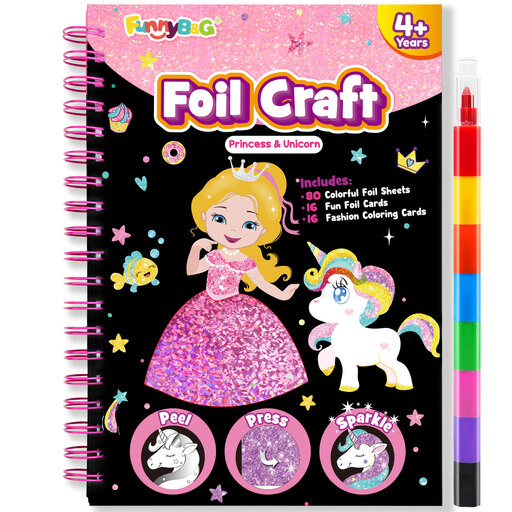
Why This Fits Their Persona: A practical option for families wanting a compact, low-preparation activity for children aged 4 to 10. It can suit rainy afternoons, travel and quiet play without requiring a table full of craft supplies.
The box includes 80 foil sheets, 16 foil art boards, 16 colouring cards and an 8-colour twist crayon, so the activity list is clear before purchase. It uses peel, press and reveal steps rather than glue or scissors.
The set contains 112 pieces and has compact packaging measuring approximately 7.28 × 10.24 × 0.71 inches. It is battery-free and designed for screen-free creative activity.
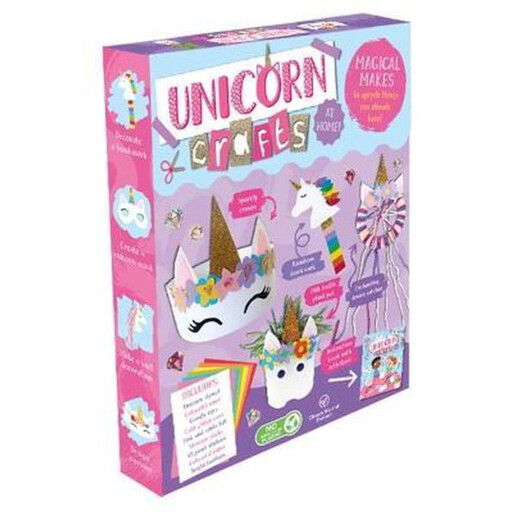
Why This Fits Their Persona: Suitable for a child aged 5 or over who enjoys longer creative projects and making decorations with a parent, grandparent or carer.
It states that materials are provided for up to ten unicorn-themed craft works, with step-by-step guides and additional ideas. It also explains that some household waste, such as cardboard boxes and milk bottles, is needed for upcycling projects.
The kit requires no batteries and has packaging dimensions of 21.2 × 3.8 × 26 cm. It combines craft-making with reuse of everyday materials.
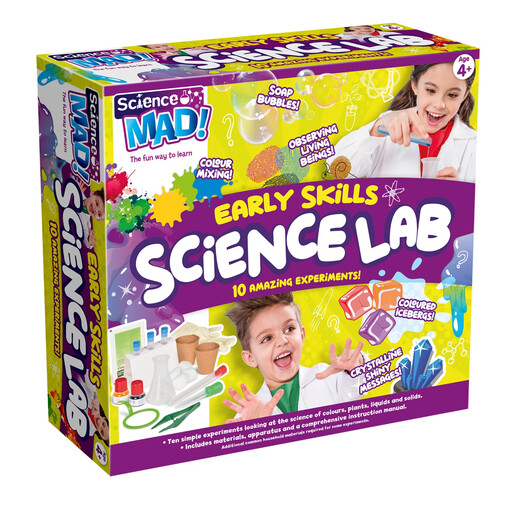
Why This Fits Their Persona: A suitable direction for families looking for introductory science experiment kits for children aged 4 and over, particularly where an adult can guide shared discovery.
The set lists ten experiments, laboratory-style apparatus and a 28-page illustrated instruction manual. Buyers can see the intended themes, including colours, plants and crystals, before ordering.
The kit includes test tubes, a flask, a pipette, food colouring and seeds. It requires no batteries, although the product warning specifies direct adult supervision and a small-parts choking hazard.
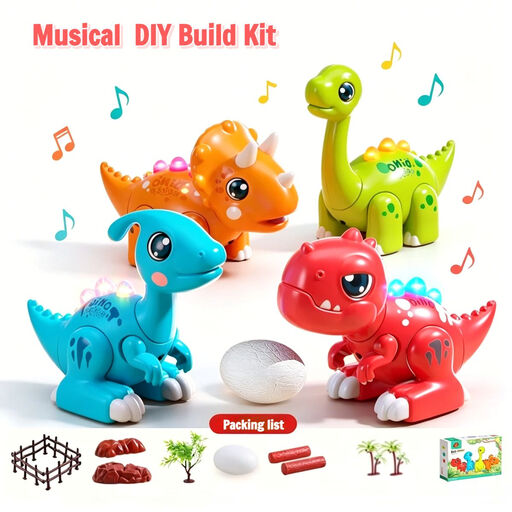
Why This Fits Their Persona: Designed for dinosaur-loving boys and girls aged 3 to 6 who want to build figures and then continue with imaginative play.
The listing specifies four dinosaur models, scenery accessories and a snap-together design. This gives buyers more information than a general promise of “creative construction”.
The set uses ABS material and includes lights and music. It contains a button battery, so adults should follow the battery warning and keep batteries away from young children.
Choose screen-free toys according to when and where they will be used. Activity tins and scratchbooks can work well on journeys, while slime labs and excavation kits need a protected surface and more supervision. For a birthday or Christmas present, check whether the child already owns similar colouring and activity books or arts and crafts for children.
For a gift intended for siblings, construction sets and multi-activity kits may encourage shared play. For a child who prefers independent quiet time, colouring, foil art or simple creative activity sets may be easier to start without extensive adult preparation.
We have compiled a complete, real-time list of products that fully satisfy these strict selection criteria and UK safety regulations.
Yes, but check the stated minimum age, component size and supervision guidance. Some toys listed for age three may still include small parts, so adults should inspect the set before giving it to a child.
Many do. Adult involvement is particularly important for kits involving chemicals, liquids, excavation tools, heat, batteries or small components. Follow the supplied instructions rather than relying only on the age printed on the front of the box.
Compare the number of complete activities with the purchase price and check whether refills or household materials are required. Battery-free craft kits, colouring sets and construction toys may have fewer running costs, while slime and chemistry kits can use consumable ingredients more quickly.