Solo packed-lunch preparers
If you cook a few eggs for your own lunches, a compact cooker may be easier to store between uses. Compare its stated capacity with the number you actually prepare.


Choose a compact cooker if you usually prepare a few eggs and need to put it away after use; consider a seven- or eight-egg model when a larger batch would avoid repeated cooking. In a shared kitchen, check the space needed for use and storage, how the parts are cleaned, and whether a ready alert suits your routine. An alert or automatic shut-off does not replace staying nearby, and eggs for packed lunches still need suitable cooling and storage.
If you cook a few eggs for your own lunches, a compact cooker may be easier to store between uses. Compare its stated capacity with the number you actually prepare.
If several lunches are prepared together, capacity and a clear end-of-cycle signal may matter more than choosing the smallest appliance.
Measured-water guidance, an automatic stop and a ready signal may help when egg preparation overlaps with other tasks. Electrical Safety First advises against leaving an operating appliance unattended.
Start with a safe place to use the cooker, then match its capacity and cleaning requirements to the lunches you normally prepare.
| Concern | What to check | Who this matters to |
|---|---|---|
| Safe shared-kitchen use | Look for a ready signal or automatic shut-off, and check that a dry worktop and suitable socket allow safe placement. | When I am preparing lunch alongside other kitchen tasks, I want a clear signal without leaving the cooker running unattended. Around 42% of consumers put this safely managed routine first. |
| Batch capacity | Count the eggs needed per session and compare that number with the stated capacity and available chilled storage. | If I prepare several lunches together, fitting the planned eggs into one cycle matters more than buying extra capacity I rarely use. Capacity is the first concern for around 33% of consumers. |
| Storage and cleaning | Compare the dimensions with your storage space and check which removable parts can be washed, and how. | When the worktop must be cleared for the next person, I need a cooker that is practical to put away and clean. For around 25% of consumers, storage and cleanup come first. |
A buzzer or automatic stop can signal the end of cooking, but neither addresses wet hands, damaged leads or unsafe placement in a busy kitchen. Electrical Safety First advises against leaving electrical appliances on and unattended.
Use a dry, stable worktop, keep the lead and socket clear of water, stay nearby while the cooker operates and follow the manufacturer's instructions for unplugging it.
A larger cooker is useful when it avoids repeated cycles, but the finished eggs still need suitable space for cooling, refrigeration and packing. East Lancashire Hospitals NHS Trust advises using a cool bag and ice pack to keep packed lunches cool.
Base capacity on your usual batch and plan where the prepared lunch will be kept before it is eaten.
Care instructions differ by model: Duronic describes dishwasher-safe accessories for its EB50, while a Salter digital cooker is specified as handwash-only.
Check the exact model's cleaning instructions and agree who will clean and put away the shared appliance.
Salter lists six- and eight-egg cookers that offer different batch sizes for packed-lunch preparation.
Duronic's EB50 is a seven-egg option for people who want a stated automatic stop and audible end signal.
Model 14048-56 provides another seven-egg format to compare when capacity and an audible signal matter.
This Philips egg cooker is a choice to consider for small packed-lunch batches when the appliance needs to be put away between uses. Check that its capacity and placement suit your shared kitchen.
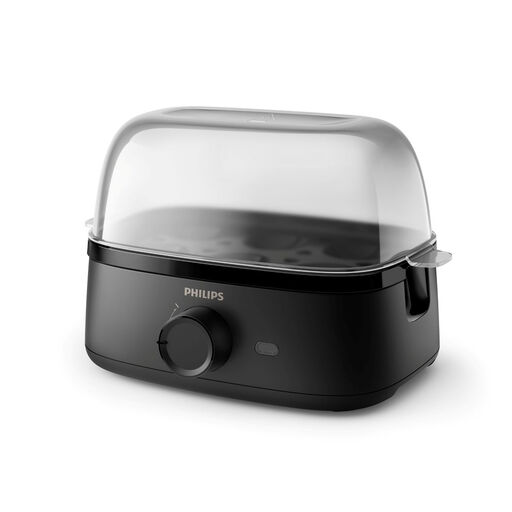 No image available
For small packed-lunch batches, compare the stated capacity with the number of eggs you normally prepare and check that the cooker fits its allotted storage space.
Before ordering, confirm the plug and applicable marking for where you will use it. Place it on a dry worktop within reach of a suitable socket, and stay nearby while it operates.
Choose capacity by the number of eggs you normally prepare in one session. A stated six-egg capacity may cover a small batch; consider seven or eight eggs when that would avoid repeat cycles and you have room to store the prepared food.
Do not treat automatic shut-off or a buzzer as a reason to leave an operating cooker unattended. Electrical Safety First advises against leaving electrical appliances on and unattended and warns against handling electrical equipment with wet hands.
Plan to keep the prepared lunch cool before it is eaten. East Lancashire Hospitals NHS Trust advises using a cool bag and ice pack for packed lunches; check that you also have suitable refrigerated storage before setting aside a larger batch.
Check the exact cooker model's care instructions and the seller's after-sales terms before buying. Find out which parts need handwashing, what the manufacturer guarantee covers and whether registration is required; terms can differ between models and sellers.