
24/7 Customer Support

Free returns

Same-day & Next-day Delivery

Quality Guaranteed

Unlock Your Welcome Offers: FREE Delivery | Up to 80% OFF | Free 30-day JoyPlus trial
Download the APP
For anyone serious about their daily brew, the journey from pre-ground coffee to freshly ground beans is a revelation. The aroma, the depth of flavour—it’s a completely different experience. But stepping into the world of home grinding can be confusing. An electric burr coffee grinder is the cornerstone of a great cup, yet the market is filled with models that promise the world but often fail to deliver.
Before you invest, it’s crucial to understand the common pitfalls that lead to buyer's remorse. Many aspiring home baristas in the UK find themselves with a machine that, despite its claims, becomes a source of frustration rather than joy.
To avoid these traps, focus on the fundamental mechanics of the grinder. These are the non-negotiable factors that determine performance and longevity for any coffee grinder for home use.
The single most important component is the burr set. Unlike blade grinders that violently chop beans into uneven pieces, burr grinders use two abrasive surfaces to crush beans into a uniform size.
The ability to fine-tune your grind size is why you are buying a burr grinder. This is controlled by the adjustment mechanism, which comes in two main types.
A powerful, high-torque motor that runs at a low speed (RPM) is preferable. High-speed motors can generate excess heat, which can pre-cook the coffee grounds and strip them of their delicate aromatic oils before you even start brewing. A slower, more powerful motor ensures the beans are crushed gently and efficiently, preserving their full flavour potential.
We have analysed the specifications of various models to match them with distinct user needs. Here are our recommendations for different types of coffee enthusiasts in the UK.
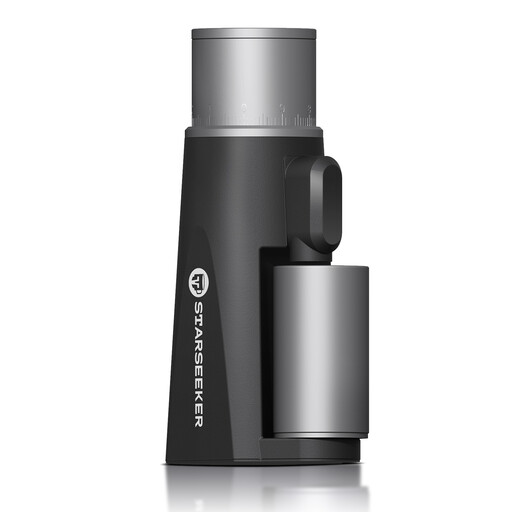
Why This Fits Their Persona: Perfect for those who want quality coffee while camping, travelling or at the office. Its compact, wireless design means you are not tied to a power socket, offering true coffee freedom without resorting to manual grinding.
It avoids the "do-it-all" trap by focusing on portability. The 100-step stepless adjustment provides genuine precision for its size and the slow 100 RPM motor minimises heat, preserving flavour even in a compact form factor.
Cord-free operation: A built-in 2600mAh battery provides power for 40-50 grinds on a single charge. Professional-grade burrs: Features 38mm conical burrs for consistent grounds.

Why This Fits Their Persona: For those focusing on espresso, this grinder offers features typically found on more expensive models. The digital interface and timed grinding allow for repeatable, precise doses, which is critical for consistency.
It directly counters the "illusion of precision" by offering timed grinding with 0.1-second accuracy. The 48 grind settings and dedicated modes for different portafilter sizes (51/54/58mm) provide tangible, espresso-focused control.
Digital timed grinding: Ensures the exact same amount of coffee is ground every time. 48mm stainless steel conical burrs: Provide consistent particle distribution for balanced extraction.
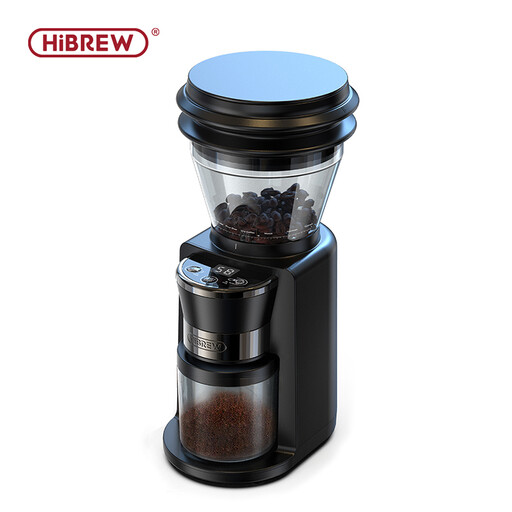
Why This Fits Their Persona: An excellent choice for the home user who enjoys various brewing methods and values a clean workspace. It balances a good range of grind settings with features designed to minimise mess and coffee waste.
This model directly tackles the "static and mess nightmare" with a built-in negative ion generator to reduce powder splash. The 34-gear stepped adjustment provides a clear and practical range for different brew styles without over-promising.
Anti-static function: Actively reduces mess and coffee ground retention. Large capacity: Features a 210g bean hopper and 100g grounds container, suitable for making multiple cups.
We have compiled a complete, real-time list of products that fully satisfy these strict selection criteria and UK safety regulations.
For optimal flavour and performance, a light cleaning is recommended weekly and a deep clean monthly. A light clean involves brushing out any loose grounds from the burrs and chute. A deep clean involves disassembling the burrs (if the model allows) and using a stiff brush and a vacuum to remove all old coffee particles and oils. Never use water on the burrs or motor housing unless specified by the manufacturer.
Yes, many grinders are capable of this, but it requires a model with a wide and effective grind range. When switching from a coarse setting (like French press) to a fine setting (espresso), you may need to run the grinder for a few seconds to purge any larger retained grounds. Grinders with stepped adjustment make it easier to switch back and forth between pre-set grind sizes.
The primary difference is their shape and how they grind. Conical burrs consist of a ring-shaped outer burr and a cone-shaped inner burr. They tend to be quieter, produce less heat and are great all-rounders. Flat burrs are two identical, horizontal rings that lie flat against each other. They are known for producing a very uniform grind size, which is highly desirable for espresso, but they can retain more grounds and may run hotter. For most home users in the UK, a quality coffee bean grinder UK with conical burrs offers an excellent balance of performance and versatility.